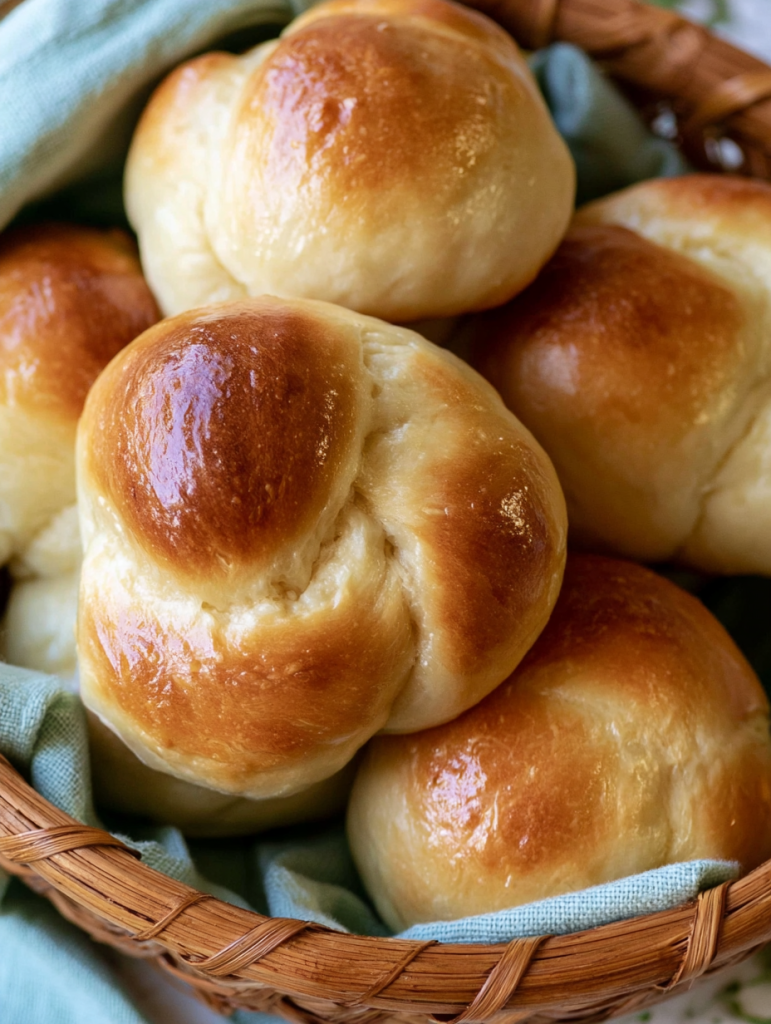
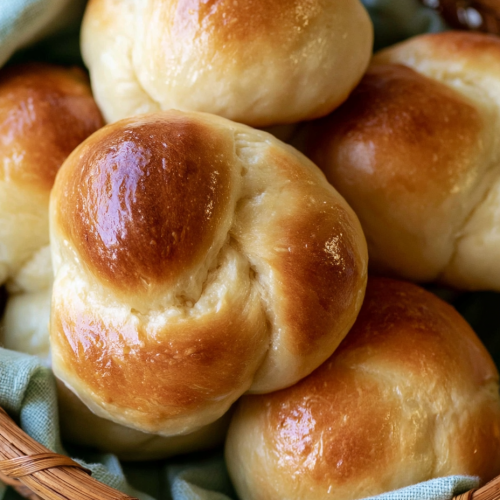
These Nanner Rolls are soft and airy inside, with sweet twisted tops that brown beautifully. They’re a cozy yeast roll for roast chicken, beef stew, ham, or baked pasta, and there are no bananas in them—not a single nanner. The dough takes time, but most of it is hands-off rising.
Why You’ll Love It
- Soft and tender — whole milk and butter give these rolls a rich, fluffy texture.
- Pretty knot shape — simple dough ropes turn into bakery-style rolls with minimal effort.
- Make-ahead friendly — the dough can be refrigerated overnight before shaping.
- Perfect for saucy meals — these rolls are especially good with ham, soup, stew, or baked pasta.
Ingredient Notes
Use active dry yeast here, the regular little packets from the grocery store. The jar is also a good option, though it can get lost in the refrigerator door behind three kinds of mustard. Two standard packets is what you need. Try our Slow Cooker 2-Ingredient Beer Bread — Because Sometimes Simple Is Better next.
Whole milk gives these rolls their soft, rich texture. Skim milk is not recommended. The butter gets warmed with the milk, and then the egg goes in slowly so it doesn’t scramble.
The flour amount is approximate, as bread flour usually is. Start with the five cups called for in the mixing bowl, then add more as you knead only as needed. Humidity can give the dough a different feel from batch to batch, because apparently even flour has moods. If you like this, you'll love our Herb & Cheese Quick Bread.
Ingredients
- 1/2 cup water, warmed to 110°F
- 2 packages active dry yeast
- 1/2 cup plus 1/4 teaspoon sugar, divided
- 2 cups whole milk
- 1/4 cup butter
- 1 large egg, lightly beaten
- 6 1/4 cups all-purpose flour, approximately—you may not use every last bit
- 2 teaspoons salt
- Cooking spray, for the bowl and pans
- Butter, for brushing over the warm baked rolls

Instructions
Pour the water into a large glass measuring cup and warm it to 110°F. Sprinkle in the yeast and the 1/4 teaspoon sugar, then stir it around until the yeast dissolves. Let it sit while preparing the milk mixture. It should get a little foamy, though perfectly good yeast can look less enthusiastic than advertised. If it smells yeasty and isn’t ancient, continue.
In a separate bowl, warm the whole milk and 1/4 cup butter until the mixture reaches about 100 to 110°F. The butter should be melted and the milk warm, not scorching. Slowly dribble in the lightly beaten egg while mixing constantly. Slowly is the key word. Adding it too quickly can leave little bits of cooked egg in the warm milk. Not ideal.
In a large bowl, whisk together 5 cups of the flour, the salt, and the remaining 1/2 cup sugar. Make a hollow in the center, like a little flour volcano without the science-fair drama, and pour in both the yeast mixture and the milk mixture.
Use a big spoon or sturdy spatula to pull the flour from the sides into the wet center. Keep mixing and adding flour as necessary. At some point, the spoon becomes more trouble than it’s worth, and hands will be needed. The dough should form a ball that can be turned onto a floured counter. It will be soft, but it shouldn’t cling excessively.
More recipes you might like


Knead the dough for 10 minutes, adding flour as needed to keep it from sticking to your hands and the counter. Ten whole minutes feels longer than it sounds. But this is what makes the rolls soft and lovely, so stick with it. For another easy option, see our Slow Cooker 3-Ingredient Beer Bread.
Spray a large bowl or proofing container with cooking spray. Put the dough in, spray the top of the dough, and cover the bowl with a lid or plastic wrap. Let it rise for 2 hours, or until doubled in size. The top of the refrigerator is usually a decent spot if the kitchen is chilly. Don’t keep lifting the cover every seven minutes to check it.
Punch down the dough—gently, but with feeling—and divide it into two equal portions. Put one half back into the bowl and cover it so it doesn’t dry out while shaping the first batch. Divide the other half into 12 pieces.
Roll each piece into a rope about 5 inches long, then tie it into a simple knot. Nothing fancy. Just a knot. Tuck the ends a little if they’re sticking out awkwardly, but these are homespun rolls, not jewelry. Place them on a cookie sheet sprayed with cooking spray or lined with a silicone mat.
Spray the tops lightly with cooking spray, cover with a clean towel, and let them rise for 30 to 45 minutes. Then repeat with the remaining half of the dough. Use two baking sheets to keep the rolls from baking into each other.
Preheat the oven to 365°F. Bake the rolls for 20 minutes, until they’re golden on top and lightly browned underneath. Start peeking near the end.
Take the rolls out and brush the tops with butter while they’re warm. Let them cool on a rack, or serve them warm.
Variations
Keep these plain for a classic dinner roll. A little garlic butter brushed over the top after baking disappears fast with spaghetti. Flaky salt on a few of them is very pretty and adds a little extra sophistication.
The dough can be shaped into regular round rolls instead of knots when tiny ropes are not appealing. The knots are charming, though. You might also like our Quick German Bread in Just 5 Minutes.
Shredded cheese can be added to the dough, but it changes the soft texture and makes the shaping messier. Some experiments are valuable. Some are a greasy counter and a lesson.
Storage & Reheating
Keep leftover Nanner Rolls in an airtight container or zip-top bag at room temperature for a couple of days. They’re best the day they’re baked, obviously, but they reheat nicely. Wrap one or two in a barely damp paper towel and warm them in the microwave for a few seconds, just until soft. Don’t overdo it unless bread-shaped rubber is the goal.
For a larger batch, wrap them in foil and warm in a low oven until heated through. A little extra butter on top is always welcome.
The dough can also be refrigerated overnight before shaping. Just put it in a proofing bowl and let it double when ready to use. Then shape, let the rolls rise, and bake as usual. That overnight option is especially handy when there are twelve things happening at once.
Final Notes
There’s a reason these recipes stick around. They aren’t always flashy. They don’t need to be. These rolls are just good—soft, warm, buttery, the kind that disappears without much thought. Try our You’re Telling Me This Bread Only Takes 2 Ingredients? next.
And if the knots come out uneven, that is completely fine. The lopsided ones are usually the first ones eaten anyway. If you like this, you'll love our drunk pecan pie bread pudding.
Nanner Rolls
Want This Recipe Later?
Ingredients
- 1/2 cup water warmed to 110°F
- 2 packages active dry yeast
- 1/2 cup plus 1/4 teaspoon sugar divided
- 2 cups whole milk
- 1/4 cup butter
- 1 large egg lightly beaten
- 6 1/4 cups all-purpose flour approximately; you may not use every last bit
- 2 teaspoons salt
- cooking spray for the bowl and pans
- butter for brushing over the warm baked rolls
Instructions
- Pour the warm water into a large glass measuring cup, sprinkle in the yeast and 1/4 teaspoon sugar, stir until dissolved, and let it sit while preparing the milk mixture until it is a little foamy and smells yeasty.
- In a separate bowl, warm the whole milk and 1/4 cup butter until the mixture reaches about 100 to 110°F and the butter is melted, then slowly dribble in the lightly beaten egg while mixing constantly so it does not scramble.
- In a large bowl, whisk together 5 cups of the flour, the salt, and the remaining 1/2 cup sugar, then make a hollow in the center and pour in both the yeast mixture and the milk mixture.
- Use a big spoon or sturdy spatula to pull the flour from the sides into the wet center, mixing and adding flour as necessary until the dough forms a soft ball that can be turned onto a floured counter without clinging excessively.
- Knead the dough for 10 minutes, adding flour as needed to keep it from sticking to your hands and the counter.
- Spray a large bowl or proofing container with cooking spray, place the dough inside, spray the top of the dough, cover with a lid or plastic wrap, and let it rise for 2 hours or until doubled in size.
- Gently punch down the dough and divide it into two equal portions, returning one half to the bowl and covering it while shaping the first batch; divide the uncovered half into 12 pieces.
- Roll each piece into a rope about 5 inches long, tie it into a simple knot, tuck the ends slightly if needed, and place the rolls on a cookie sheet sprayed with cooking spray or lined with a silicone mat.
- Spray the tops lightly with cooking spray, cover with a clean towel, and let the rolls rise for 30 to 45 minutes, then repeat the shaping and rising with the remaining half of the dough using two baking sheets so the rolls do not bake into each other.
- Preheat the oven to 365°F and bake the rolls for 20 minutes, until they are golden on top and lightly browned underneath.
- Remove the rolls from the oven, brush the tops with butter while they are warm, and let them cool on a rack or serve warm.
Notes
Nutrition
Nutrition values are estimates based on the listed ingredients and serving count. Actual values vary with brands, cuts and portion sizes.