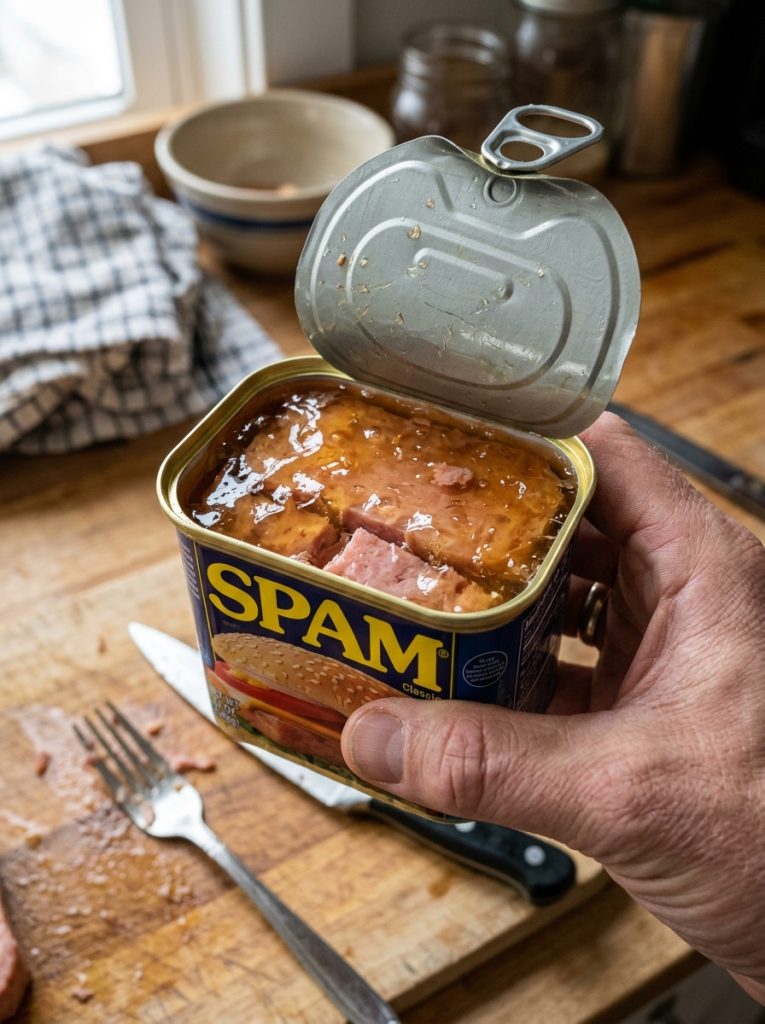
You crack open a can of Spam—maybe for the first time, maybe not—and there it is. That glossy, slightly wobbly layer sitting around the meat like it owns the place.
And if you’ve never seen it before? Yeah… it can feel a little questionable.
Is it supposed to look like that?
Did something go wrong?
Should you even eat it?
Honestly, you’re not alone in wondering. That jelly has confused a lot of people over the years. But here’s the thing—it’s not weird in the way you think. In fact, it’s completely normal. Let me explain.
So… What Is That Jelly, Really?
That clear, slightly firm layer is just natural gelatin. That’s it.
It forms from the meat itself—specifically from collagen, which is a protein found in pork and ham (the main ingredients in Spam). When the meat gets cooked during processing, that collagen breaks down and turns into a liquid. Then, once the can cools… it sets.
Kind of like what happens when you chill homemade broth in the fridge and it turns jiggly the next day.
Same idea. Just… in a can.
No weird additives. No mystery goo. Just a normal byproduct of cooking meat.
Why It Forms (And Why That’s Actually a Good Thing)
Here’s where it gets interesting—because that jelly isn’t just sitting there doing nothing.
It actually helps preserve the meat.
During the canning process, everything is sealed tight and heated to kill bacteria. As it cools, the gelatin forms a sort of protective layer. It locks in moisture and keeps the Spam from drying out.
So yeah, it might look a little odd—but it’s part of why Spam lasts so long on the shelf.
You know how some foods get dry or crumbly after storage? This helps prevent that.
Okay But… Could It Mean the Spam Is Bad?
Short answer: usually, no.
Longer answer: it depends on what you’re seeing (and smelling).
That jelly should look:
- Clear or slightly amber
- Smooth and firm (but not rubbery or slimy)
- Basically odorless
If that’s what you’ve got—you’re fine.
But if something feels off… trust that instinct.
A Quick Reality Check: What Spoilage Actually Looks Like
This is where people get tripped up. The jelly itself isn’t the problem—it’s changes in the jelly that matter.
Watch for things like:
- Cloudy or murky appearance
- Green, gray, or very dark tones
- Strong or sour smell
- Unusual sliminess
And honestly? If the can was bulging, leaking, or dented badly before you opened it, that’s already a red flag.
No second guessing there—just toss it.
Use Your Eyes (They’re Better Than You Think)
When you slide the Spam out of the can, take a second. You don’t need to overanalyze it—but a quick glance helps.
The meat should be:
- Pinkish and uniform
- Firm but not dry
- Free of weird spots or discoloration
The jelly? Light, clean-looking, not dramatic.
If anything looks dramatically different from that… yeah, don’t risk it.
And Then There’s the Smell Test
This one’s simple.
Spam should smell like… cooked, salty meat. Nothing fancy. Nothing strong.
If you open the can and immediately pause because something smells off—that’s your answer.
No need to debate it.
Do You Actually Have to Eat the Jelly?
Nope. Not at all.
It’s completely safe, but that doesn’t mean you have to love it.
Some people cook it right along with the Spam and never think twice. Others rinse it off immediately. Both are fine.
If you’re unsure, try this:
- Fry Spam with the jelly once
- Then try it rinsed off another time
You’ll figure out pretty quickly what you prefer.
What Happens When You Cook It?
Here’s the funny part—the jelly basically disappears.
Once it hits a hot pan, it melts down and blends into the cooking process. In fact, it can help the Spam get that crispy, golden edge people love.
So even if it looks odd cold, it doesn’t stay that way.
Kind of like butter solid in the fridge—totally different once heated.
Storage, Shelf Life… and That Expiration Date
Spam is known for lasting a long time—but it’s not immortal.
Keep it in a cool, dry place. Nothing fancy—just don’t leave it somewhere hot or humid.
And yes, check the date.
Canned foods can last past that date, but quality can slowly drop. If you’re already unsure and it’s way past the date, that’s another reason to skip it.
Also—watch the can itself:
- Rust?
- Deep dents?
- Leaks?
Not worth the risk.
What About Leftovers? (Because It Happens)
Once opened, Spam behaves like any cooked meat.
- Store it in an airtight container
- Keep it in the fridge
- Use it within 3 to 5 days
If you want to stretch it longer, freezing works too. Slice it first—it’s way easier to use later.
Let’s Clear Up a Few Common Myths
People have some strong opinions about that jelly. Not all of them are accurate.
- “It means the Spam is spoiled.”
Nope. It’s normal. - “It’s artificially added.”
Also no. It forms naturally from the meat. - “You have to remove it.”
Only if you want to. - “It’s unhealthy.”
It’s just gelatin—basically protein from the meat.
So yeah… not nearly as dramatic as it looks.
When in Doubt, Keep It Simple
If you’re ever unsure, just run through this quick checklist:
- Can looks normal
- Jelly is clear and mild
- Meat looks consistent
- Smell is neutral
If all that checks out—you’re good.
If something feels off? Don’t overthink it. Toss it.
Final Thought (Because This One’s Simple)
That jelly might look strange at first, especially if you weren’t expecting it. But once you know what it is, it stops being a mystery.
It’s not a defect. It’s not a warning sign. It’s just part of how Spam works.
And honestly? After a couple of times, you probably won’t even notice it anymore.