You know that moment—you spray your windows, wipe them down, step back… and somehow they look worse than before?
Cloudy streaks. Smudges catching the light. That weird dull film that just won’t go away.
It’s frustrating, especially when you’re using vinegar—the one thing everyone swears by. Natural, cheap, “works on everything.” Right?
Well… sort of.
Here’s the thing: vinegar does work. Really well, actually. But only if you use it the right way. Most people aren’t doing anything wildly wrong—they’re just missing a few small details that make all the difference.
Let me explain.
So Why Does Vinegar Work in the First Place?
Vinegar isn’t magic—it just acts like it is.
The real reason it cleans so well comes down to one thing: acetic acid. That’s the part doing all the heavy lifting. It breaks down mineral buildup, grease, and that sticky layer that forms on glass and metal over time.
Think of it like loosening a stubborn jar lid. Vinegar doesn’t scrub the dirt off—it weakens its grip so you can wipe it away easily.
And yes, it can kill some bacteria too. Not hospital-level disinfecting, but enough for everyday cleaning. Kitchen counters, bathroom fixtures, windows—it handles those just fine.
So if vinegar is so effective… why the streaks?
The Real Problem: Tiny Mistakes That Add Up
Most streaky results don’t come from vinegar itself—they come from how it’s used.
Honestly, a few of these are so common you’ve probably done at least one without thinking.
1. Using it straight from the bottle
It feels logical—stronger means better, right?
Not here.
Undiluted vinegar can leave residue and even damage certain finishes. It’s a bit like using too much detergent in the washing machine—you end up with buildup instead of clean.
2. Cleaning the wrong surfaces
Vinegar and natural stone? Bad combination.
Granite, marble… they don’t handle acid well. It slowly eats away at the surface, leaving dull spots that don’t come back.
Same goes for:
- Waxed furniture
- Certain electronics
- Hardwood floors (this one surprises a lot of people)
3. Using the wrong cloth
Paper towels seem convenient—but they’re often the reason behind those annoying streaks.
They leave lint. Tiny fibers. And once you notice it… you really notice it.
Not All Vinegar Is Created Equal
If you’re cleaning windows, stick with distilled white vinegar.
It’s clear, it’s consistent, and it won’t leave behind any color or residue. Other types—like apple cider vinegar—can technically clean, but they’re more likely to leave a film or slight tint.
Quick rule:
- Look for vinegar with around 5% acidity
- Keep it simple—no need for anything fancy
This isn’t the place for “organic infused rosemary vinegar” or anything like that.
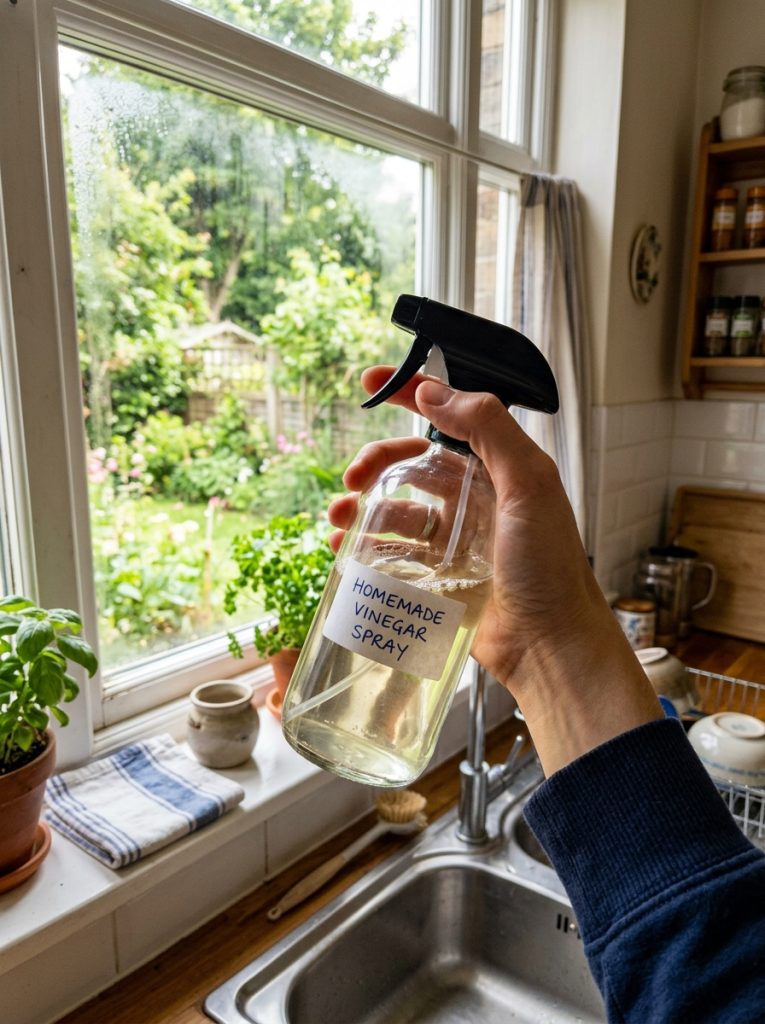
The Mix That Actually Works
This is where people tend to eyeball it… and that’s usually where things go sideways.
Here’s the sweet spot:
- 1 part distilled white vinegar
- 1 part water
That’s it.
If your windows are extra grimy (think: kitchen splatter or hard water spots), you can go a little stronger—maybe 2 parts vinegar to 1 part water. But don’t push it too far.
And if you’ve ever thought, “Maybe I’ll just add a splash more…”—yeah, that’s often when streaks show up.
Tools Matter More Than You Think
You could have the perfect solution and still get mediocre results if your tools aren’t doing their job.
Microfiber cloths = non-negotiable
They’re soft, absorbent, and don’t leave lint behind. That alone makes a huge difference.
Squeegee = underrated hero
Especially for windows.
It removes excess liquid in one clean motion—no smearing, no over-wiping.
Small habit that helps: wipe the blade after every pass. It sounds tedious, but it prevents dragging dirt back across the glass.
The “No-Streak” Method (Step by Step)
This is where everything comes together.
- Start dry
Wipe the window with a dry microfiber cloth first. Dust and debris are streak-makers. - Spray lightly
You don’t need to soak the glass. A light, even mist works better. - Wipe to loosen dirt
Use a cloth in small circular motions. You’re breaking up grime here—not finishing. - Squeegee from top to bottom
Smooth, steady strokes. Wipe the blade between each pass. - Dry the edges
Quick wipe with a clean cloth—this step gets skipped a lot, and it shows.
And that’s it. No buffing for five minutes. No chasing streaks.
It’s Not Just for Windows (But Be Selective)
Once you get the hang of it, vinegar becomes one of those “grab it for everything” cleaners.
Works great on:
- Stainless steel (just follow the grain)
- Glass tables
- Bathroom faucets and showerheads
Let it sit for a couple of minutes on mineral buildup—especially in the bathroom—and it’ll wipe right off.
But again… skip:
- Stone surfaces
- Hardwood floors
- Anything with a delicate finish
It’s powerful, but it’s not universal.
Those Viral Vinegar Hacks—Worth It?
Some are surprisingly good.
Heating a bowl of vinegar and water in the microwave? That one actually works. The steam loosens dried food, so you can wipe it out in seconds.
But others… not so much.
Using vinegar on hardwood floors is a popular tip—and a risky one. It slowly dulls the finish, and once that happens, there’s no quick fix.
If something sounds a little too easy or too universal, it’s worth double-checking.
A Few Safety Notes (Quick but Important)
Vinegar is natural—but that doesn’t mean mix it with everything.
Never combine it with:
- Bleach
- Hydrogen peroxide
That can create harmful gases. Not something you want lingering in your kitchen.
Also:
- Use it in a ventilated space
- Wear gloves if your skin is sensitive
Simple stuff, but easy to overlook.
Why So Many People Stick With Vinegar Anyway
Honestly, once you get the method right, it’s hard to go back.
It’s cheap. It’s effective. And it replaces a whole shelf of cleaning products.
Plus, it’s easier on the environment. No heavy chemicals, no complicated labels, no plastic overload from multiple bottles.
It’s not perfect—but it’s reliable. And sometimes that’s exactly what you need.
A Few Quick Questions People Always Ask
Can vinegar remove mold?
Yes—especially surface mold. Spray it, let it sit for about an hour, then scrub.
Is it safe everywhere?
No. Avoid stone, wood finishes, and screens.
How often should you clean windows with it?
Every couple of months works for most homes. More if you’ve got pets, kids, or a lot of dust.
Final Thought (Because This Is Where It Clicks)
If vinegar hasn’t worked for you before, it probably wasn’t the vinegar.
It was the ratio. The cloth. The surface. The little things.
Fix those—and suddenly it’s not streaky anymore. It’s clear, bright, and honestly kind of satisfying.
You know that clean-window feeling? When the light hits just right and you almost walk into the glass?
Yeah. That one.