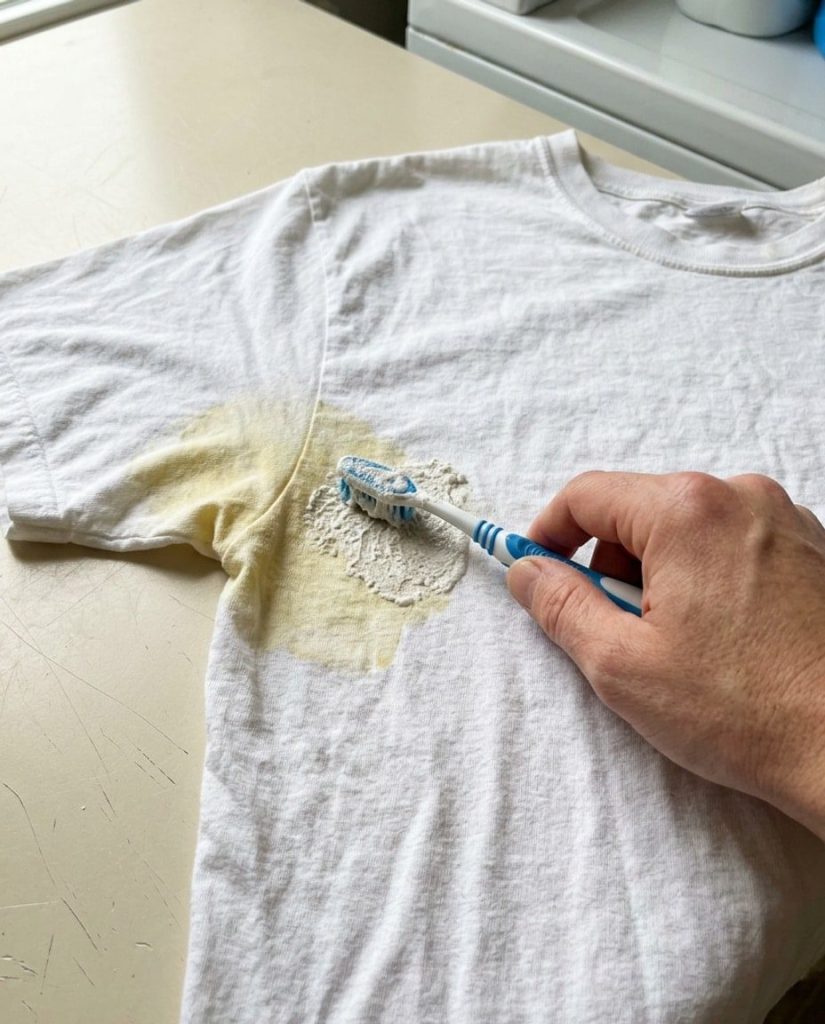
Those yellow underarm patches aren’t just sweat. They form when sweat reacts with the aluminum in antiperspirant, and the mix bonds to the fabric. Chlorine bleach reacts with it too, which is why bleached shirts often come out more yellow.

The Paste
- 1 tablespoon dish soap
- 2 tablespoons 3% hydrogen peroxide
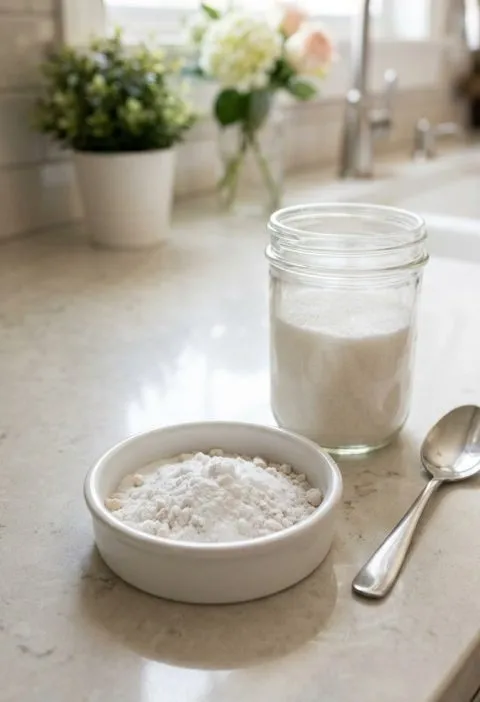
- 1 tablespoon baking soda
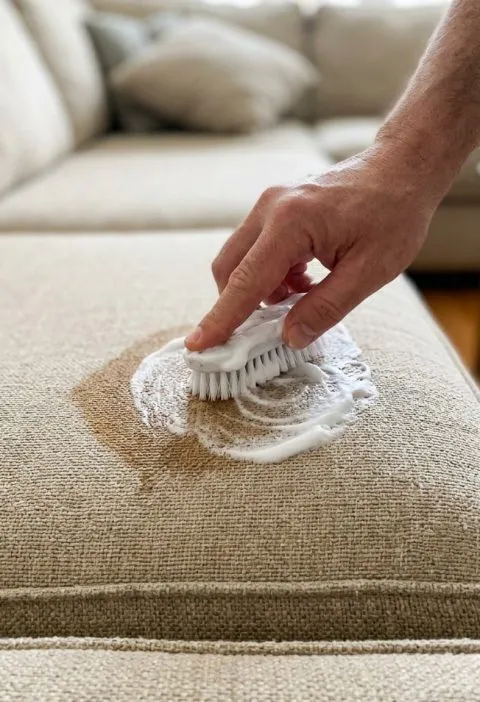
Mix in a small bowl. Lay the shirt flat and work the paste into the stain on both sides of the fabric with an old toothbrush. Leave it for 30 to 60 minutes. Wash in the warmest water the label allows.
Check before you dry it. If the stain is still there, repeat. Heat from the dryer sets what’s left.
For Old, Stiff Stains
Soak the shirt first in a bucket of warm water with a scoop of oxygen bleach for a few hours, then use the paste.
For Colored Shirts
Skip the peroxide, which can lighten color. Use white vinegar instead: soak the stain in half vinegar, half water for 30 minutes, then wash.
Prevent Them
- Let deodorant dry before you dress.
- Use less of it. More product means more buildup.
- Wash shirts soon after wearing them. Stains get harder to remove with time.
- Turn shirts inside out in the wash.
- Try an aluminum-free deodorant if stains are a constant problem.
A Safety Note
Never mix bleach with vinegar, ammonia or any other cleaner. It makes toxic gas.
Frequently Asked Questions
Why did bleach make my shirt more yellow?
Bleach reacts with the proteins in sweat and with antiperspirant residue.
Does lemon juice work?
Lemon juice and sunlight lighten mild stains on white cotton. Rinse well afterward.
Can I use this on a collar ring?
Yes. The same paste works on collar and cuff grime.