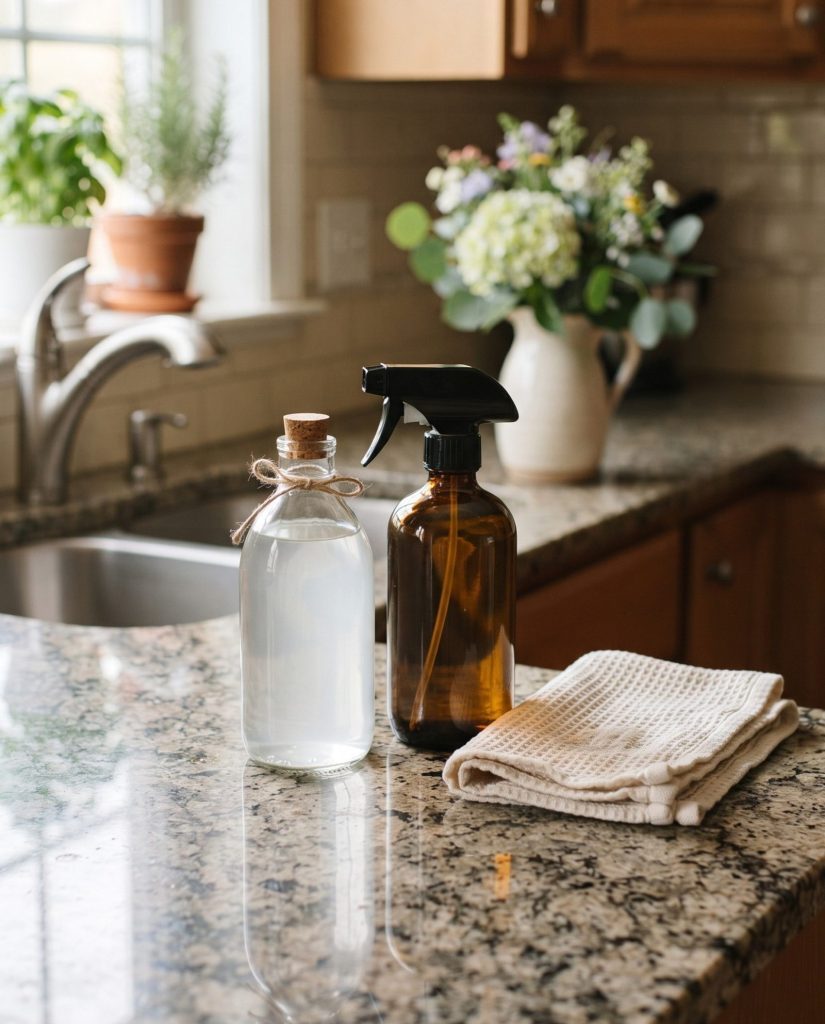
I clean almost everything with vinegar and water. Then I wiped my new granite counter with it every day for a month and noticed dull, cloudy patches.
Vinegar is an acid, and some surfaces don’t like acid at all. Here’s where to skip it.

1. Granite, Marble and Natural Stone
Acid can etch natural stone, leaving dull spots. Use a cleaner made for stone, or mild dish soap and warm water.
2. Hardwood Floors
Many floor makers advise against vinegar because it can dull the finish over time. Use the cleaner your floor maker recommends.
3. Cast Iron Pans
Vinegar can strip the seasoning and invite rust. Wash with hot water, dry well and rub with a little oil.
4. Phone, TV and Computer Screens
Screens often have special coatings that acid can damage. Use a dry microfiber cloth or a cleaner made for screens.
5. Egg Spills
Acid makes egg proteins firm up, which can make a raw egg mess harder to wipe away. Use cool, soapy water first.
6. Waxed or Oiled Wood Furniture
Vinegar can strip wax and leave the wood looking flat. Use a furniture polish or a damp cloth.
7. Your Clothes Iron
Many iron makers say not to run vinegar through the tank because it can harm the inner parts. Check your manual before descaling.
8. Knives Left Soaking
A quick wipe is fine, but leaving good knives in vinegar can pit and dull the blade. Wash, dry and put them away.
One More Rule
Never mix vinegar with bleach. Together they make a toxic gas.
Frequently Asked Questions
Is vinegar safe on glass and tile?
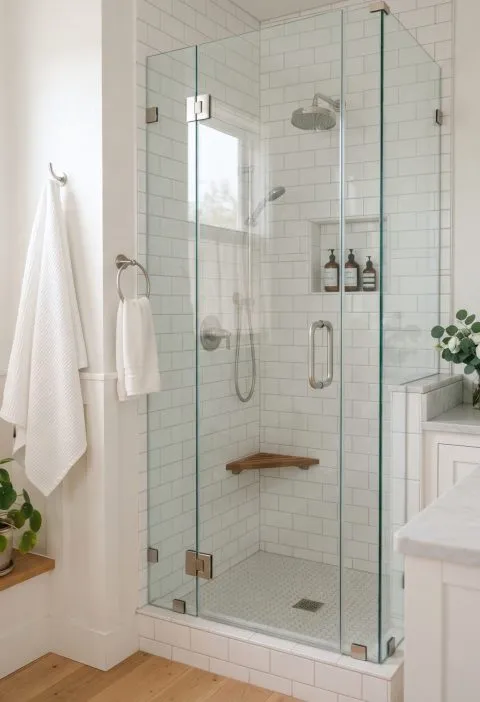
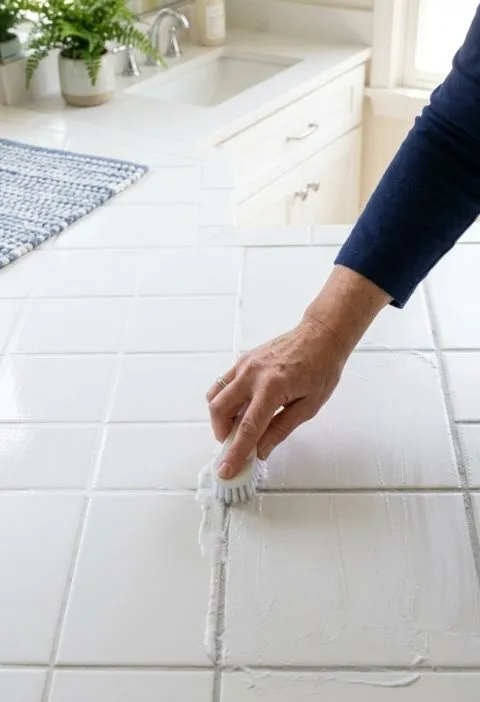
Yes, vinegar and water work well on glass, glazed tile and most sinks.
What about stainless steel?
A light wipe is fine. Rinse and dry it so it doesn’t leave spots.
Can I use lemon juice instead on stone?
No. Lemon is an acid too.
Keep the vinegar for windows and kettles, and give the granite a gentler hand.