Most of us plug things in at night and forget about them. For a lot of gadgets that’s fine. But a few battery-powered things should be charged only while you are awake and close by, according to consumer safety officials.

Why some batteries are different
E-bikes, scooters, power banks, hoverboards, cordless tools and laptops run on lithium-ion batteries. These batteries pack a lot of energy into a small space. When one is damaged, poorly made or used with the wrong charger, it can overheat and catch fire very fast, and that fire is hard to put out.
The U.S. Consumer Product Safety Commission (CPSC) tells e-bike and scooter owners to charge only when someone is there, and not overnight. Fire departments give the same advice for other large lithium-ion batteries.
The things to charge only while you’re awake
- E-bike and e-scooter batteries. These are the biggest batteries most homes have. Charge them while you are home and awake, and unplug them when they are full.
- Hoverboards and other ride-on toys. Same type of battery, same rule.
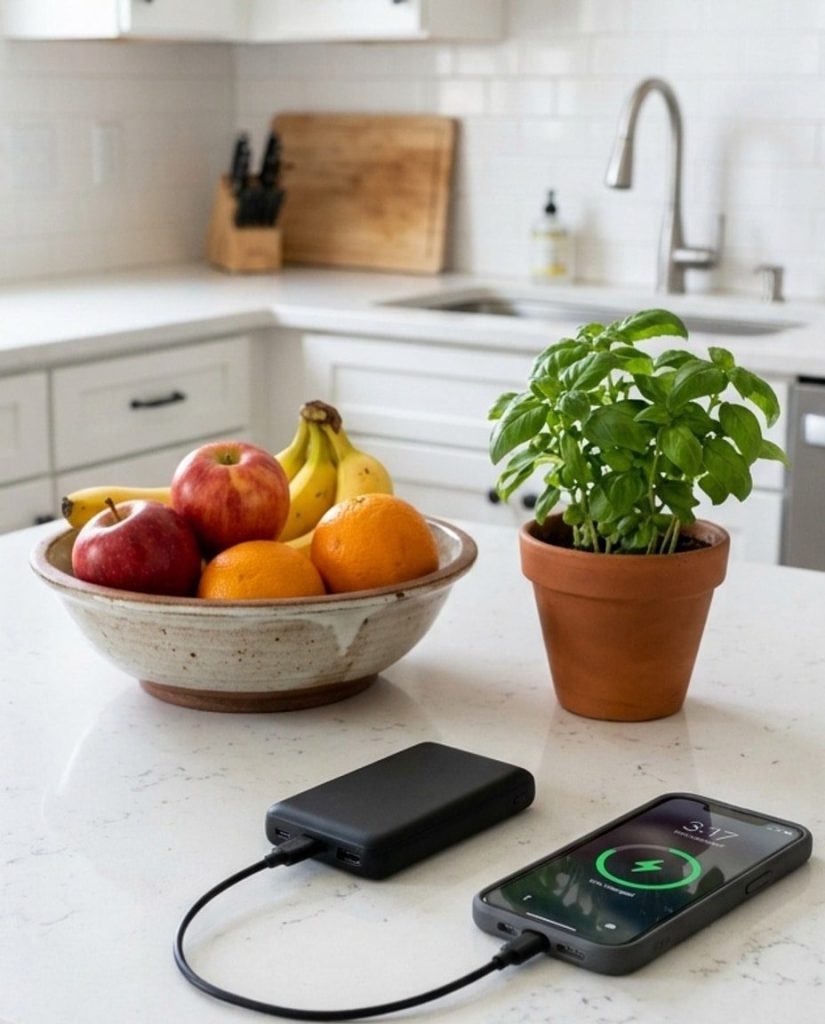
- Power banks. The small backup batteries in purses and drawers. Charge them on a hard surface, in sight, and unplug them when full.
- Cordless tool batteries. Drill and leaf blower packs belong on their charger in the garage while you are working, not running all night.
- Laptops on a bed or couch. A laptop under a pillow or on a soft blanket can’t cool off. Charge it on a desk or a table.
Safe charging habits
- Use the charger that came with the device, or one the maker approves. Cheap universal chargers can push a battery too hard.
- Charge on a hard, flat surface, never on a bed, couch or pillow.
- Keep charging away from your way out. Don’t charge an e-bike or scooter in a hallway or by the front door, where a fire would block your exit.
- Stop using a battery that is swollen, hot, leaking or smells odd. Take it to a battery recycling drop-off; don’t put it in the trash.
- Unplug when it’s full.
- Have a working smoke alarm near where you charge.
What about phones?
Phones and tablets have small batteries and charging protection built in. The same common sense still applies: use a good charger, and don’t charge a phone under your pillow.
Sources
- U.S. Consumer Product Safety Commission, Micromobility products and lithium-ion battery safety: https://www.cpsc.gov/Safety-Education/Safety-Education-Centers/Micromobility-Information-Center
- U.S. Fire Administration, Lithium-ion battery safety: https://www.usfa.fema.gov/prevention/home-fires/prevent-fires/lithium-ion-batteries/
- National Fire Protection Association, Lithium-ion batteries: https://www.nfpa.org/education-and-research/home-fire-safety/lithium-ion-batteries