A can of basic white foam shaving cream costs about a dollar, and it’s a decent cleaner. It’s mostly soap whipped with air, so it clings to a stain instead of running off.
Use plain foam, not gel, and always test a hidden spot first.

1. Upholstery and Car Seat Spots
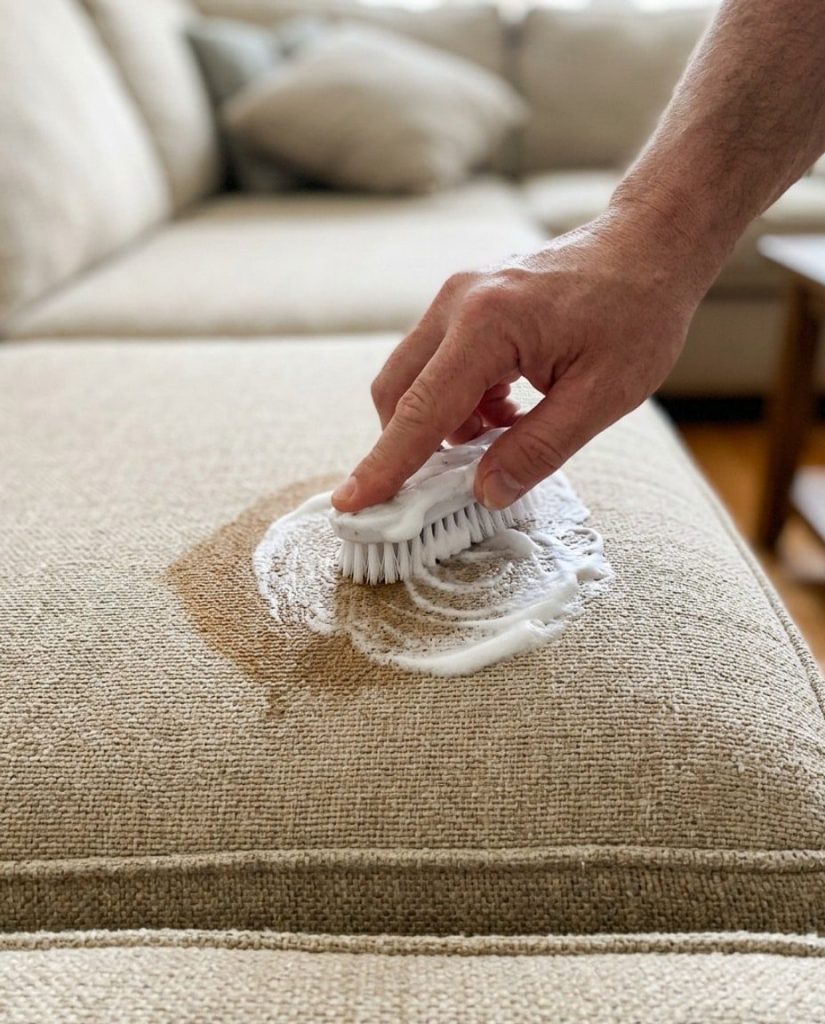
Work a small amount into the stain with a soft brush. Wait 10 minutes, then blot with a damp cloth until the foam is gone. Let it air dry.
2. Carpet Spills
Blot the spill first. Cover it with foam, wait 15 minutes, and blot with a damp cloth. Good on fresh food and drink spills.
3. Foggy Bathroom Mirrors
Rub a thin layer on the glass and buff it off. The mirror stays clear after a shower for a week or two.
4. Stainless Steel Fingerprints
Rub a little on the fridge or dishwasher door with a soft cloth, then wipe clean with a dry one, following the grain.
5. Around the Base of the Toilet
Spread foam on the floor around the toilet, leave it 15 minutes, and wipe it up. The soap lifts residue that causes that stubborn bathroom smell.
6. Jewelry and Chrome Faucets
Foam, a soft toothbrush and a rinse will brighten plain gold, silver and chrome. Skip it for pearls, opals and anything with glued stones.
Where It Doesn’t Work
- Old, set-in stains. It’s a spot cleaner, not a miracle.
- Silk, suede, leather and wool.
- Grease-heavy stains, which need dish soap.
- Blood or pet accidents, which need an enzyme cleaner.
Tips
- Less is more. Too much foam leaves soap in the fabric, and soap attracts dirt.
- Always blot; don’t scrub hard.
- Rinse with a clean damp cloth so no residue stays behind.
Frequently Asked Questions
Does the brand matter?
No. The cheapest plain white foam works.
Can I mix it with dish soap?
A few drops of dish soap in the foam helps on greasy spots. Rinse well.
Is it safe on a mattress?
For small surface spots, yes. Use very little and let it dry fully.