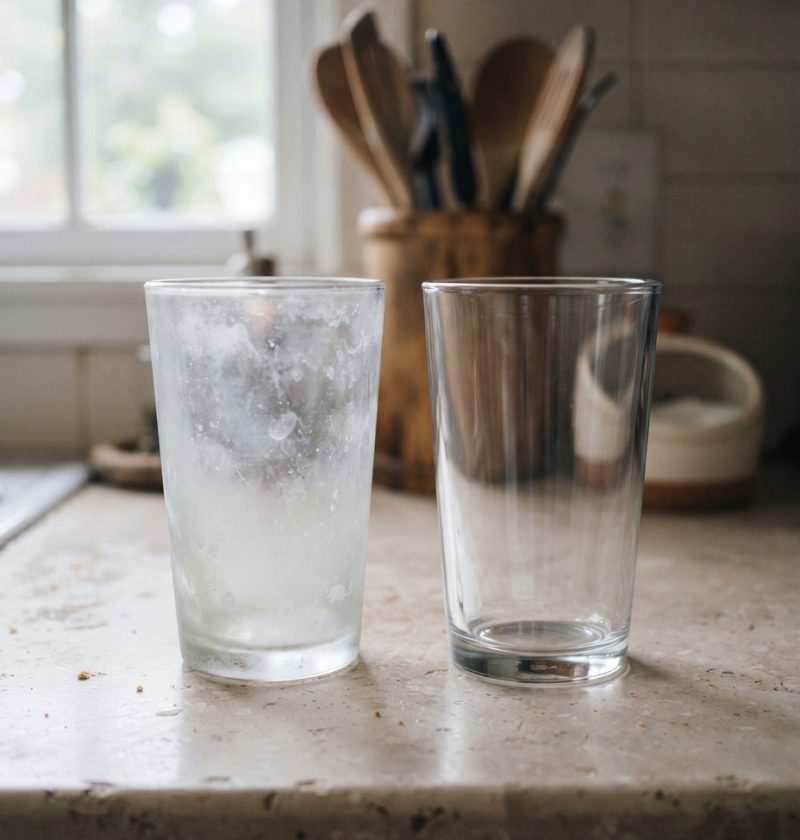
Everything came out of my dishwasher with a dull white haze on it. Glasses, plates, the inside of the machine. I ran a cleaner through and it came back within a week. There are two different problems that look identical, and they need opposite fixes. First Work Out Which One You Have Take a hazy glass and soak it in white vinegar for five minutes. If the film comes off, it is hard water minerals. Limescale from calcium and magnesium in your water. If the film stays, it is etching. The glass surface itself has been damaged and it is …
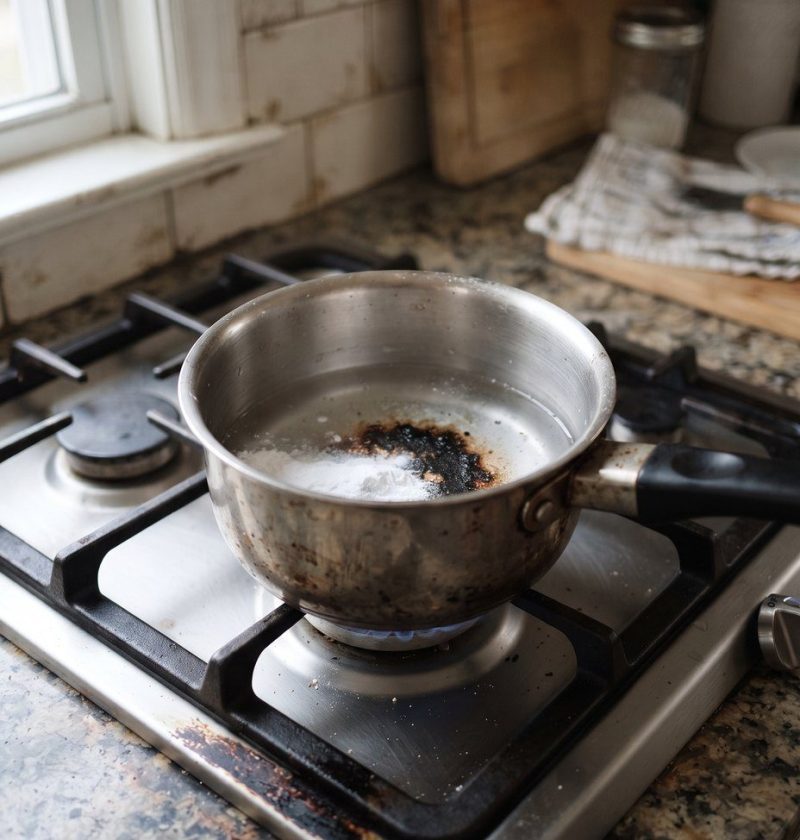
I left a pan of rice on the heat too long and the bottom went black. I scrubbed at it for twenty minutes with a scouring pad and made almost no difference. Then I stopped scrubbing and let chemistry do it, and it lifted off in one piece. The Method for Stainless Steel Cover the burnt layer with water — about half an inch. Add two tablespoons of baking soda. Bring it to a simmer for ten to fifteen minutes. Take it off the heat, let it cool until you can touch it, then push at the edge of the …
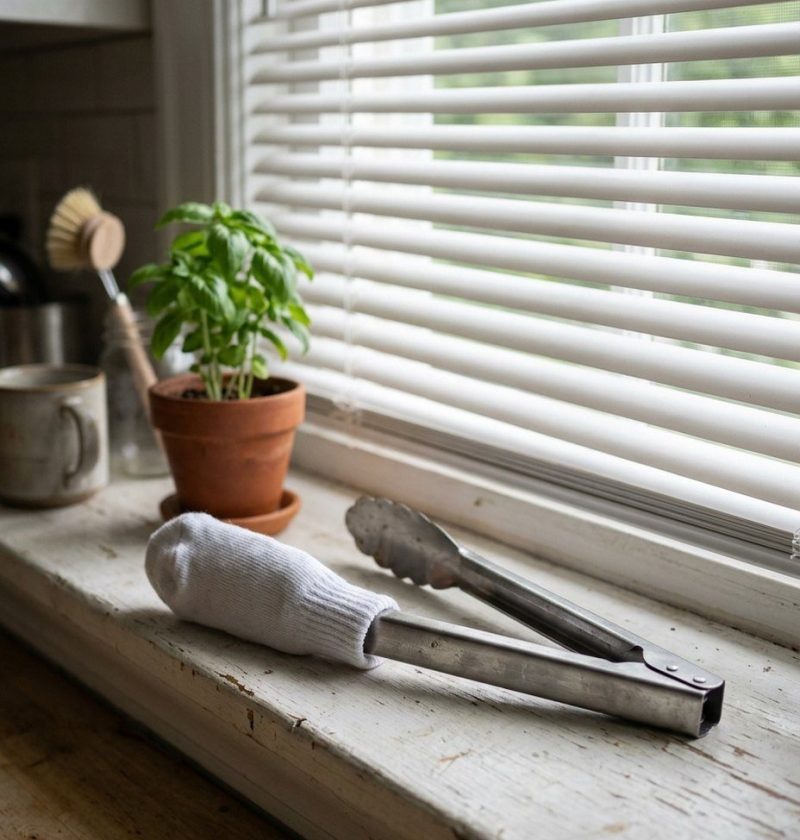
I had been cleaning blinds one slat at a time with a cloth, which takes an hour and leaves streaks. Then someone showed me the sock. An old sock on your hand, tongs, and ten minutes. The whole window. How to Do It Take a pair of kitchen tongs and an old cotton sock. Slide the sock over one arm of the tongs, or use two socks and cover both arms. Secure it with a rubber band if it slips. Dampen the sock slightly. Water with a splash of white vinegar is enough. It should be damp, not wet — …
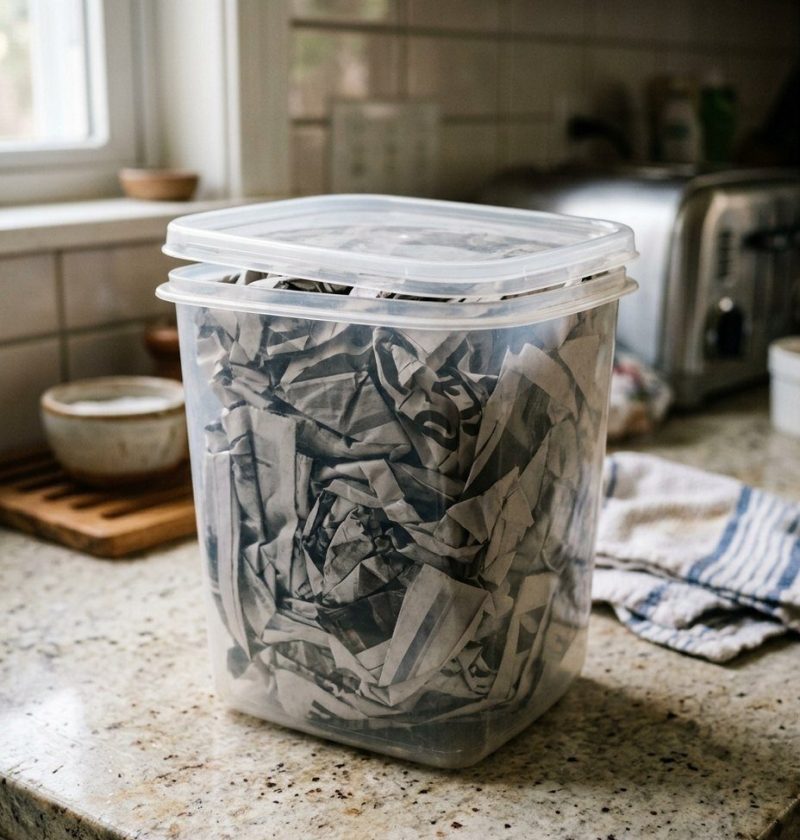
I had a container that had held curry once, months ago. It had been through the dishwasher a dozen times since. It still smelled like curry, and so did anything I put in it. Two of these actually fix it, and the rest are the ones people repeat online without testing. Why Plastic Holds Smells and Glass Does Not Plastic is porous at a microscopic level, and the molecules that carry smell are oils. Those oils soak into the surface, so they are not sitting on the plastic where soap can reach them — they are in it. Detergent and …
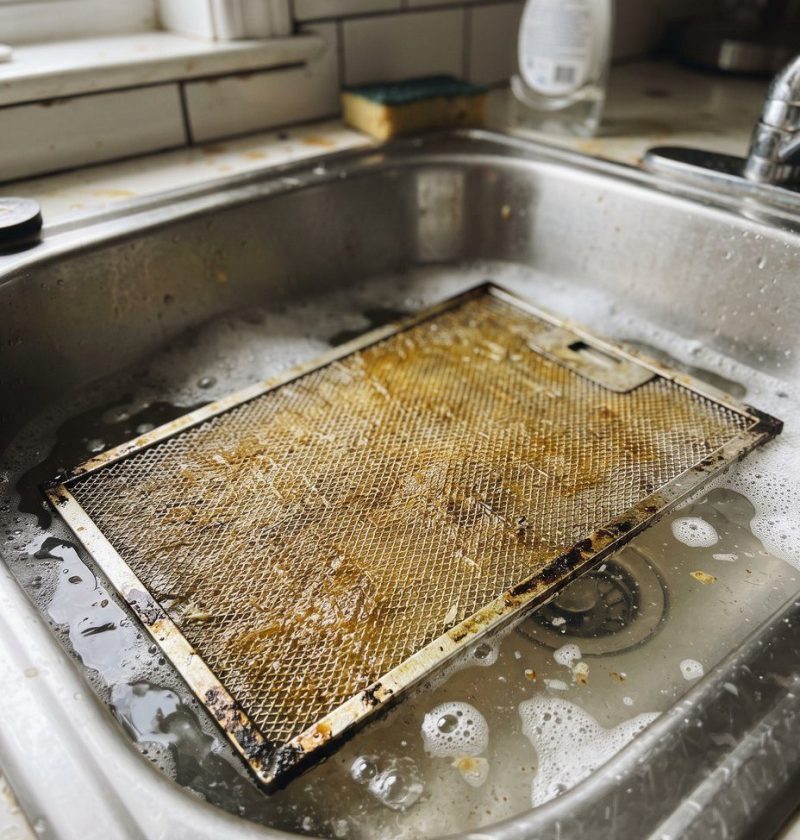
I pulled the metal filter out of my range hood and could not see through it. It was a solid sheet of yellow-brown grease. I nearly bought a new one. Then I put it in the sink with boiling water and dish soap, and twenty minutes later it looked new. The Method That Actually Works Boiling water, dish soap, and baking soda. In that order, and the water has to be genuinely boiling — hot tap water will not do it. Fill the sink or a roasting pan with boiling water. Add a good squeeze of dish soap and about …
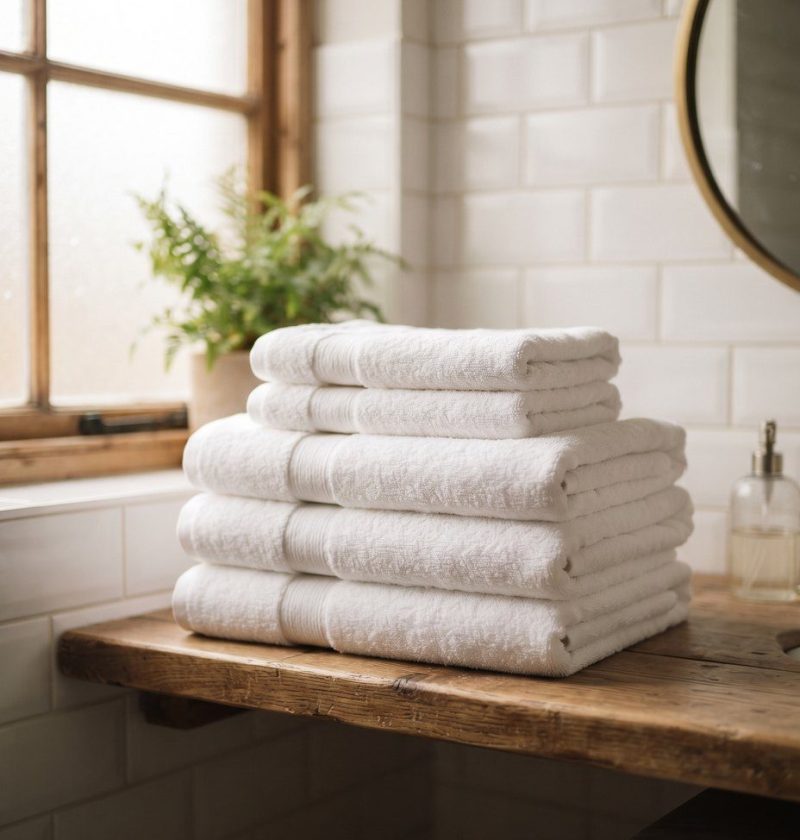
My towels went from soft and thirsty to sitting on my skin and pushing the water around. I assumed they were worn out. They were not worn out. They were coated. What Is Really on Your Towels Fabric softener. This is the main cause, and it is the thing most people are using to try to fix it. Fabric softener works by leaving a thin waxy film on the fibers. That film is what makes a towel feel soft in your hand. It is also waterproof. Cotton absorbs water; wax repels it. Every wash with softener adds another layer. Too …
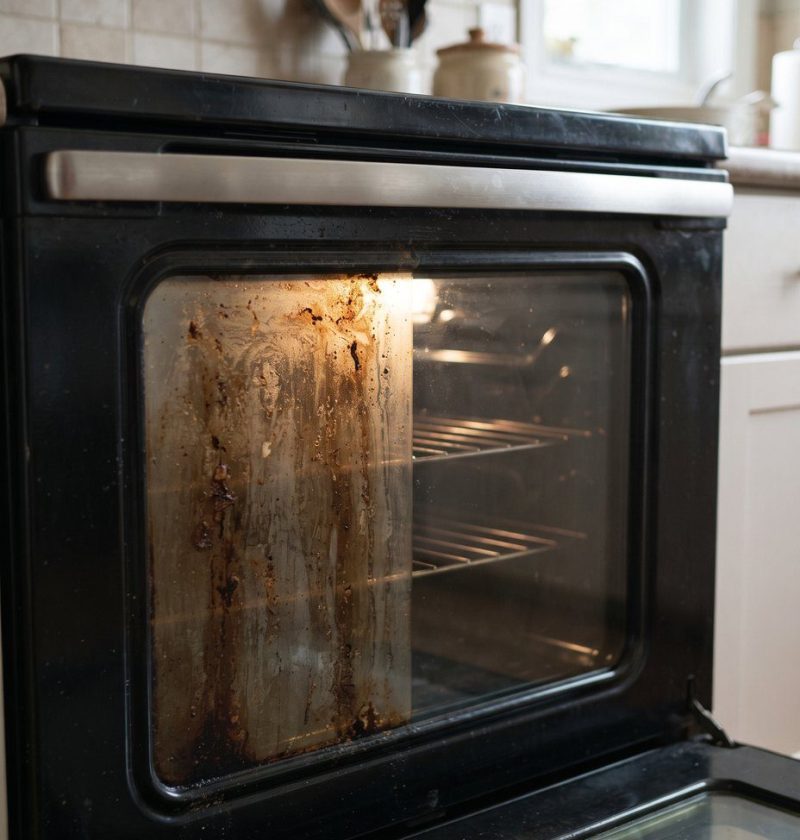
The inside of my oven door had a brown film on it that had been building up for years. Oven cleaner took the top layer off and left the rest. A dishwasher tablet and a cup of hot water did what the spray could not. What You Need One dishwasher tablet — the solid pressed kind, not a gel pack. A mug of hot water. That is it. Powder tablets work best because they hold their shape while you scrub. A liquid pod bursts and runs everywhere. How to Do It Dip the tablet in hot water for a few …
My grandfather dropped a tea bag into the pot every time he made beef stew. I assumed it was wartime habit — something you did when you were short of stock. It turns out to be a real technique, and it’s still the thing that makes his stew better than mine was. What Tea Does to Beef The tannins tenderize. Black tea is full of tannins, and tannins break down protein. In a long braise that means tougher cuts give up sooner and end up silkier. It’s the same reason some old recipes use red wine, which is also tannic. …
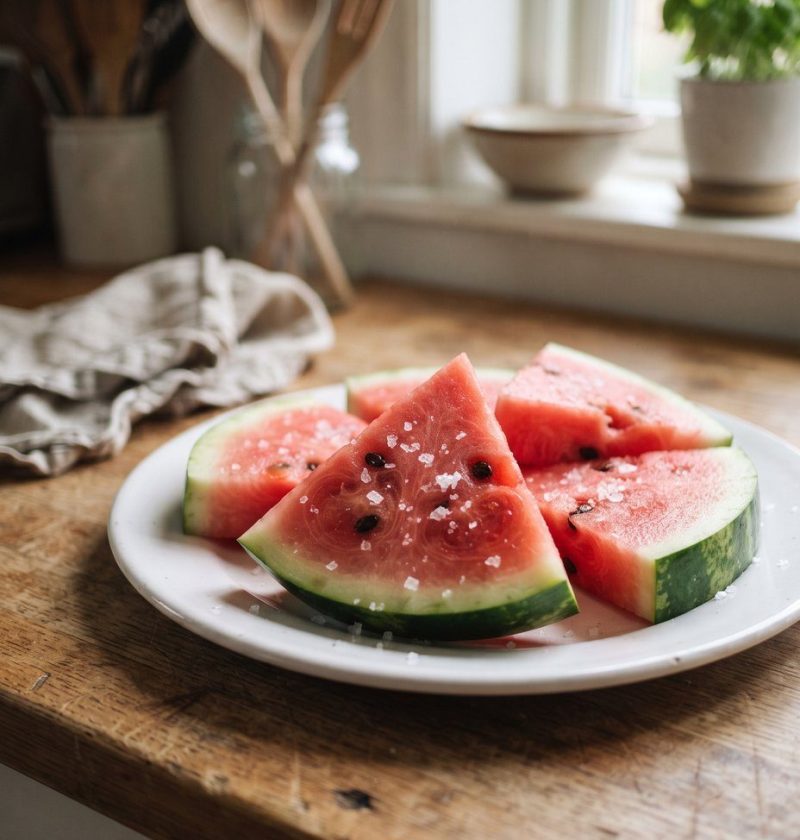
Someone handed me a slice of watermelon with salt on it at a barbecue and I took it to be polite. I have salted every slice since. It is not a novelty — it is what watermelon is supposed to taste like. Why It Makes It Sweeter This is the counterintuitive part: salt doesn’t cover the sweetness, it amplifies it. Salt suppresses our perception of bitterness. Watermelon has a faint bitter edge you don’t consciously notice, and once salt mutes it the sweetness comes forward with nothing in the way. Salt also makes the watermelon release a little juice at …
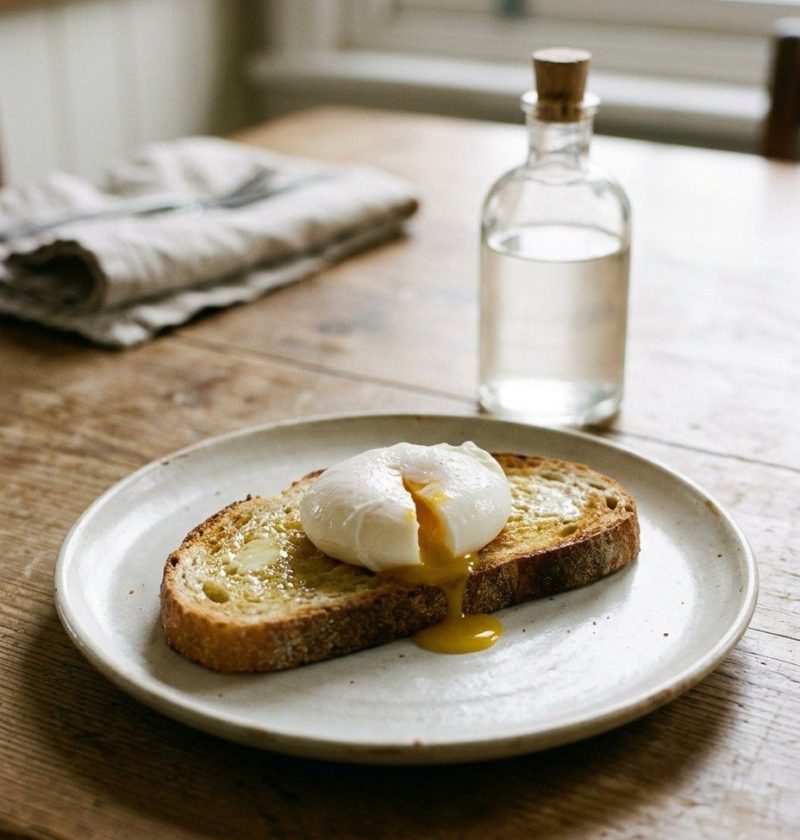
Poached eggs used to defeat me. I’d get a pan of white wisps and a sad naked yolk sitting on the bottom. A splash of vinegar in the water fixed it on the first try. Why It Works Egg white is protein. Acid makes protein set faster. When the egg hits acidulated water the outside of the white firms up almost immediately, which holds the rest of it together instead of letting it drift off into the pan. Without acid, the thin outer white has time to spread before it cooks, and that is the cloud you’re left skimming out. …