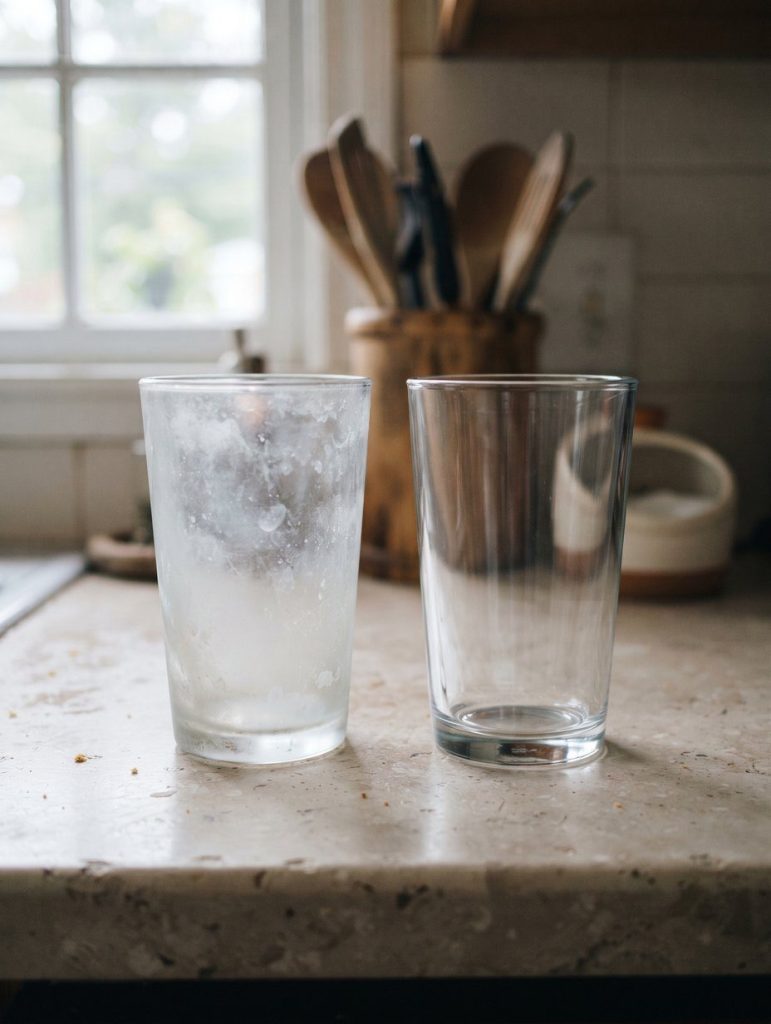
Everything came out of my dishwasher with a dull white haze on it. Glasses, plates, the inside of the machine. I ran a cleaner through and it came back within a week.
There are two different problems that look identical, and they need opposite fixes.
First Work Out Which One You Have
Take a hazy glass and soak it in white vinegar for five minutes.
If the film comes off, it is hard water minerals. Limescale from calcium and magnesium in your water.
If the film stays, it is etching. The glass surface itself has been damaged and it is permanent.
This test matters because the fix for one makes the other worse.
If It Is Hard Water
Use a rinse aid, and keep the reservoir filled. This is the single biggest fix and most people with hard water are not using it. Rinse aid lowers the surface tension of the water so it sheets off instead of sitting in droplets that dry and leave their minerals behind.
Run the hot cycle. Minerals deposit more at the low temperatures of an eco cycle.
Put a cup of white vinegar on the top rack and run the machine empty. Once a month. It dissolves the scale inside the machine, which is where the film keeps coming from.
Check the salt if your machine has a softener compartment. Many do and many people never fill it.
If It Is Etching
Etching cannot be reversed. But you can stop it getting worse on everything else.
Use less detergent, not more. Etching is caused by too much alkaline detergent in soft water, and the usual instinct is to add more when things look dull. That makes it worse.
Stop pre-rinsing every plate. Detergent needs food soil to work on. With nothing to grab, it attacks the glass instead.
Turn the water temperature down. Very hot water plus strong detergent plus soft water is the worst combination for glass.
Do not use a heated dry cycle on glass. Open the door and let it air dry.
Things That Also Cause It
A blocked filter. Pull it out and look. If it is full, the machine is recirculating dirty water and depositing it back on the dishes.
Overloading. Water has to reach every surface. Dishes that shield each other come out coated.
Old detergent. Powder and tablets lose strength once the box has been open a few months and they absorb moisture.
Start With the Vinegar Test
Five minutes tells you which problem you have.
And if it is hard water, the rinse aid alone usually fixes it.