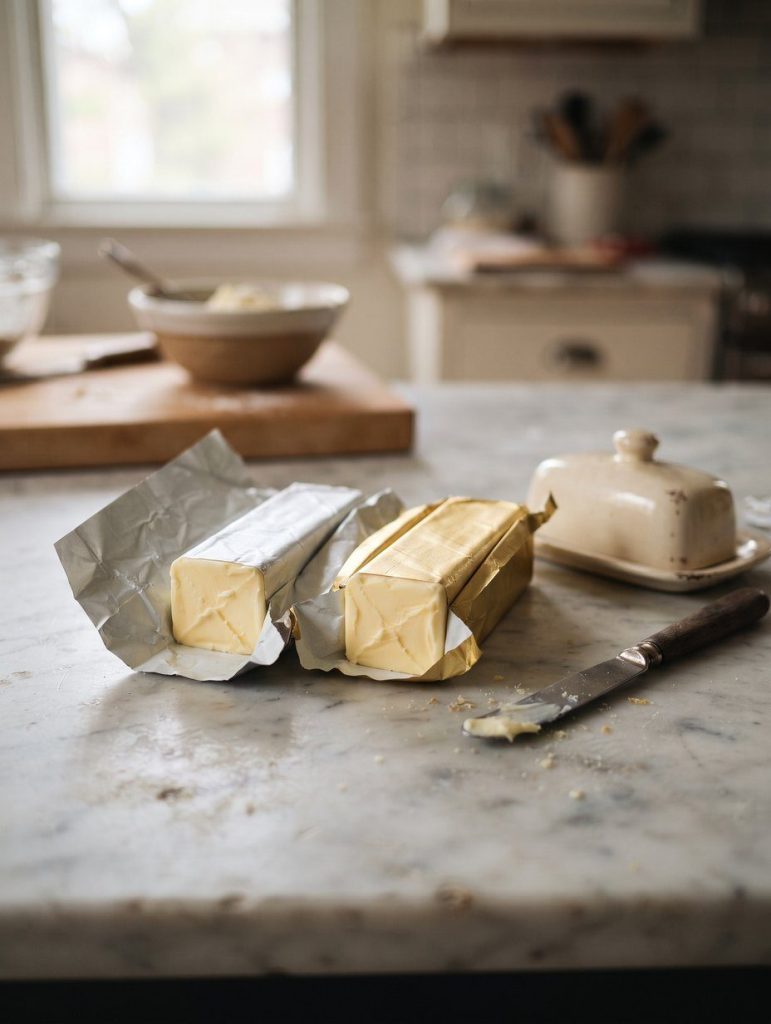
Most recipes say unsalted butter. Most people have salted butter in the fridge and use it anyway, and usually nothing bad happens.
So why does every baking book insist on it? There is a real reason, and it is not the one most people assume.
The Real Reason Bakers Want Unsalted
Control. Salted butter is not salted to a standard. Different brands use different amounts — roughly a quarter to a half teaspoon per stick. Some use twice as much as others.
If you bake with salted butter you do not know how much salt is in your dough, and you cannot correct for it. In a recipe developed to a precise balance, that matters.
Freshness. Salt is a preservative, so salted butter has a longer shelf life and can sit around much longer. Unsalted butter has to be fresh, and fresh butter tastes better.
Professional bakers use unsalted and add their own salt. That is the whole trick.
Where It Genuinely Matters
Buttercream and frosting. Butter is most of the recipe, so the salt is not diluted by anything. Salted butter frosting can taste properly salty.
Shortbread and butter cookies. Very few ingredients, mostly butter. Nowhere for the salt to hide.
Laminated pastry — croissants, puff pastry. Large amounts of butter and a precise recipe.
Anything where you are already adding salt by weight and the total matters.
Where It Really Does Not
Cakes, brownies, muffins, quick breads. Butter is a small part of the total and the salt disappears into it. Use what you have.
Anything savory. Cooking vegetables, frying eggs, a pan sauce, mashed potatoes. You were going to add salt anyway.
On toast. Salted, and it is not close.
How to Substitute Properly
Using salted butter where the recipe says unsalted: reduce the added salt by a quarter teaspoon per stick (half cup) of butter.
Using unsalted where it says salted: add a quarter teaspoon of salt per stick.
That is it, and it is accurate enough for anything in a home kitchen.
One Real Trap
The butter in the wrapper is not always what you think. European-style butter has more fat — 82 to 86 percent instead of 80 — and less water.
That difference changes pastry and cookies more than the salt does. Less water means less steam, which means less spread and a shorter, crisper result.
If you are going to be precise about butter, the fat content is the number worth reading, not the salt.
What to Actually Buy
If you only keep one, keep salted — it is more useful day to day and the substitution is easy.
If you bake often, keep both, and keep the unsalted in the freezer where it will not go stale waiting for you.