There’s a very specific kind of disappointment that hits when you slice into a piece of fruit that looked perfect.
You know the one.
The avocado that refuses to soften for days—then suddenly turns into brown mush overnight. The peach that smells like summer but tastes like damp cardboard. The watermelon that promises sweetness and delivers… watery regret.
It’s frustrating. And honestly? A little personal.
I used to stand in the produce aisle doing what I thought was “choosing carefully”—pressing things, flipping them over, giving them a hopeful sniff—like I was auditioning for a role I didn’t quite understand. Half the time, I got it wrong.
Then something shifted. A short stint working at a farmers market—nothing glamorous, just early mornings and crates of fruit—showed me something simple but powerful:
Great fruit picking isn’t luck. It’s pattern recognition.
Once you see it, you can’t unsee it.
The Golden Rules (Or: What Almost Every Good Fruit Has in Common)
Before we get into specific fruits, let’s talk fundamentals. These are the quiet rules that apply almost everywhere.
1. Use all three senses—yes, all of them.
Sight tells you part of the story. Touch fills in the gaps. Smell? That’s often the final verdict. If a fruit smells like nothing, it usually tastes like nothing. Simple.
2. Damage is a dealbreaker.
Bruises, cuts, overly soft spots—they’re not “minor flaws.” They’re early warnings. Fruit doesn’t heal. It only continues in the direction it’s already going.
3. Color lies sometimes.
It sounds harsh, but it’s true. Fruits are often picked early, shipped long distances, even exposed to gases to speed up visual ripening. That glowing red? Not always a guarantee.
4. Season matters more than you think.
A strawberry in peak season tastes like candy. The same strawberry out of season? It’s just… red.
5. When in doubt—smell it.
Honestly, this rule alone will save you money. Sweet aroma = developed sugars. No aroma = not ready.
Let’s Walk the Aisle Together (Fruit by Fruit)
Alright—this is where things get practical.
Avocados: The Drama Queens
Avocados don’t do “middle ground.” They’re either rock-hard or one hour away from collapse.
Here’s the trick:
- Gently press near the stem. It should give slightly—not cave in.
- Pop off the tiny stem cap. Green underneath? Good. Brown? Walk away.
And yes, buy them in stages. One for today, one for later, one for “maybe Friday if life goes well.”
Bananas: The Predictable Ones
Bananas are refreshingly honest.
- Bright yellow → ready now
- Green → patience required
- Brown spots → sweeter, softer (great for baking)
Here’s a small detail people miss: bananas ripen faster in bunches. Separate them if you want to slow things down. It’s like social influence—but for fruit.
Berries: High Risk, High Reward
Berries are fragile. They don’t forgive neglect.
Look for:
- Bright, even color
- No moisture pooling at the bottom
- No sneaky mold hiding underneath (always check)
And please—open the container. A quick smell tells you everything. Sweet is good. Sour? That batch is already on its way out.
Melons: The Confidence Test
Melons are where people start second-guessing themselves.
But here’s the thing—you can tell.
For cantaloupe and honeydew:
- Color should lean golden or creamy—not pale green
- The stem end should smell like… well, melon
- A slight softness at one end is a good sign
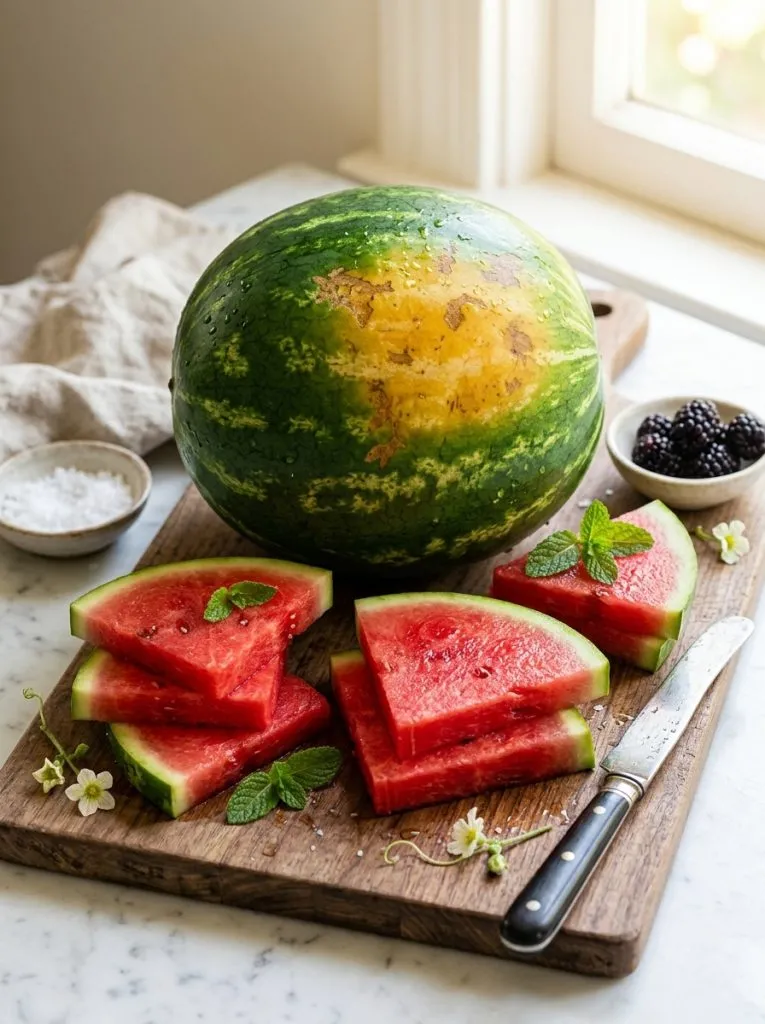
Watermelons? That’s a whole ritual:
- Look for a creamy yellow field spot (not white)
- Tap it—yes, really. You want a hollow, drum-like sound
- Pick it up—it should feel heavier than expected
It’s oddly satisfying when you get this right.
Citrus: Don’t Be Fooled by Shine
Oranges, lemons, limes—they’re less about appearance and more about feel.
- Heavier fruit = more juice
- Thin skin = better texture
- Slight give when squeezed = good
And here’s a fun contradiction: some of the sweetest oranges look slightly green. Nature doesn’t care about your expectations.
Stone Fruits (Peaches, Plums, Nectarines): The Heartbreakers
These are the ones that hurt the most when you get them wrong.
You want:
- A noticeable fragrance (no smell = no flavor)
- A slight softness—not squishy, just yielding
- No green near the stem (that’s a red flag, ironically)
Here’s the tough truth: if they were picked too early, they might soften—but they’ll never develop full flavor. Texture changes. Taste doesn’t catch up.
Pineapple: Trust Your Nose
Ignore most of the visual cues.
Instead:
- Smell the base—it should be sweet and tropical
- Leaves should look fresh, not dry or brittle
- The body should feel firm with a little give
That “pull a leaf” trick? It works sometimes. Not always. Don’t bet everything on it.
Buying Is Half the Job—What Happens Next Matters Too
Let’s say you picked well. Great. Now don’t ruin it at home.
Some fruits need time on the counter—avocados, peaches, mangoes.
Others prefer the fridge once they’re ready—berries, grapes, citrus.
And here’s a small hack that feels almost unfair:
Put unripe fruit in a paper bag with a banana or apple.
They release ethylene gas—a natural ripening signal. It’s like speeding up the clock, gently.
Organic vs. Conventional—A Practical Take
This topic gets emotional quickly, so let’s keep it grounded.
Some fruits tend to carry more pesticide residue—think strawberries, grapes, peaches. If you’re choosing where to spend more, start there.
Others—like avocados, pineapples, and mangoes—naturally have protective skins. Conventional is generally fine.
You don’t have to go all-in. Just be intentional.
A Few Questions People Always Ask (And Quietly Worry About)
“Should I buy ripe or firm fruit?”
Both. Future you will be grateful.
“Do those ‘ripe’ stickers mean anything?”
Sometimes. But your senses are more reliable.
“Why doesn’t my fruit ripen properly?”
It was picked too early. That decision happens long before you ever see it.
“Should I wash fruit before storing it?”
No. Moisture speeds up spoilage. Wash right before eating.
So… What Actually Changes After All This?
Here’s the honest answer: not everything.
You’ll still pick a bad fruit now and then. That’s part of the deal.
But most of the time? You’ll notice patterns. You’ll trust your instincts. You’ll stop relying on guesswork.
And slowly, something shifts.
You stop standing in the produce aisle hoping for the best—and start choosing with quiet confidence.
No drama. No overthinking.
Just good fruit. Every time.