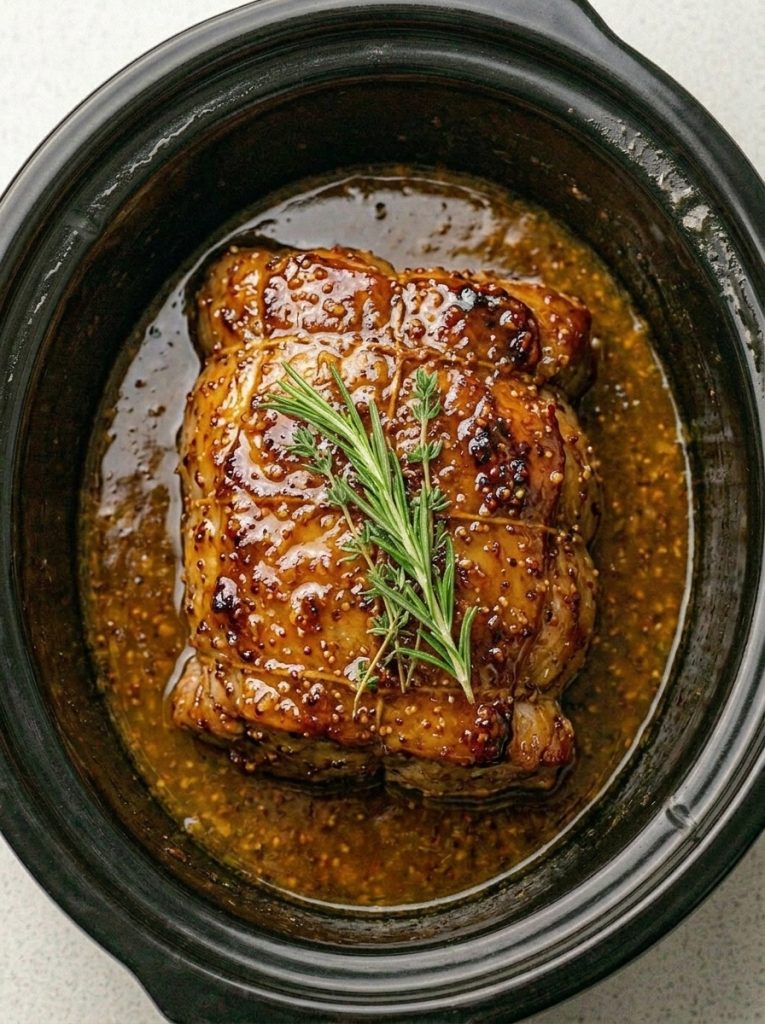
This slow cooker honey mustard pork roast is the recipe I reach for when my schedule is packed but I still want something that feels special. Just four ingredients, a crockpot, and a few hours — and you end up with tender, fall-apart pork coated in a glossy, caramelized honey mustard sauce that looks and tastes like you spent way more time on it than you actually did.
Why You’ll Love It
Only 4 ingredients — honey, mustard, pork, and salt. That’s it, nothing fancy required.
Practically hands-off — the slow cooker does all the work while you get on with your day. Try our Oven Baked 3-Ingredient Church Ladies Beef and Onion Roast next.
That sauce though — it turns deep golden and sticky as it cooks, clinging to every slice in the best possible way.
Great for leftovers — piled onto toasted rolls with coleslaw, it makes an incredible next-day sandwich.
Flexible cooking time — low and slow for 7–9 hours, or high for 3½–4½ hours if you’re short on time.
About the Ingredients
Pork shoulder or pork loin both work here, and I’ve used both at different times depending on what was on sale. Shoulder is more forgiving and gives you more of that melt-apart, shreddable texture — which is what I usually want. Loin will slice more cleanly if that matters to you. Either way, trimming the excess fat before it goes in is worth doing; you don’t need it and it just makes the sauce greasy. If you like this, you'll love our Oven Baked 3-Ingredient Au Jus Roast Beef.
For the mustard — I use Dijon, almost always. I keep a big jar of the store brand in the fridge at all times. But I’ve made this with yellow mustard when I was out of Dijon and it’s genuinely good in a different way. More nostalgic. Tastes like summer cookouts somehow, even though it’s a slow cooker roast in January. Don’t ask me to explain that.
The honey I’m less particular about. Whatever’s in the cabinet. I’ve used the little bear-shaped bottle and I’ve used fancy local stuff and I honestly can’t tell a meaningful difference once it’s cooked down with everything else.
Salt. Kosher salt. Don’t skip this or under-salt it — the sauce needs that balance or the whole thing just tastes flat and sweet. Taste it before you pour it over the roast. You want to think, oh, that’s a little salty-sweet, almost too much — that’s where you want it.
Ingredients
3 to 4 lb boneless pork shoulder or pork loin roast, trimmed up
½ cup honey (I use the regular store brand, it’s fine)
½ cup Dijon mustard — or yellow mustard if that’s what you’ve got For another easy option, see our Oven-Baked 3-Ingredients Celery Soup Pot Roast.
1½ to 2 teaspoons kosher salt — I usually go closer to 2, but start with 1½ if you’re cautious

Instructions
First thing: pat the pork dry with paper towels. I know this sounds fussy but it genuinely matters — wet meat doesn’t brown or caramelize properly, and even though we’re not searing this, it still makes a difference in how the surface of the roast behaves in the slow cooker. Just do it. It takes thirty seconds.
More recipes you might like


Put the roast in the slow cooker. In a small bowl, whisk together the honey, mustard, and salt. Taste it. Adjust if you need to. Pour it over the roast and use tongs to turn it a couple times so everything gets coated. If there’s a fat cap on the roast, position it fat side up — it’ll baste itself as it cooks, which sounds fancy but is really just gravity doing its job.
Put the lid on and walk away. Low heat for 7 to 9 hours, high heat for 3½ to 4½ hours. I almost always do low, because I’m setting it up in the morning before work and I don’t want to think about it again until I get home. If your slow cooker runs hot — and some of them absolutely do, I had one for years that ran way hot and everything came out dry before I figured that out — aim for the lower end of the time range.
When it’s done, the sauce will be this beautiful golden brown, slightly darkened at the edges. The pork will be very tender. Pull the roast out, let it rest on a cutting board for about ten minutes. This is not optional. I know you’re hungry and it smells incredible but give it the ten minutes.
While it’s resting, skim any fat off the surface of the sauce. If you want it thicker, take the lid off, set the slow cooker to high, and let the sauce reduce for 10 or 15 minutes, stirring a couple times. It gets sticky and glossy and really good. Then slice or shred the pork — I go back and forth on this depending on my mood, honestly — and either return it to the slow cooker to sit in the sauce, or arrange it on a platter and spoon the sauce over the top like you’re a person who has their life together.
Serve it with mashed potatoes or buttered egg noodles. Something that catches the sauce. That’s the whole point of the sauce.
Variations
Coarse grain mustard works really well here too — gives it a more rustic, chunky texture. I’ve tried that and I like it, though I think I still prefer the smoothness of Dijon. You can also cut the honey back to a third of a cup if you don’t want it as sweet, and bump the mustard up slightly to compensate. You might also like our 5-Ingredient Slow Cooker Sirloin Tip Roast Dinner.
If you want to prep ahead, and this is maybe the most useful thing I can tell you — make the sauce the night before and store it in a jar in the fridge. Then in the morning you’re just pouring it over the roast, turning on the slow cooker, and leaving. That is a genuinely painless dinner routine.
For a smaller roast, around 2 pounds, reduce the salt a bit and start checking it maybe an hour earlier than the low end of the cook time. It’ll be done faster than you think.
Leftovers
Three to four days in the fridge, covered. It reheats well in a skillet on low heat with a splash of water to loosen the sauce — do not microwave it if you can help it, or at least add a little moisture and cover it, or the pork gets dry and the sauce gets weirdly sticky.
The leftover pork makes an excellent sandwich. Toasted roll, a little extra honey mustard sauce, some crunchy coleslaw or just plain shredded lettuce. It’s one of those happy accidents where the leftovers are almost better than the original. Try our Slow Cooker Garlic Herb Beef Chuck Roast next.
If you’re serving this at a family dinner or something where people will be coming and going at different times, the warm setting on the slow cooker is perfect for holding the pork while everyone helps themselves. Just remember to stir the sauce occasionally so it doesn’t get too thick around the edges. If you like this, you'll love our Slow Cooker 4-Ingredient Honey Garlic Beef.
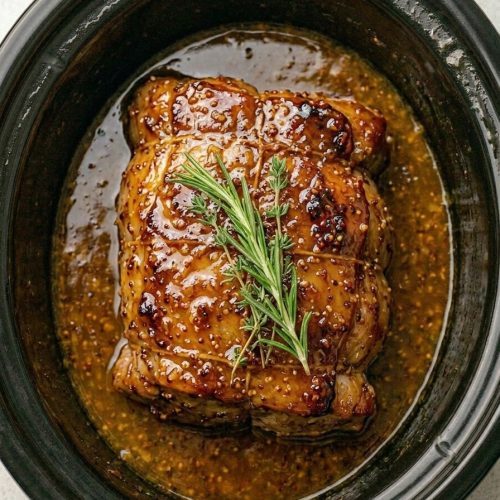
Slow Cooker 4-Ingredient Honey Mustard Pork Roast
Want This Recipe Later?
Ingredients
- 3 lb pork shoulder roast or pork loin roast
- 3/4 cup honey mustard
- 1/2 cup chicken broth
- 1 packet dry onion soup mix
Instructions
- Lightly grease the inside of a 4-quart or 6-quart slow cooker.
- Place the pork roast in the bottom of the slow cooker.
- Spread the honey mustard evenly over the pork.
- Pour the chicken broth around the roast.
- Sprinkle the dry onion soup mix over the top.
- Cover and cook on low for 7–8 hours, or on high for 4–5 hours, until the pork is tender and easy to slice or shred.
- Spoon the sauce over the pork before serving warm.
Notes
Nutrition
Nutrition values are estimates based on the listed ingredients and serving count. Actual values vary with brands, cuts and portion sizes.