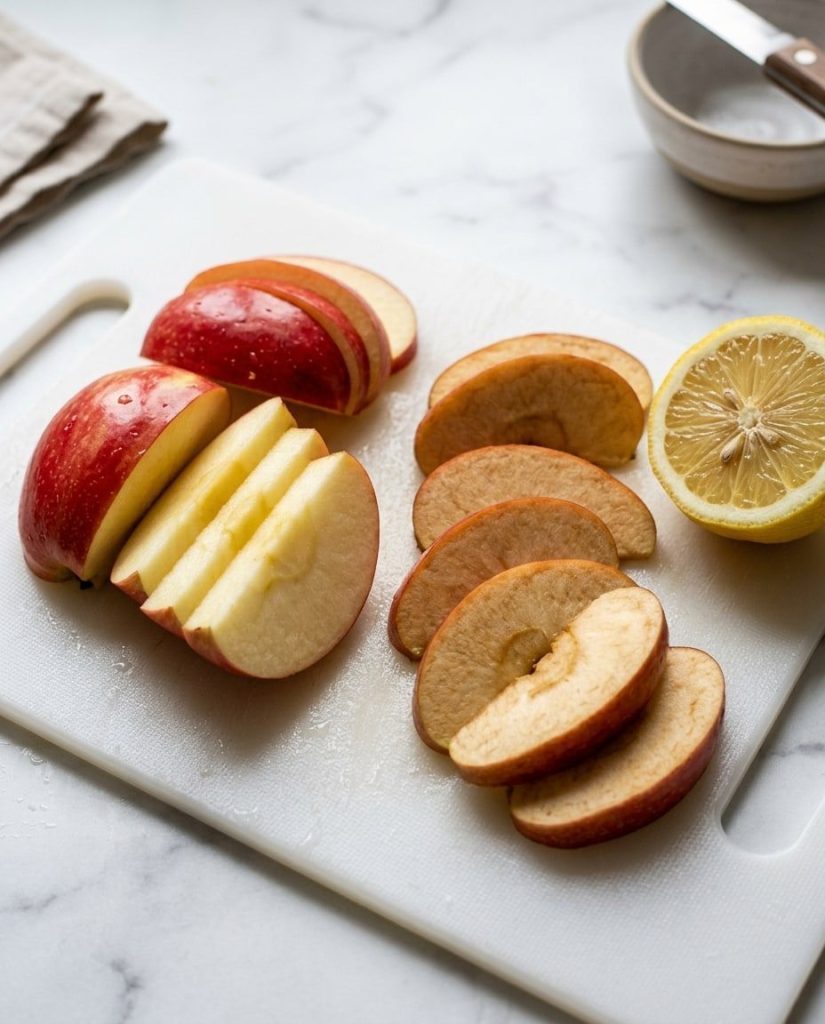
You slice an apple, turn around to grab a plate, and the slices are already turning tan at the edges. By the time the lunch box is opened, they’re brown. They’re still perfectly safe to eat, but brown apple slices just don’t look as appealing, especially on a party tray.
The good news is that there are easy ways to slow it down, and most of them use things already in your kitchen.

Why Apples Turn Brown
Apples contain natural compounds and an enzyme that stay separate inside the whole fruit. When you cut or bite an apple, you break the cells open and expose them to the air. The enzyme reacts with oxygen and those compounds, and the result is the brown color you see on the surface.
It’s the same reason a bruised spot on an apple turns brown, and it’s similar to what happens to cut potatoes, pears and avocados.
Two things speed it up: air and warmth. Two things slow it down: acid and cold. Every good trick below uses one of those ideas.
5 Tricks That Keep Apple Slices Fresh
1. A Squeeze of Lemon Juice
This is the classic for a reason. The acid in lemon juice slows the browning reaction.
How to do it: Mix 1 tablespoon of lemon juice with 1 cup of cold water. Soak the slices for 3 to 5 minutes, then drain. Using diluted lemon juice keeps the apples from tasting sour. Lime juice or orange juice work the same way.
2. A Quick Salt Water Soak
It sounds strange, but a light salt water bath works very well, and the salt rinses right off.
How to do it: Stir 1/2 teaspoon of salt into 1 cup of cold water. Soak the slices for about 5 minutes, then give them a quick rinse in plain water and pat them dry. You won’t taste the salt.
3. Honey Water
Honey contains natural compounds that help slow browning, and it adds a gentle sweetness kids like.
How to do it: Stir 2 tablespoons of honey into 1 cup of warm water until it dissolves, let it cool, then soak the slices for 5 minutes and drain.
4. Lemon-Lime Soda or Apple Juice
Clear lemon-lime soda and plain apple juice both contain acid, so they slow browning too. They also add a little sweetness.
How to do it: Soak the slices for 3 to 5 minutes and drain. This is a handy trick for a party fruit tray.
5. Keep Them Cold and Covered
Whatever soak you use, the next most important thing is to keep the slices cold and away from air.
How to do it: Pack the slices tightly in a container or a zip-top bag, press out as much air as you can and refrigerate. For lunch boxes, a small ice pack helps a lot.
Which Apples Brown the Slowest?
Some apple varieties naturally brown more slowly than others. Apples with crisp, white flesh such as Honeycrisp, Granny Smith, Pink Lady and Cortland tend to hold up better. Softer, sweeter apples like Red Delicious and McIntosh usually brown faster. If you’re making a fruit tray, pick a slower-browning variety and use one of the tricks above.
A Few More Tips
- Use a sharp knife. A clean cut crushes fewer cells than a dull blade, so there’s less browning.
- Slice right before serving when you can. Even with a soak, freshest is best.
- Don’t over-soak. A few minutes is enough. Long soaks can make the slices soft.
- Pat them dry. Dry slices keep better in a container.
Is a Brown Apple Safe to Eat?
Yes. Browning is just a color change on the surface. A brown slice may taste a little softer, but it’s not spoiled. An apple is past its best if it’s mushy, smells fermented or shows mold.
Frequently Asked Questions
How long do treated apple slices stay fresh?
Kept cold in a sealed container, treated slices usually look good for most of a day, and often longer.
Does this work for pears and potatoes too?
Pears respond well to lemon water or salt water. Cut potatoes are best kept fully covered in cold water until you cook them.
Can I prepare apple slices the night before?
Yes. Use a salt water or lemon water soak, dry them, pack them tightly in a sealed container and refrigerate overnight.
A little acid, a little cold and a well-sealed container go a long way. Your apple slices will look as good at lunchtime as they did at breakfast.