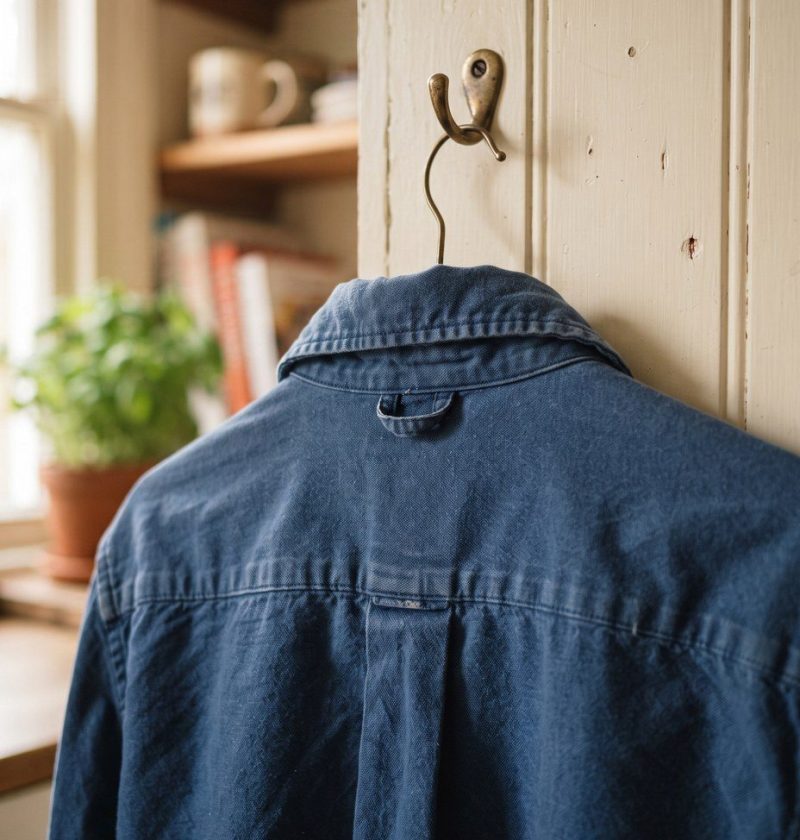
There’s a small fabric loop stitched into the center back of a lot of shirts, just below the collar yoke. Oxford shirts almost always have one. It’s called a locker loop, and it has a genuinely specific history. It Was for Hanging the Shirt Up The loop appeared on button-down shirts made for American college students in the 1960s. The idea was simple: gyms and locker rooms had hooks, not hangers. A loop meant you could hang a shirt on a hook without creasing the shoulders the way a hanger-less shirt does when you drape it. The same feature turned …
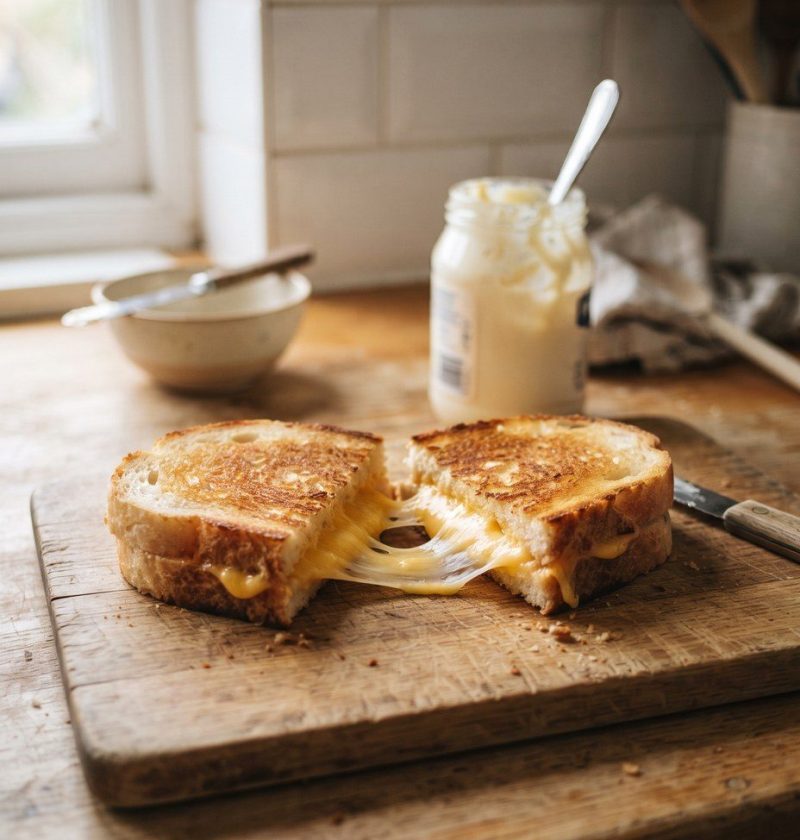
I’d heard this one for years and refused to try it. Mayonnaise on the outside of a grilled cheese instead of butter sounded like the sort of thing people say to get a reaction. Then I ran out of butter on a Tuesday, had a child waiting, and did it anyway. I have not used butter for a grilled cheese since. What Actually Happened The bread went a deeper, more even gold than butter ever gives me. No pale patches, no burnt spots, no bit in the middle that stayed soft. The crust was crisper. Properly crisp, the way it …
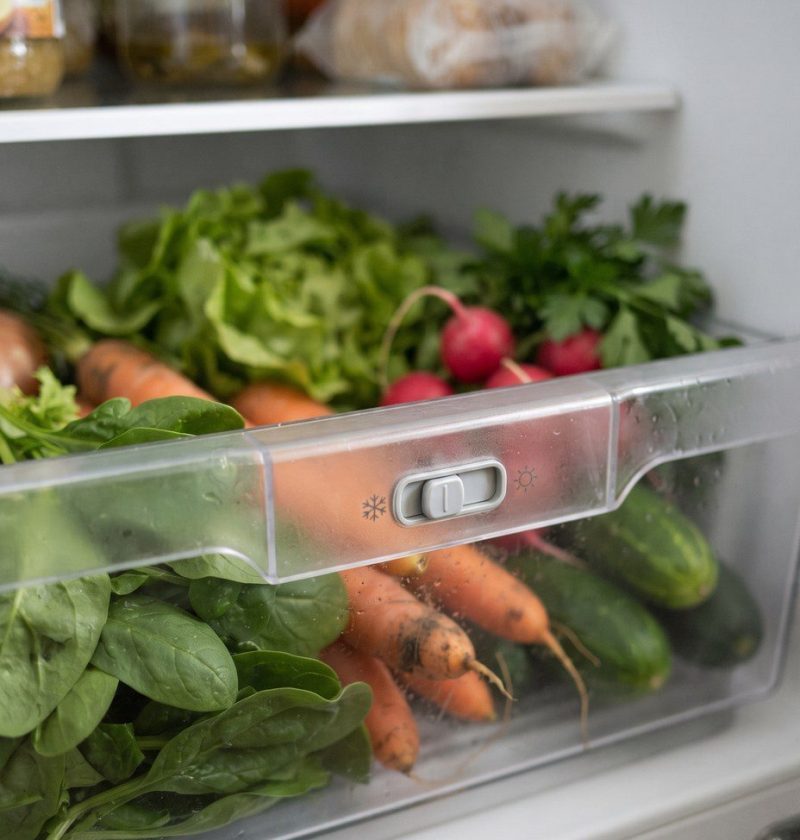
There’s a small slider on the front of the drawer at the bottom of your fridge. Mine said nothing at all — just a tab you could push from one end to the other. I moved it once, decided nothing happened, and never touched it again. It does something. It’s just invisible. It Controls Humidity, Not Temperature That slider opens and closes a small vent in the drawer. Closed vent means moisture stays trapped — a humid drawer. Open vent means moisture escapes into the rest of the fridge — a dry drawer. It is not a temperature control. The …
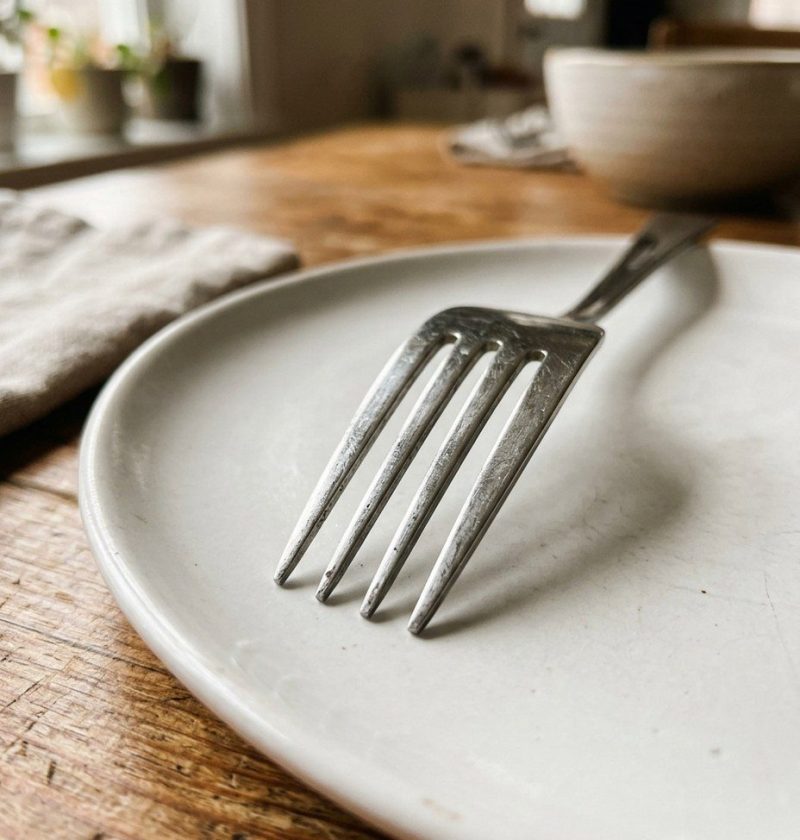
Pull a fork out of your drawer and look at the outer two tines. On a lot of forks — particularly older sets and better ones — the left-hand outer tine is noticeably wider and flatter than the other three. It isn’t a manufacturing fault. It’s there on purpose. It’s a Cutting Edge That wider outer tine is thickened so you can press down with it and cut through soft food without reaching for a knife. A piece of fish. A soft potato. Cake. Pasta. Anything you’d rather cut with the side of the fork while holding the plate steady. …
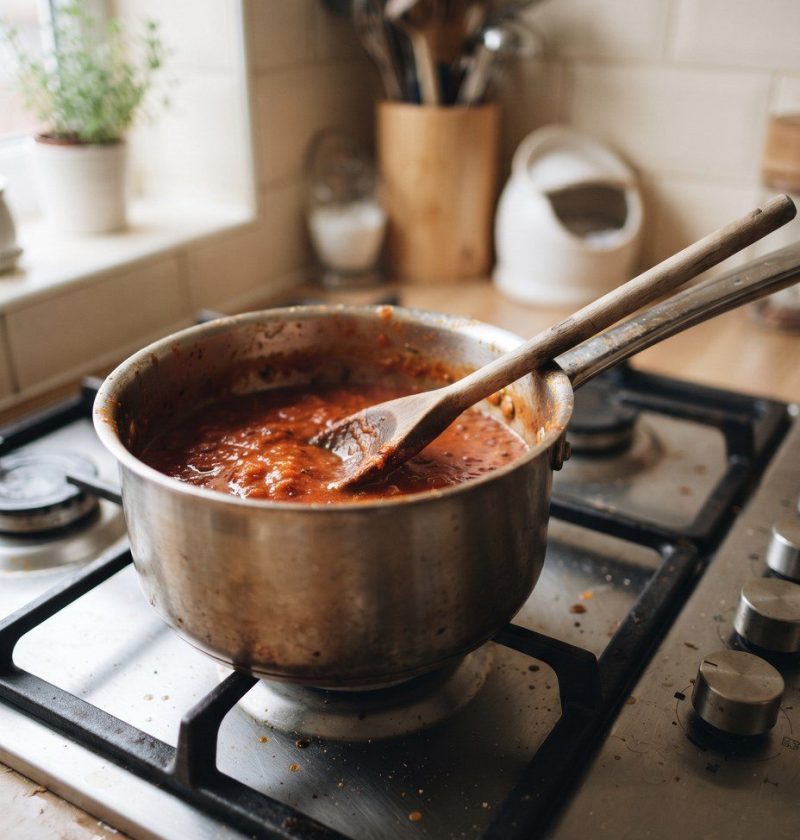
Some wooden spoons have a notch cut into one side of the handle, up near the top. Others have a flat cut across one edge of the bowl. I owned several for years and assumed they were decorative, or just where the wood had been shaped. Both have a job. The Notch in the Handle Is a Pot Rest The notch sits over the rim of a pot so the spoon hangs on the edge instead of sliding down into whatever you’re cooking. It’s the answer to the thing that happens to everyone — you leave the spoon in the …
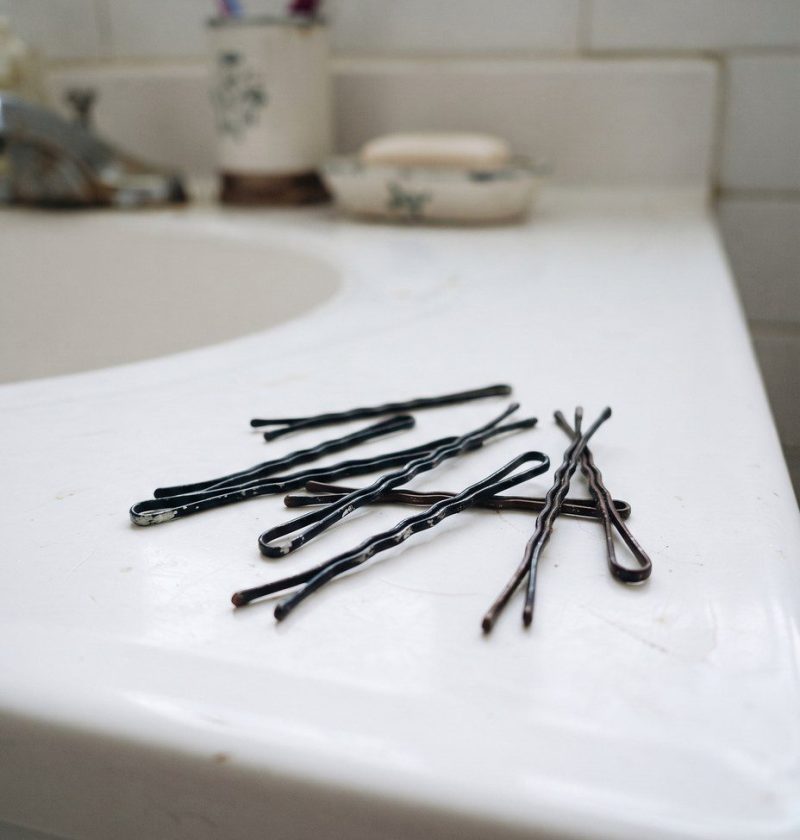
A bobby pin has one flat side and one side with waves in it. Almost everybody puts them in flat side down, and almost everybody is doing it backwards. Wavy Side Goes Against Your Head The waves are the grip. They’re what press into the hair and hold it. The flat side is the smooth outer face. Put the wavy side down against your scalp and the pin bites. Put it up and the pin has nothing to hold on to — which is why they slide out after twenty minutes and you spend the day finding them on the …
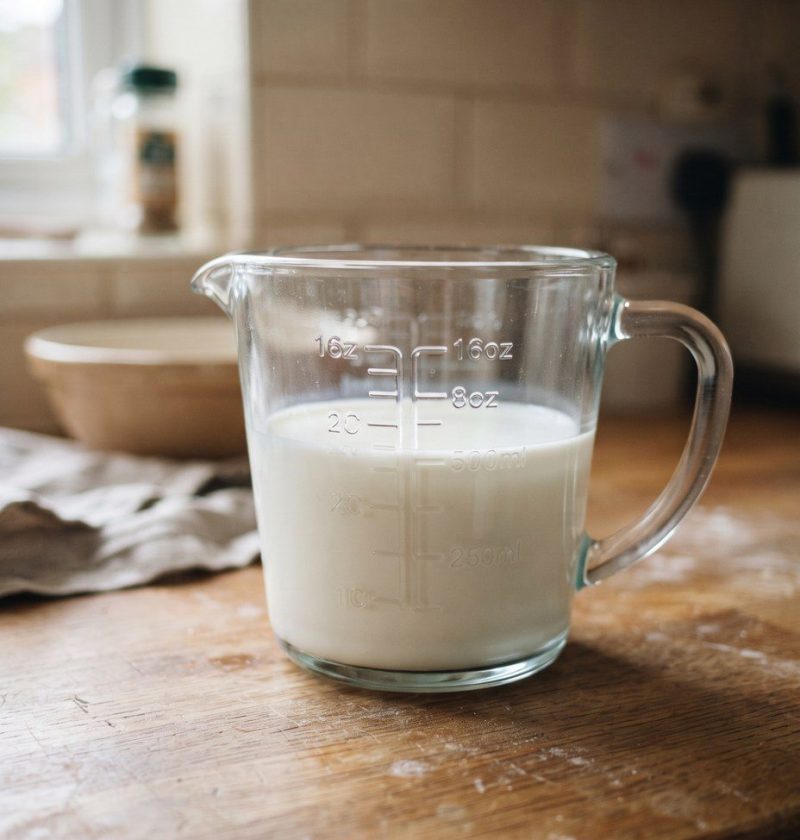
Look at a glass measuring jug. The highest marking — the 2 cup line, or 500ml — is not at the top. There’s an inch or so of empty glass above it. It looks like the manufacturer got the design wrong. They didn’t. That gap is the entire reason a glass jug is better than a plastic cup for wet ingredients. The Gap Is for Carrying Liquid sloshes. Fill a jug to the actual brim and the walk from the tap to the mixing bowl loses you a tablespoon on the counter every time. The headspace means you can fill …
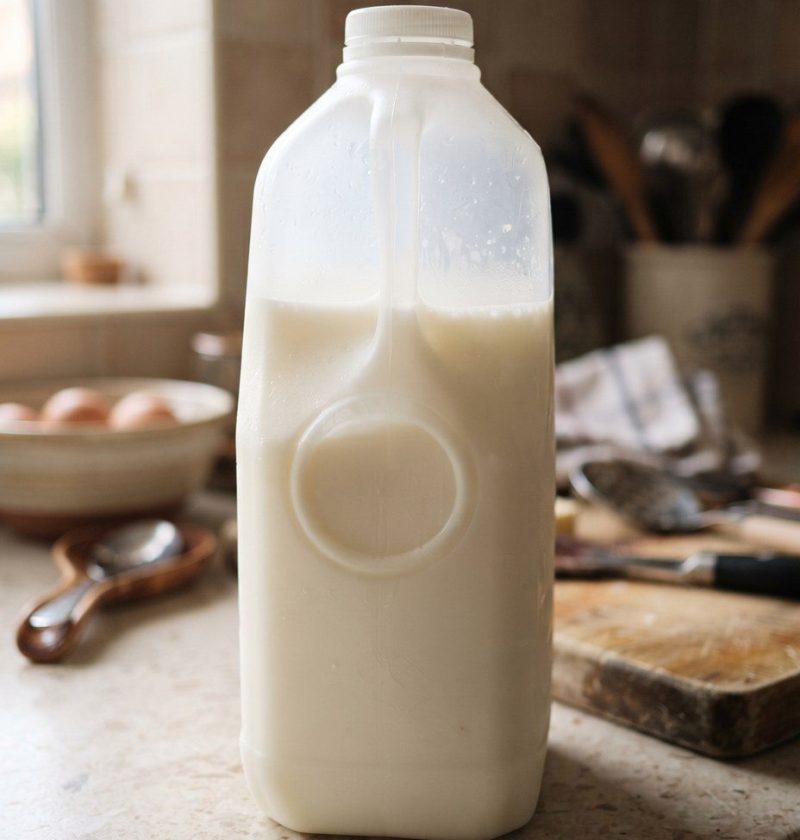
Pick up a plastic gallon jug of milk and you’ll find a circle pressed into one side, like a shallow dish set into the plastic. The story that goes round is that it pops out when the milk has gone off. It doesn’t. It never has. The real answer is more useful. It’s an Expansion Panel Milk moves. It gets cold, it gets warm, it gets knocked about in a crate on a lorry, and the pressure inside the jug changes with all of it. Thin plastic with no give in it would bulge, split at a seam, or push …
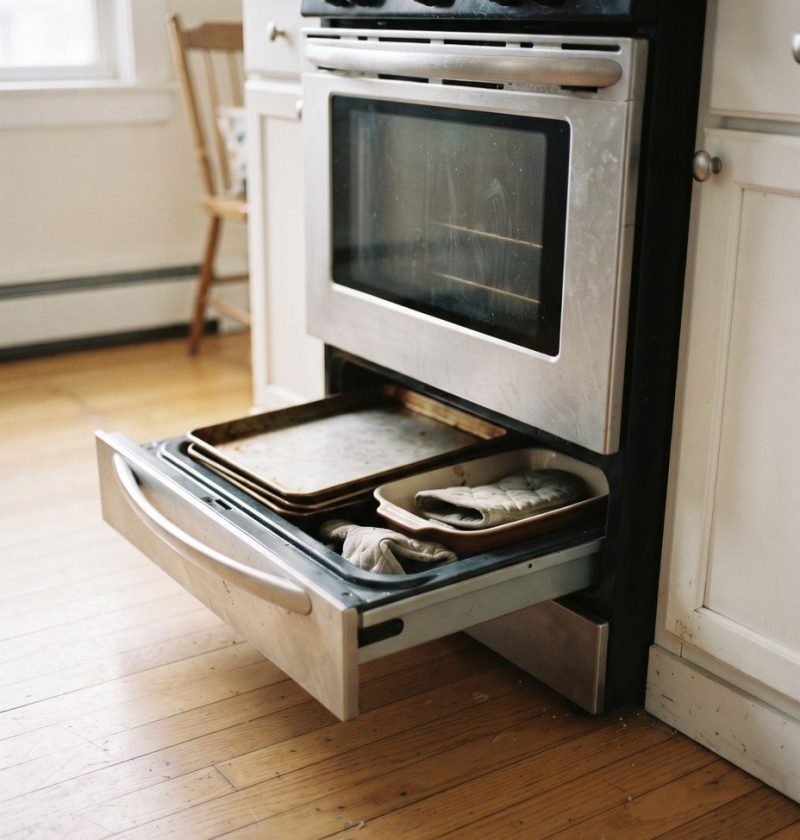
Every oven I’ve ever owned has had a drawer underneath it. For about fifteen years I kept baking trays in mine. Then a plumber who was fixing something else entirely opened it, looked at me, and asked whether I knew what it was for. I did not. It Depends What Kind of Oven You Have There are two different drawers that look identical from the outside, and which one you’ve got changes everything. 1. A Warming Drawer On most modern electric ovens, that bottom drawer is a low-temperature warming compartment. It has its own gentle heat and it’s designed to …
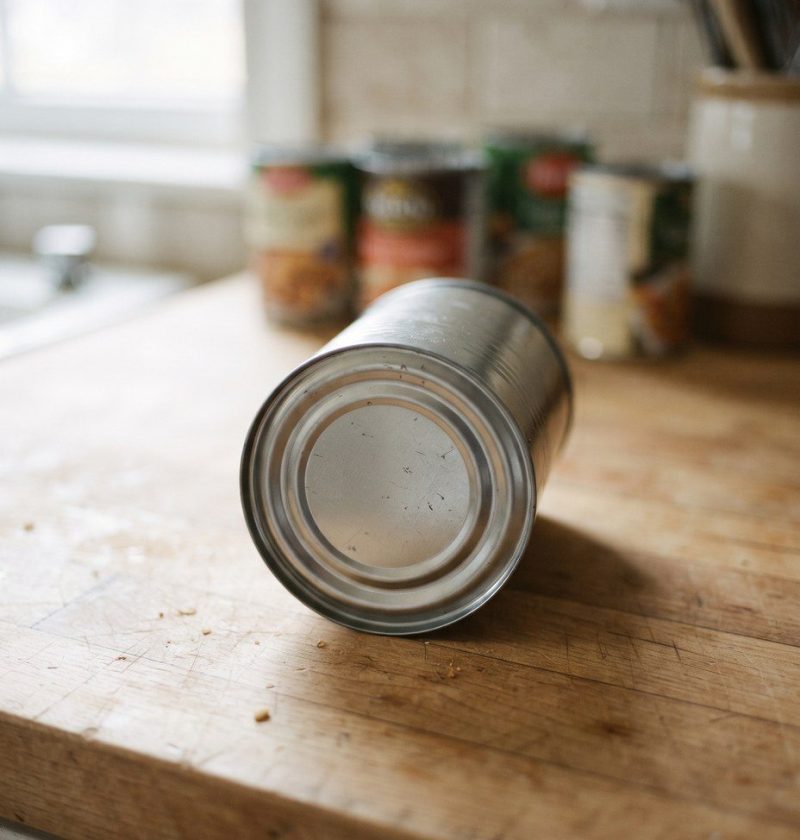
Run your hand over the bottom of a can of soup and you’ll feel it — a shallow dome pushed up into the middle, so the can actually sits on its rim rather than flat on its base. It looks like a manufacturing shortcut. It’s the opposite. It’s one of the most deliberate bits of design in your cupboard, and it’s also a safety signal. Why the Bottom Is Domed Canned food is heated inside the sealed can to sterilise it. Heating makes the contents expand; cooling makes them contract. The can has to survive that, twice, without splitting. A …