I watched a cook at a Chinese restaurant do this and asked what it was. He said “baking soda” like it was the most ordinary answer in the world, and went back to work.
It turns out to be one of the biggest differences between beef at home and beef in a restaurant, and it takes fifteen minutes.
What It Does
Baking soda raises the pH of the meat’s surface.
That does two things. It makes it harder for the proteins to bond tightly together as they cook — and tight bonding is what squeezes water out and makes meat tough. And a higher pH speeds up browning, so you get more color in less time.
The result is beef that stays tender and loose instead of going into hard little pellets, and browns properly instead of stewing in its own liquid.
The technique has a name in Chinese cooking — velveting — and this is the quick version of it.
The Amounts, Exactly
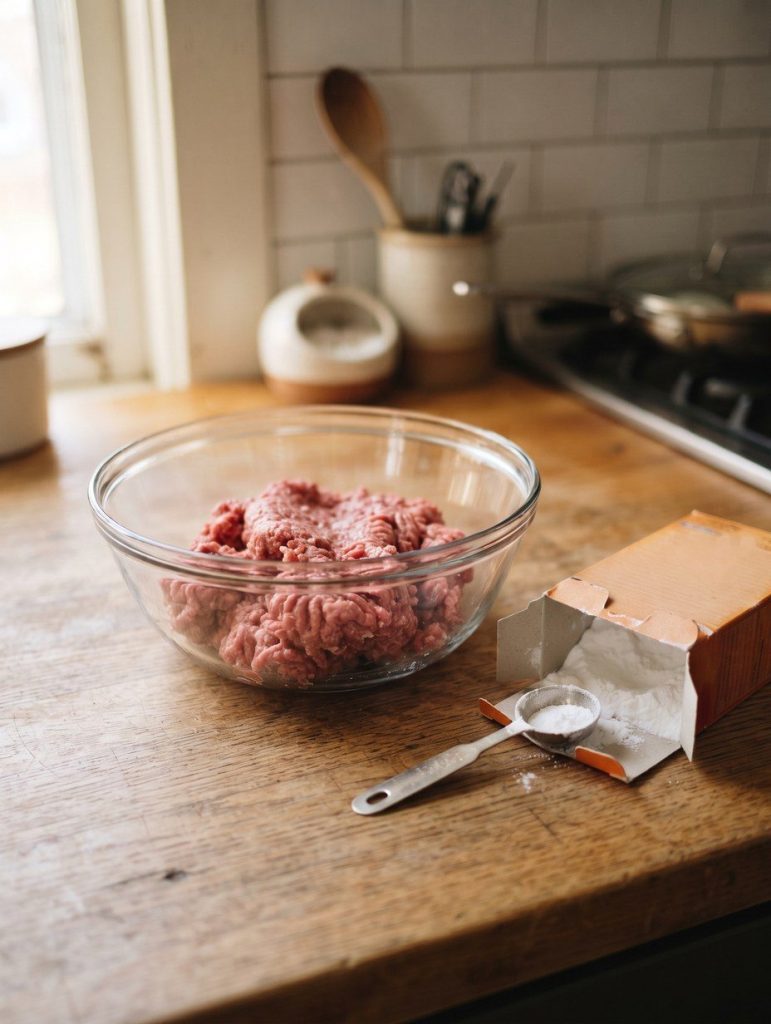
For one pound of ground beef: three quarters of a teaspoon of baking soda.
Sprinkle it over, mix it through with your fingers, and leave it fifteen to twenty minutes at room temperature. Then cook as normal — no rinsing needed for ground beef.
For sliced beef for a stir fry: one teaspoon per pound, tossed through, left twenty minutes, then rinsed well and patted dry.
Sliced beef does need rinsing. Leave it on and you’ll taste it.
Do Not Use More
This is the one rule that matters.
Too much baking soda tastes soapy and metallic, and there is no fixing it once it’s in. It also makes the texture go slippery and slightly wrong — tender is good, mushy is not.
And don’t leave it on for hours. Twenty minutes does the job. Two hours starts breaking the meat down past the point you want.
What It’s Best For
Ground beef for tacos, chili and bolognese. This is where it shines. Ground beef normally releases water, boils itself gray, and only browns once the water’s gone. Treated beef browns straight away and stays in loose crumbles.
Stir fry beef. The restaurant texture people can never get at home is almost always this.
Cheap steak. Skirt, flank, anything thin and tough. Twenty minutes, rinse, dry hard, sear hot.
What It Won’t Do
It won’t turn a bad cut into a good one. It won’t do anything useful for a slow braise, because hours of low heat already achieves tenderness a different way.
And it doesn’t add flavor. It changes texture and color. Season the meat as you normally would, after the treatment.
The Other Half of Browning
While we’re here, the two things that ruin ground beef browning more than anything:
A crowded pan. Too much meat at once drops the temperature and it steams. Do it in two batches.
Stirring it constantly. Leave it alone for three or four minutes to get a crust before you break it up.
Baking soda plus a hot uncrowded pan plus patience. That’s the whole difference.