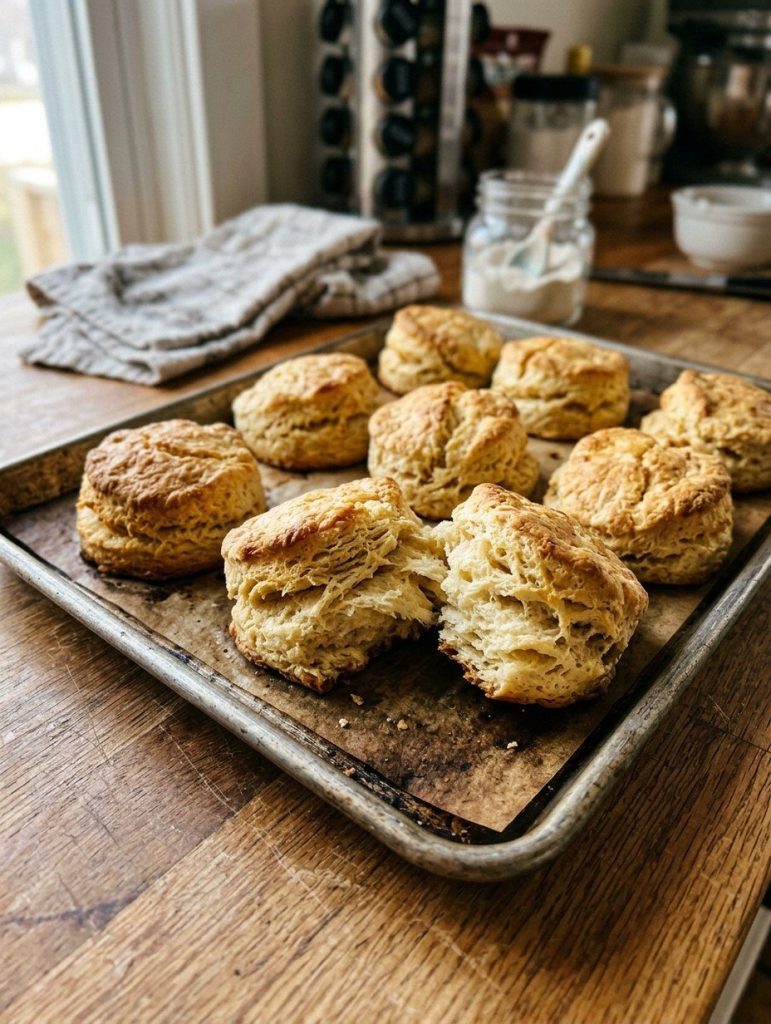
My biscuits were fine. Fine is the problem. They were flat, dense-ish, and nothing like the ones at my aunt’s house that came apart in layers.
She told me she grates the butter, frozen, on a box grater. I thought she was making it harder than it needed to be. She was making it considerably easier.
Why Frozen and Grated
Flaky biscuits come from small, separate, solid pieces of butter scattered through the dough.
In the oven those pieces melt and the water in them turns to steam. The steam pushes the dough apart from inside and leaves a gap. Do that a few hundred times and you get layers.
The enemy is butter that has warmed up and smeared into the flour. Smeared butter can’t steam in pockets, so you get a dough that’s rich but flat.
Cutting cold butter in with a pastry blender works, but it takes a few minutes and your hands warm it the whole time. Grating frozen butter takes twenty seconds and produces hundreds of identical little shards that are still frozen solid when they land.
How to Do It
Put the butter in the freezer for at least half an hour. Overnight is fine.
Grate it on the large holes of a box grater straight into your flour. Hold the paper wrapper around the end to keep your hand off it — that’s the trick that stops it softening as you go.
Toss it through the flour with a fork so the shards get coated and stay separate. Don’t rub it in. It should look like flour with bits in it.
Then add your liquid and bring it together with as few movements as you can manage.
The Other Thing That Doubles the Layers
Once the dough is together, pat it into a rectangle, fold it in three like a letter, and pat it out again. Do that three or four times.
Each fold multiplies the layers. It’s the same principle as puff pastry, done crudely and quickly, and it takes about a minute.
Then cut straight down with a sharp cutter and do not twist. Twisting seals the edges and the biscuit can’t rise. This one thing is why a lot of home biscuits come out lopsided.
Where Else Grated Frozen Butter Works
Pie crust. Same reasoning, same result. It’s the easiest way to get a flaky crust without a food processor.
Scones. Identical.
A crumble topping. Grate it over the flour and sugar and toss — no rubbing in, no warm hands.
On top of a casserole. Grated frozen butter over breadcrumbs browns more evenly than dotted lumps.
Two Small Things That Matter More Than You’d Think
Cold liquid. Buttermilk straight from the fridge. Room-temperature liquid starts melting the butter before it reaches the oven.
A hot oven. 425°F or more. The butter needs to hit heat fast enough to steam rather than simply melt out of the sides.
Try It Next Weekend
Freeze a stick of butter tonight, grate it tomorrow, and fold the dough three times.
Mine went from fine to the kind people ask about, and the only thing I changed was how the butter got into the bowl.