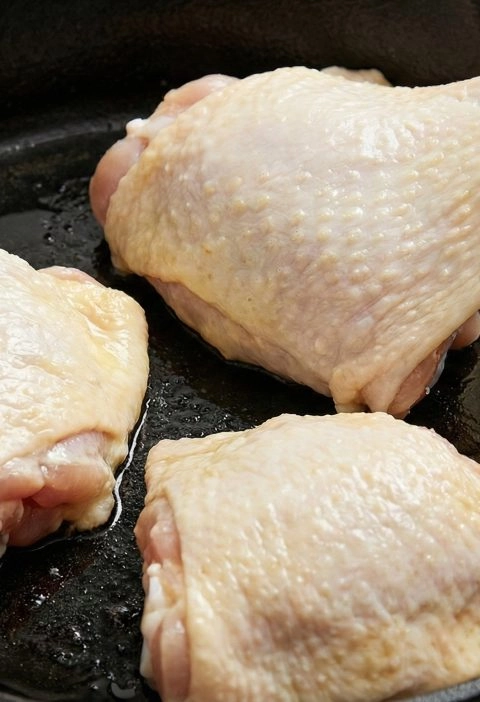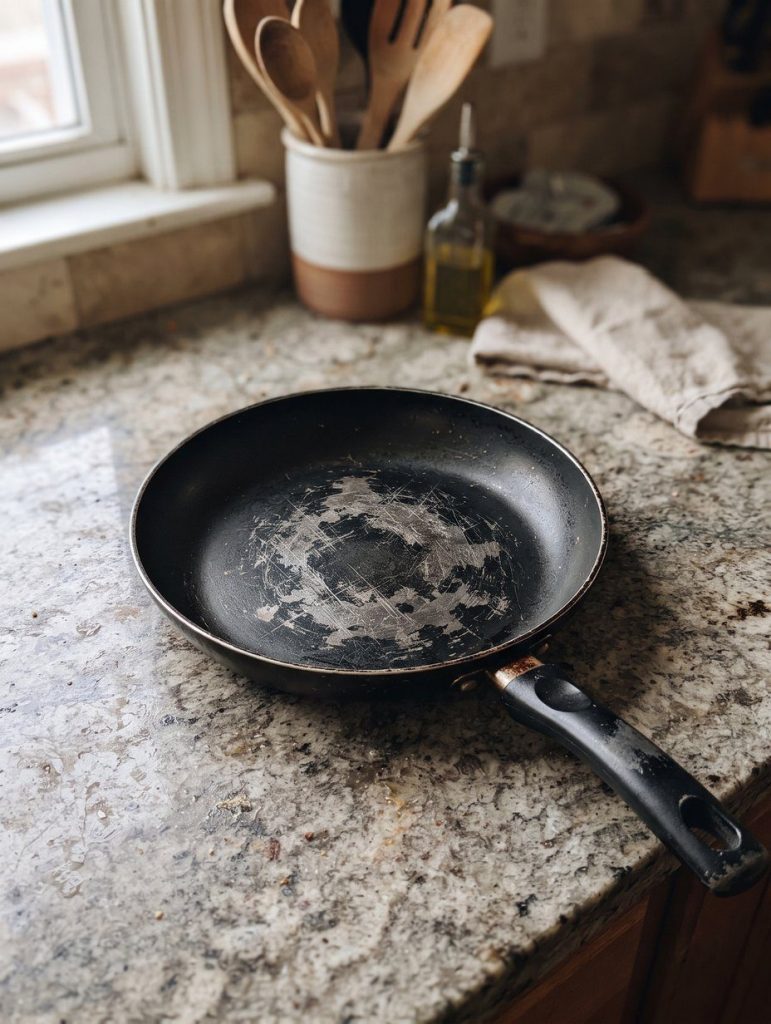
A non-stick pan is the easiest pan in the kitchen and the easiest one to ruin. Most pans that “stopped being non-stick after six months” were not defective — they were used for one of these.
Five things that take years off the coating, and what to cook them in instead.
1. A Steak

A proper sear needs the pan somewhere near 450 to 500°F. Non-stick coatings start breaking down around 500°F and release fumes above that.
You will also not get the crust you wanted. The coating is designed to stop food gripping the surface, and browning needs food to grip the surface. A steak in a non-stick pan comes out gray and disappointing even if the pan survives.
Use instead: cast iron or stainless steel.
2. Anything That Needs a Broiler or a Hot Oven
Most non-stick pans are oven-safe to about 400 or 450°F, and a broiler runs far hotter than that with the heat pointed straight at the coating.
Handles matter too — many have silicone or plastic parts that will not take oven heat at all.
Use instead: cast iron, or a stainless pan with a metal handle.
3. An Empty Pan You Are Preheating
This is the one that does the most damage and almost nobody counts it as cooking.
With food or oil in it, the pan cannot get much above the boiling point of what is in it. Empty, a non-stick pan on a high burner passes 500°F in two or three minutes.
Always put the oil or the food in first, and preheat on medium.
4. Long Simmers With Tomato or Wine
Acid attacks the bond between the coating and the metal underneath, not the coating itself. A quick pan sauce is fine. An hour of tomato sauce is not.
The damage does not show immediately. It shows six months later when the coating starts lifting at the edges.
Use instead: enameled cast iron or stainless.
5. Anything You Want to Deglaze
Deglazing means dissolving the browned bits stuck to the pan into a sauce. Those browned bits are most of the flavor in a pan sauce.
A non-stick pan is specifically designed to stop anything sticking to it, so there is nothing there to deglaze. You get a thin, pale sauce.
This is not about damaging the pan — it is about using the wrong tool.
What Else Shortens Its Life
Metal tools. One scrape with a fork makes a channel that spreads.
The dishwasher. Dishwasher detergent is far more aggressive than dish soap and it dulls and degrades the coating.
Cooking spray. This surprises people. Aerosol spray contains lecithin, which polymerizes into a sticky varnish at frying heat and builds up into a layer that will not wash off. It makes the pan sticky and it is nearly impossible to remove. Use a little oil from a bottle.
Stacking pans inside it. Put a cloth or a paper towel between them.
And Know When to Throw It Out
When the coating is scratched through to the metal or flaking, the pan is finished. Do not keep using it.
Treat it as a consumable — three to five years is a good run.