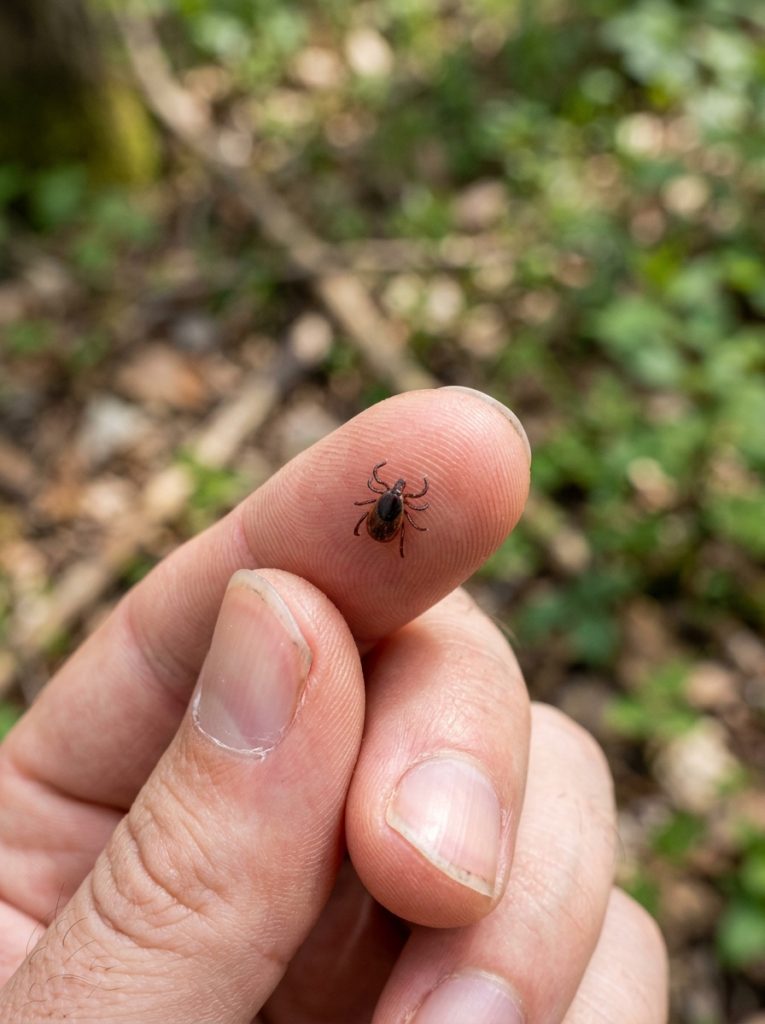
Finding a tick on your skin is one of those moments that instantly pulls you out of whatever you were doing. You could be mid-hike, mid-nap, mid-anything—and suddenly, your brain goes, Nope. This is now the only thing that matters.
And if it’s a lone star tick? That uneasy feeling tends to double.
Not because every bite is dangerous—it’s not—but because this particular species has a bit of a reputation. It’s more aggressive than most ticks, moves quickly, and yes, it’s linked to some unusual conditions (we’ll get to the red meat allergy in a minute—it’s as strange as it sounds).
Still, here’s the grounding truth: most tick bites don’t lead to disease, especially when handled correctly and quickly.
So let’s walk through this calmly, step by step.
First things first — is it actually a lone star tick?
Before you spiral, it helps to know what you’re dealing with.
Adult females are the easiest to spot—they have that single white dot on their back. Almost looks like someone tapped them with a paint marker.
Adult males are a bit trickier, with scattered white streaks around the edges.
And then there are nymphs and larvae—tiny, almost invisible, and unfortunately still capable of transmitting illness.
Here’s the thing that catches people off guard:
Lone star ticks don’t just sit and wait. They hunt.
Not dramatically, but enough that you might notice one actively moving toward you. It’s unsettling, sure—but also useful to know.
Step 1: Remove the tick (slow and steady wins here)
Alright, this is the part that matters most.
You don’t need fancy gear. Just:
- Fine-tipped tweezers
- Soap and water
- Rubbing alcohol
- A small container (if you want to keep the tick)
Now, the technique:
Grab the tick as close to your skin as possible. You’re aiming for the head or mouthparts—not the body. That’s important.
Then pull upward. Slowly. Even pressure. No twisting, no jerking.
It might feel like nothing’s happening for a second. That’s normal. Keep steady pressure, and it’ll release.
Once it’s out:
- Clean the area with soap and water
- Dab some alcohol or antiseptic
- Wash your hands
And if you can, save the tick. A small bag or container works fine. You probably won’t need it—but if symptoms show up later, it can help with identification.
What not to do (even if you’ve heard it a hundred times)
Let’s clear up the myths, because they’re surprisingly persistent.
No, you shouldn’t:
- Smother it with petroleum jelly
- Paint it with nail polish
- Burn it with a lighter
- Twist it out like a screw
Honestly? These methods don’t just fail—they can make things worse.
When stressed, ticks can release more saliva into the bite site. That’s exactly what you want to avoid.
So keep it simple: tweezers, steady pull, done.
Step 2: Clean it… then keep an eye on it
Once the tick is gone, your job isn’t quite finished—but it’s a lot less intense.
Clean the area again if you want to be thorough. Add a bit of antibiotic ointment. Then do something that feels oddly official:
Mark the date.
Seriously. Whether it’s your phone calendar or a note, just log it.
Maybe even snap a quick photo of the bite. It sounds excessive, but it helps later if you’re trying to remember whether the redness has changed.
Now, over the next few days (and up to a month), watch for:
- Expanding redness
- Fever or chills
- Muscle aches
- Fatigue that feels… off
- Unusual rashes
A little redness in the first day or two? Totally normal. Your skin’s reacting to the bite.
But if it starts spreading or you feel flu-like symptoms, that’s your cue to check in with a doctor.
Step 3: The part people don’t expect — the risks
Here’s where lone star ticks stand out.
STARI (the Lyme lookalike)
You might see a red, expanding rash—sometimes shaped like a bull’s-eye. It looks like Lyme disease but isn’t caused by the same bacteria.
Symptoms can include fatigue, headaches, and mild fever.
It’s generally less serious long-term, but still worth medical attention.
Ehrlichiosis (less common, but important)
This one shows up a week or two after a bite.
Think:
- Fever
- Headache
- Muscle aches
- Nausea
It’s treatable, usually with antibiotics like doxycycline. The key is catching it early.
And then there’s… the red meat allergy
Yes. This is real.
It’s called alpha-gal syndrome, and it’s one of the strangest medical side effects tied to a tick bite.
Here’s how it works:
The tick introduces a sugar molecule called alpha-gal into your system. Later, when you eat red meat—beef, pork, lamb—your body reacts like it’s under attack.
But here’s the twist:
The reaction is delayed. Often by 3 to 6 hours.
So instead of immediately connecting the dots, people wake up in the middle of the night with hives or stomach pain and think, What did I even eat?
Symptoms can include:
- Hives or itching
- Digestive issues
- Swelling
- In rare cases, serious allergic reactions
If something like that happens, mention the tick bite to your doctor. It matters.
Step 4: When to actually see a doctor
Not every bite needs a medical visit. But some definitely do.
You should get checked if:
- Part of the tick is still stuck in your skin
- The tick was attached for a long time
- You develop a rash, fever, or flu-like symptoms
- The bite looks infected
- You notice strange allergic reactions—especially after eating meat
Doctors sometimes prescribe antibiotics as a precaution, depending on the situation.
Step 5: Avoiding the whole situation next time
Prevention isn’t glamorous, but it works.
Before heading outside:
- Wear light-colored clothing (ticks show up better)
- Tuck pants into socks—yes, it looks odd, but it helps
- Use repellents like DEET or picaridin
- Treat clothing with permethrin if you’re in tick-heavy areas
After you come back:
- Check your whole body—especially warm, hidden spots
- Shower within a couple of hours
- Toss clothes in the dryer on high heat
And don’t forget pets—they’re basically tick taxis.
So… should you panic?
No. And that’s worth repeating.
One lone star tick bite doesn’t mean you’ll get sick.
Most people don’t.
What does make a difference is how you respond in those first few minutes—removing it properly, cleaning the area, and staying aware afterward.
It’s not about overreacting. It’s about being prepared.
And now? You are.v