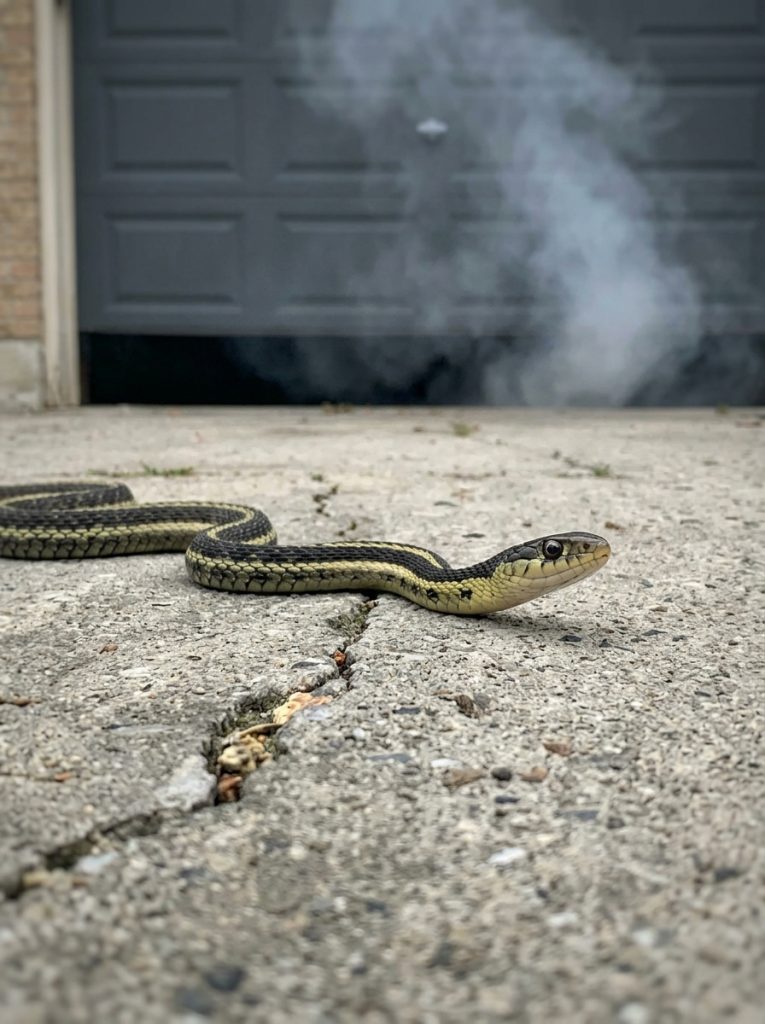
Let’s be honest—snakes aren’t exactly the kind of guests anyone hopes to see lounging in the yard.
Still, they’re not villains. They keep rodent populations in check, balance ecosystems, and generally mind their own business. The problem starts when their “business” overlaps with your garden, garage, or worse—your front steps.
So the question becomes: how do you gently encourage them to move along… without turning your yard into a chemical war zone?
Here’s where scent comes in—and surprisingly, it’s more powerful than most people realize.
Why Smell Matters More Than You Think
Snakes don’t sniff the way we do. Instead, they flick their tongues, picking up scent particles and feeding that data into a sensory organ in the roof of their mouth. It’s oddly fascinating—and also very useful to know.
Because of this system, strong or irritating smells can feel overwhelming to them. Not dangerous, necessarily—but uncomfortable enough that they’d rather go somewhere else.
And honestly? That’s all you need.
The Scents That Make Snakes Think Twice
Now, not every strong smell works. Some just fade into the background. Others, though, seem to hit a nerve—so to speak.
Cinnamon and Clove Oil — The Heavy Hitters
These two are often mentioned together for a reason—they’re intense. Warm, spicy, and sharp enough to cut through the air.
For snakes, that intensity can feel like sensory overload.
How people usually use them:
Mix a few drops with water in a spray bottle and apply around entry points—doors, fences, garden edges. A little dish soap helps the oil blend better.
Interestingly, this combo also nudges away ants and spiders. Not a bad bonus.
Garlic and Onion — Not Just for Cooking
You know that sharp, lingering smell when you chop onions? Snakes notice it too—and they’re not fans.
The sulfur compounds give off a scent that’s pretty unpleasant in the wild.
A simple approach:
- Chop garlic and onions
- Let them sit in water overnight
- Strain and spray the liquid around your yard
Or take the slower route—plant garlic along your garden borders. It’s subtle, but it builds a natural barrier over time.
Vinegar — Sharp and Straightforward
Vinegar doesn’t mess around. That sharp, acidic smell tends to push snakes away, especially near water features like ponds or pools.
How to use it without regrets:
Spray it along edges—fences, pathways, entry points. You can also soak rags and place them in problem spots.
Just… don’t drench your plants. Vinegar isn’t exactly gentle on greenery.
Ammonia — Effective, But Handle With Care
This one works, but it’s not exactly “friendly.”
The smell resembles predator waste, which can trigger a kind of instinctive avoidance.
Typical method:
Soak rags, place them in containers with small holes, and position them near hiding spots.
But here’s the thing—ammonia is strong. Gloves are a good idea. Keeping it away from pets and kids? Non-negotiable.
Eucalyptus and Peppermint — The Fresh-Scent Trick
These smell clean and refreshing to us. To snakes? Not so much.
Both oils carry sharp, penetrating scents that seem to irritate their sensory system.
Easy use:
Mix with water, spray around doors, windows, garden beds—or soak cotton balls and tuck them into corners.
Bonus: fewer mosquitoes buzzing around while you’re at it.
Cedarwood — A Barrier That Feels Natural
Cedar has that deep, woody smell—pleasant, but strong.
Snakes tend to avoid crossing areas layered with cedar chips or mulch. It’s less about spraying and more about creating a physical scent barrier.
Plus, it looks good in a yard. That matters more than people admit.
So… How Do You Use All This Without Overthinking It?
Here’s where people often get stuck. Too many options, too many mixtures.
Let me simplify it.
If you want something practical:
- Mix a few essential oils (cinnamon, clove, peppermint) with water
- Spray around your yard’s perimeter
- Focus on gaps, doors, sheds, and shady corners
Then reinforce it:
- Add cedar mulch
- Place a few scented rags in hidden spots
- Reapply after rain (this part is easy to forget—and it matters)
That’s it. You don’t need a complicated system.
A Quick Reality Check — What Doesn’t Really Work
Some methods sound convincing… until you try them.
- Mothballs — toxic and not meant for outdoor use
- Ultrasonic devices — no solid evidence they do anything
- Fake predators — snakes aren’t fooled for long
It’s tempting to look for a “set it and forget it” solution, but nature doesn’t really work like that.
The Bigger Picture (And This Is the Part People Skip)
Here’s the slightly uncomfortable truth: smells alone won’t solve the problem.
They help. They absolutely help. But if your yard is full of hiding spots and food sources, snakes will tolerate a little discomfort.
So the real strategy looks like this:
- Keep grass short
- Clear out wood piles and debris
- Seal cracks around your home
- Reduce rodents (this one’s huge)
Think of scent as the nudge—and habitat control as the actual fix.
The Bottom Line
Natural scents can make your yard less inviting to snakes. Not perfectly safe, not guaranteed—but noticeably less appealing.
And when you combine those scents with a clean, well-maintained space?
That’s when it really starts to work.
A bit of effort, a few strong smells, and some consistency—that’s the formula. Not flashy, but effective.