You know that moment—you’re halfway through making dessert, everything’s going smoothly, and then… no heavy cream. Just gone. Vanished. Like it never existed.
That’s exactly where I found myself.
There I was, standing in my kitchen, staring at a pie that clearly needed whipped cream to feel complete. Not optional. Not negotiable. And yet—no cream.
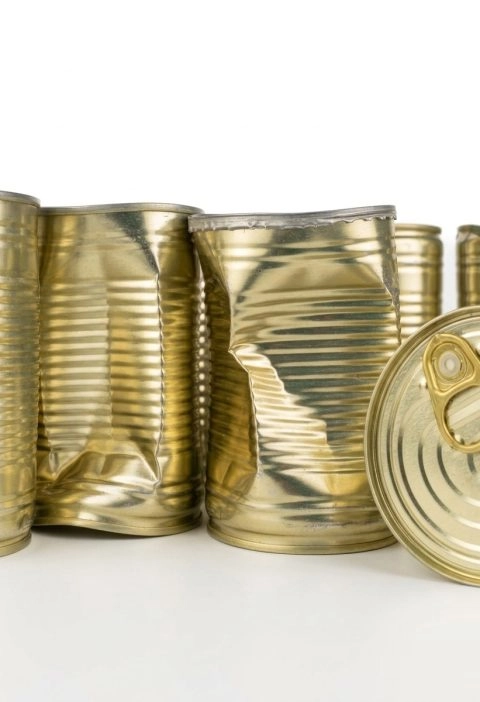
But there was a lonely can of evaporated milk sitting in the pantry.
And that’s where things got interesting.
Wait… Why Evaporated Milk?
Honestly, this wasn’t some genius plan. It was more like, “Well… what else do I have?”
Still, the idea wasn’t completely random. Evaporated milk is thicker than regular milk—about 60% of its water has been removed—so it’s not exactly watery. It’s got some body. Some potential.
Plus, it’s one of those pantry staples that just waits. Months go by, and it’s still there, quietly reliable. Unlike heavy cream, which seems to expire the second you forget about it.
So I thought—could this actually work?
The Cold Truth (Literally)
Here’s the thing: temperature matters. A lot.
If you’ve ever whipped cream before, you know cold is your best friend. Same logic applies here—maybe even more so, since evaporated milk is already working with less fat.
So I went all in:
- Can in the freezer for about 30 minutes
- Mixing bowl? Also in the freezer
- Beaters? Yep, those too
It felt a bit extra, I’ll admit. But when you’re trying to convince low-fat milk to behave like cream, you don’t cut corners.
The First 60 Seconds: Hope… Wit a Side of Doubt
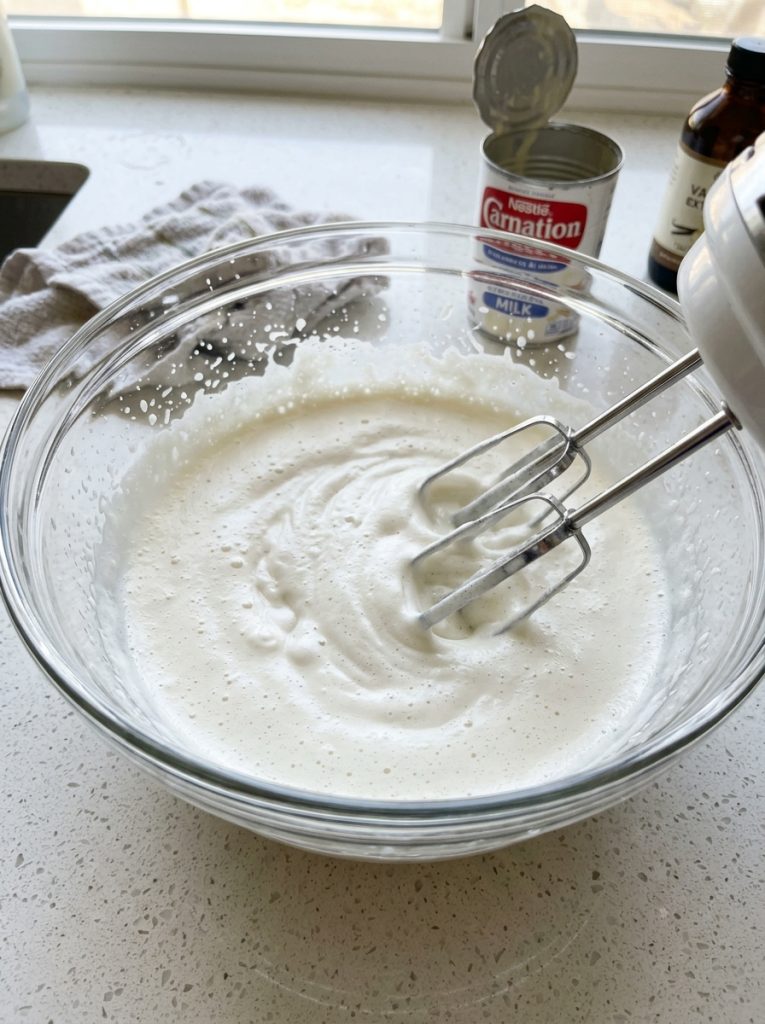
I poured the chilled evaporated milk into the bowl and started mixing.
At first? Nothing special. Just… milk. Slightly thicker milk, sure, but still very much liquid.
Then around 15–20 seconds in—tiny bubbles.
Not dramatic. Not exciting. But enough to make me pause and think, “Okay… something’s happening.”
By the one-minute mark, it had turned slightly frothy. Still loose, still pourable, but visibly different.
It wasn’t whipped cream—but it wasn’t not something either.
Five Minutes In: Frothy Territory
Now we were getting somewhere.
At around five minutes, the mixture had thickened quite a bit. The volume increased, and the texture shifted into something airy—almost like foam on a fancy coffee.
But here’s the honest part: it still didn’t resemble whipped cream.
No soft peaks. No structure. Just a light, bubbly consistency that felt… promising, but incomplete.
Kind of like a halfway success.
Ten Minutes Later: Reality Sets In
I kept going. Partly out of curiosity, partly out of stubbornness.
Ten minutes in, I had to accept it—it wasn’t going to form stiff peaks. Not even close.
The mixture stayed fluffy, yes. Airy, yes. But stable? Not really.
If you scooped it, it slowly relaxed back into itself. No shape-holding. No drama.
And honestly? That made sense.
Let’s Talk Taste (Because That Matters Too)
Texture aside, I was curious about flavor.
And this is where things surprised me.
Evaporated milk has this slightly cooked, almost caramel-like note—subtle, but noticeable. When whipped, that flavor becomes a bit more pronounced.
Add a touch of sugar, and suddenly it’s… kind of good.
Not rich like whipped cream. Not indulgent in the same way. But lighter. Softer. Almost like a cross between foam and mousse.
Unexpected, but not disappointing.
Side-by-Side With Real Whipped Cream (No Contest, But Still…)
For fairness, I made actual whipped cream too.
And yeah—the difference was immediate.
Whipped cream:
- Thick
- Stable
- Rich
- Holds peaks like a champ
Evaporated milk version:
- Light
- Airy
- Slightly foamy
- Doesn’t hold shape
So no, it’s not a true substitute.
But—and this matters—it’s not useless either.
The Science Bit (I’ll Keep It Simple)
Here’s what’s really going on.
Whipped cream works because of fat. Heavy cream has around 36% fat, which traps air and creates structure.
Evaporated milk? Only about 6–8%.
That’s a huge gap.
So while the proteins in evaporated milk can trap some air, there just isn’t enough fat to stabilize it into peaks.
In simple terms: it can fluff up, but it can’t hold itself together.
Can You Improve It? A Little, Yes
If you’re determined (and I was), there are ways to make it better.
A couple tweaks that help:
- Add powdered sugar: improves texture slightly and sweetens
- Use gelatin: helps stabilize the structure
- Whip in stages: start medium, then go higher speed
It still won’t fully mimic whipped cream—but it gets closer. Close enough for certain uses.
When This Trick Actually Works
Let’s be practical.
This works well when you want something light:
- Topping for fruit
- Foam for coffee or hot chocolate
- Light desserts like mousse or trifles
Basically, anything where structure isn’t critical.
And When It Really Doesn’t
Now for the hard truth.
Don’t use this if you need:
- Cake frosting
- Pie topping that holds shape
- Anything piped or decorative
It just won’t hold up—literally.
So… Would I Do It Again?
Honestly? Yes—but with conditions.
If I’m in a pinch and just need something airy and slightly creamy, this works. It’s not perfect, but it’s clever. Resourceful.
But if I want that classic, rich, cloud-like whipped cream?
I’m going with the real thing. No question.
Still, there’s something satisfying about making do with what you have—and discovering that even a humble can of evaporated milk has a few tricks up its sleeve.
And you know what? That kind of kitchen improvisation—that’s half the fun.