Let’s be honest—weeds have a weird kind of persistence. You pull them, they come back. You spray them, they shrug it off like nothing happened. It starts to feel personal after a while.
And then there’s the other side of it. Those store-bought weed killers? Sure, they work. But you can’t help wondering what else they’re doing—lingering in the soil, drifting onto nearby plants, maybe even affecting your pets or kids.
So you end up stuck in this annoying middle ground: tolerate the weeds or go heavy on chemicals. Not exactly a satisfying choice.
That’s where a homemade herbicide can step in—not as a miracle cure, but as a smarter, more controlled option.
Why Even Bother Going Homemade?
Here’s the thing—this isn’t about being “all-natural” for the sake of it. It’s about control.
When you mix your own solution, you know exactly what’s going into it. No mystery ingredients. No complicated labels. Just a few simple components doing very specific jobs.
And yes, it tends to be cheaper. A lot cheaper, especially if you’re dealing with recurring problem areas like patio cracks or driveway edges.
But the real appeal? Precision.
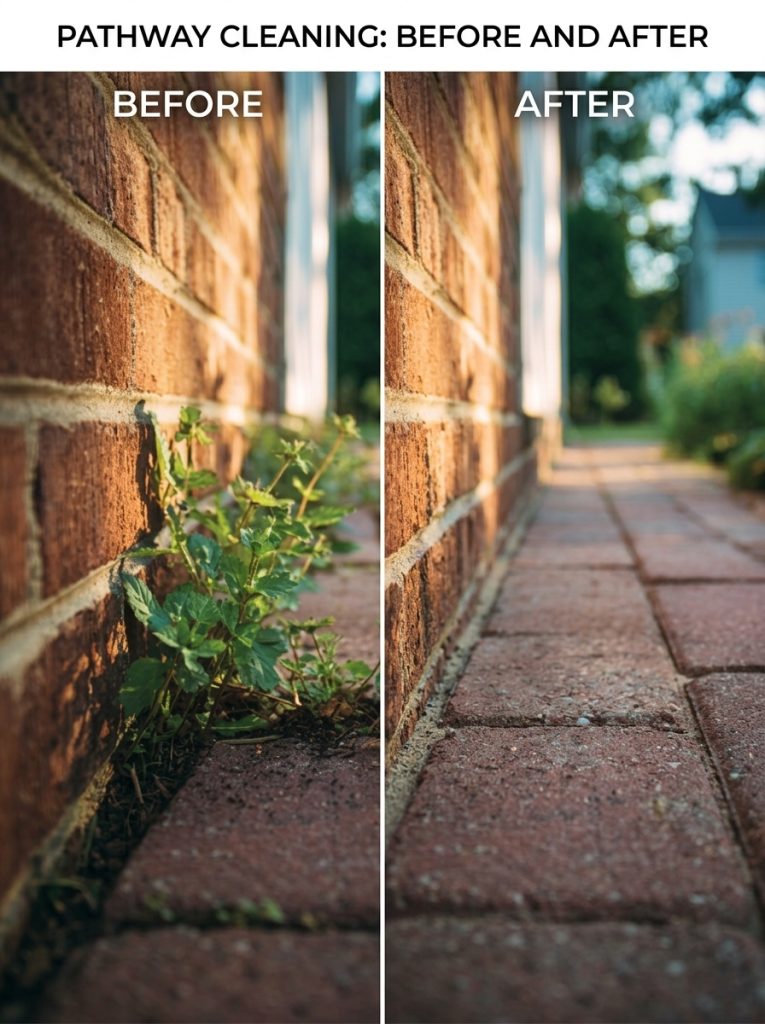
You’re not blanketing your entire yard. You’re targeting specific trouble spots—those stubborn weeds sneaking through concrete or popping up where they clearly weren’t invited.
That said—and this matters—“homemade” doesn’t mean harmless. Misuse it, and you can absolutely damage soil or nearby plants. The difference is, you’re in charge of how and where it’s used.
The Ingredients: Simple, But Not Random
This recipe isn’t just something pulled out of thin air. Each ingredient has a role, and once you understand that, the whole thing makes more sense.
The Core Trio
- White vinegar (1 gallon, 5% acidity or higher)
This is your main active ingredient. The acetic acid pulls moisture out of plant tissue—basically drying weeds out from the inside. - Table salt (1 cup)
Salt disrupts water balance in plants and dehydrates them further. It’s effective, but here’s the catch—it sticks around in the soil. That’s great for cracks in pavement, not so great for garden beds. - Liquid dish soap (1 tablespoon)
This one’s underrated. Soap breaks surface tension, helping the solution cling to leaves instead of sliding off.
Simple, right? But the simplicity is kind of the point.
Mixing It Up (Without Overthinking It)
You don’t need fancy equipment here. A bucket and a basic sprayer will do the job.
- Pour the vinegar into your container
- Add the salt and stir until dissolved
- Mix in the dish soap gently (don’t whip up a foam party)
That’s it. No complicated steps, no waiting around.
One small note—don’t make a huge batch thinking you’ll store it for later. It’s best fresh. Over time, the effectiveness drops off.
Timing Is Everything (Seriously)
You could have the perfect mixture, but if you apply it at the wrong time, results will be… underwhelming.
Here’s what you’re aiming for:
- A sunny day (heat boosts the drying effect)
- No wind (drift is not your friend)
- No rain for at least 24 hours
Think of it like painting—conditions matter.
When you spray, aim directly at the leaves. Light coating is enough. Drenching doesn’t help and just increases the chance of affecting nearby soil.
What Happens Next?
This isn’t instant, but it’s pretty quick.
Within a day or two, you’ll notice wilting. Leaves lose their color, stems droop—it’s not subtle.
But here’s where expectations need a slight adjustment.
This solution works on contact. It doesn’t travel down into deep root systems. So for tougher, perennial weeds? You’ll likely need a second (or third) round.
A little persistence goes a long way.
Small Tweaks That Make a Big Difference
Honestly, this is where most people either succeed or give up too early.
A few practical tips:
- Target carefully
This mixture doesn’t discriminate. If it touches a plant you like, that plant won’t like it back. - Go easy on the salt
Especially near soil you want to reuse. Salt is effective, but it doesn’t just disappear overnight. - Test first
Try a small area. Different weeds react differently. - Pair with manual removal
Pulling larger weeds first makes the spray far more effective on regrowth.
It’s not about doing more—it’s about doing it smarter.
Variations That Actually Make Sense
Not every situation calls for the exact same formula.
For Garden Beds (Skip the Salt)
Just vinegar + soap.
It’s gentler on the soil, though you may need to reapply more often.
For Stubborn Pavement Weeds
Start with boiling water. Yes, really.
Pour it directly onto the weeds, let them soften up, then follow with the vinegar mix. It’s surprisingly effective.
Want a Little Boost?
A few drops of citrus essential oil can increase effectiveness—and it smells a lot better than straight vinegar.
The Questions Everyone Ends Up Asking
Will it kill grass?
Yes. Instantly. This is not lawn-friendly.
Is it safe for pets?
Once it’s dry, generally yes. But during application? Keep them away.
Why didn’t it work the first time?
Could be weather, coverage, or just stubborn weeds. Try again—preferably on a sunnier day.
Does salt ruin soil permanently?
Not permanently, but it lingers. Use it sparingly and only where plant growth isn’t wanted.
A Quick Reality Check (Because It Matters)
Here’s the part people don’t always say out loud: there’s no perfect weed solution.
Not homemade. Not store-bought. Not anything.
Weeds show up because nature doesn’t like bare soil. It fills gaps—it always has.
So sometimes, the best long-term strategy isn’t just killing weeds. It’s preventing them:
- Mulch your beds
- Keep soil healthy
- Deal with weeds early, before they settle in
The homemade herbicide? It’s just one tool. A useful one—but still just a tool.
So… Is It Worth It?
If you’re looking for a controlled, affordable way to handle small weed problems—especially in hard-to-reach spots—then yes, absolutely.
It’s not flashy. It’s not perfect. But it works.
And maybe more importantly, it lets you deal with weeds on your own terms. No second-guessing what’s in the bottle. No overkill where it’s not needed.
Just a simple solution, used thoughtfully.
If you end up trying it, pay attention to what works in your space. Gardening’s a bit like cooking—same ingredients, slightly different results depending on how you use them.
And honestly? That’s part of the fun.