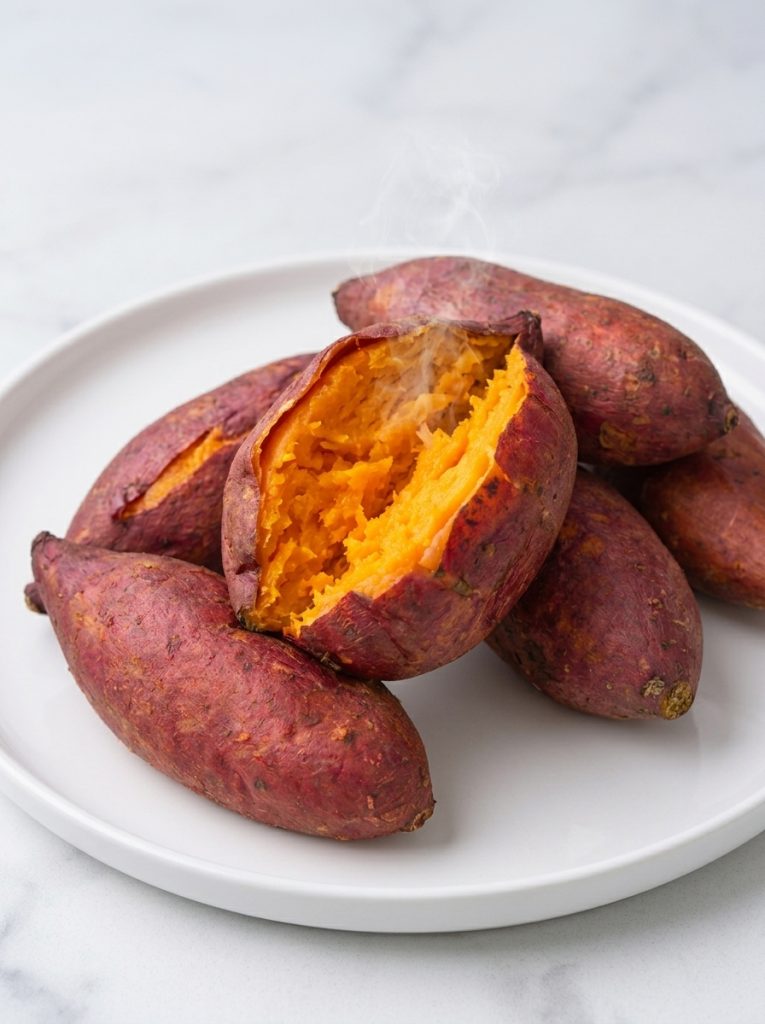
Sweet potatoes have quietly reinvented themselves.
Not long ago, they were stuck playing a seasonal role—buried under marshmallows at family dinners, overly sweet, almost dessert-like. Now? They’ve got range. You’ll spot them in grain bowls, gym meal preps, even blended into smoothies. A full glow-up, honestly.
But here’s the part most people don’t think about: what actually happens if you eat them every day?
I used to treat sweet potatoes like a backup carb. No rice? Fine, I’ll grab one. Nothing special. Then I started reading more about them—real nutrition research, not just fitness blog hype—and I had that moment of pause. Like, wait… have I been underestimating this thing?
So I kept it simple. One boiled sweet potato a day. Thirty days. No drastic diet changes, no overthinking.
Just a pot, some water, and a bit of curiosity.
And yeah—things shifted. Subtly at first. Then noticeably.
Let me walk you through it.
Why Boiling Isn’t Boring (It’s Actually the Smart Move)
Let’s clear something up before we go further—how you cook a sweet potato changes everything.
Roasting tastes great, sure. Frying? Even better (if we’re being honest). But both come with trade-offs—extra fats, higher sugar concentration, and in some cases, compounds you don’t really want piling up.
Boiling, though… it’s almost underrated.
It’s gentle. It doesn’t mess too much with the structure of the food. And that matters.
When you boil sweet potatoes (skin on, ideally), you:
- Keep most of the vitamin C intact
- Preserve those B vitamins your body actually uses daily
- Avoid extra calories from oil
- Lower the glycemic impact compared to roasting
- Maintain fiber—the stuff your gut quietly depends on
And here’s the funny part: they don’t need much dressing up. A little butter, a pinch of cinnamon, maybe some olive oil… done.
I’ll admit something slightly embarrassing—I ate a few straight out of the fridge like apples. Cold, firm, oddly satisfying.
So… What Actually Happens When You Eat Them Daily?
1. Your Digestion Gets… Predictable (In a Good Way)
This was the first thing I noticed. And it happened fast—like three days in.
Sweet potatoes carry both soluble and insoluble fiber. Think of it like a two-person cleanup crew:
- One feeds your gut bacteria
- The other keeps things moving physically
It’s not dramatic. No fireworks. Just… consistency.
You wake up, and things work. Smoothly. Reliably.
If you’ve ever dealt with sluggish digestion, you know how big that is.
2. Your Skin Starts Doing That “Healthy Glow” Thing
Around the two-week mark, someone asked me if I’d changed skincare products.
I hadn’t.
That glow? It’s beta-carotene doing its job.
Sweet potatoes are loaded with it—the pigment that gives them that deep orange color. Your body turns it into vitamin A, which helps with skin repair, cell turnover, even oil balance.
And here’s the wild part: one medium sweet potato gives you over 400% of your daily vitamin A needs.
Yeah. That’s not a typo.
There is a funny downside, though. If you really overdo it, your skin can take on a slight orange tint. It’s harmless, but… noticeable. I didn’t hit that point—but it’s good to know where the line is.
3. Your Energy Levels Stop Playing Games
You know that mid-afternoon crash? Around 3 PM, when your brain just… checks out?
Mine disappeared.
Not dramatically. More like it faded away quietly.
Boiled sweet potatoes release energy slowly. The fiber slows down sugar absorption, so instead of a spike-and-crash cycle, you get something steadier.
It’s not caffeine-level energy. It’s better—it’s consistent.
And honestly, that’s what most of us actually need.
4. Your Immune System Gets a Subtle Boost
I can’t prove this one with a dramatic story. But I’ll say this:
Everyone around me got sick. Office colds, seasonal bugs—you know how it goes.
I didn’t.
Now, was it the sweet potatoes alone? Probably not. But they helped.
Between vitamin A, vitamin C, and antioxidants, they support how your body handles stress and infections. Nothing flashy—just quiet reinforcement.
Sometimes that’s enough.
5. You Stay Full Longer (Without Trying Too Hard)
This one surprised me more than I expected.
A boiled sweet potato isn’t heavy, but it sticks with you.
It’s that mix of fiber, water, and complex carbs. You eat one, and suddenly you’re not hovering around the kitchen 45 minutes later looking for snacks.
It’s not about restriction. It’s just… less noise around food.
And that makes a difference if you’re trying to manage weight without turning your life into a spreadsheet.
Okay, But Let’s Be Real—Any Downsides?
Nothing is perfect. Not even sweet potatoes.
A few things to keep in mind:
- Too many = slight orange tint to your skin (harmless, just unexpected)
- Moderate oxalates, which can matter if you’re prone to kidney stones
- Fiber adjustment period—your gut might need a week to catch up
- If you’re on blood sugar medication, monitor levels carefully
None of these are deal-breakers. Just context.
How Do You Eat Them Every Day Without Getting Sick of Them?
Because yeah—plain boiled sweet potatoes every day? That gets old fast.
Here’s what actually worked for me:
Breakfast
- Mashed with cinnamon + almond butter
- Sliced and added to oatmeal (sounds odd, works surprisingly well)
Lunch
- Tossed into salads with greens and cheese
- Used as a base instead of croutons or bread
Dinner
- Mashed as a side
- Mixed into bowls with beans, rice, and something fresh like lime or herbs
Snack
- Cold, straight from the fridge (I stand by this)
Quick tip: boil a batch for the week. Store them. You’ll thank yourself later.
A Few Questions People Always Ask
Is every day too much?
For most people, one per day is totally fine.
Better than baking?
For blood sugar control—yes. For taste? Depends on your mood.
Eat the skin or not?
Eat it. That’s where a lot of the good stuff sits.
Will it help with weight loss?
Not magically. But it makes things easier.
So… Was It Worth It?
Yeah. It was.
Not because it changed everything overnight—but because it didn’t.
That’s the point.
No extreme diet. No cutting out foods. Just one consistent, simple addition.
And that was enough to notice:
- Better digestion
- More stable energy
- Clearer skin
- Less mindless snacking
It made me rethink what “healthy eating” actually looks like.
Not complicated. Not strict. Just… consistent.
If you’re curious, try it. Not forever—just a few days a week.
Pay attention to how you feel. That matters more than any article, honestly.
And hey—if nothing else, you’ll have a solid, affordable, genuinely good food in your routine.
That’s already a win.