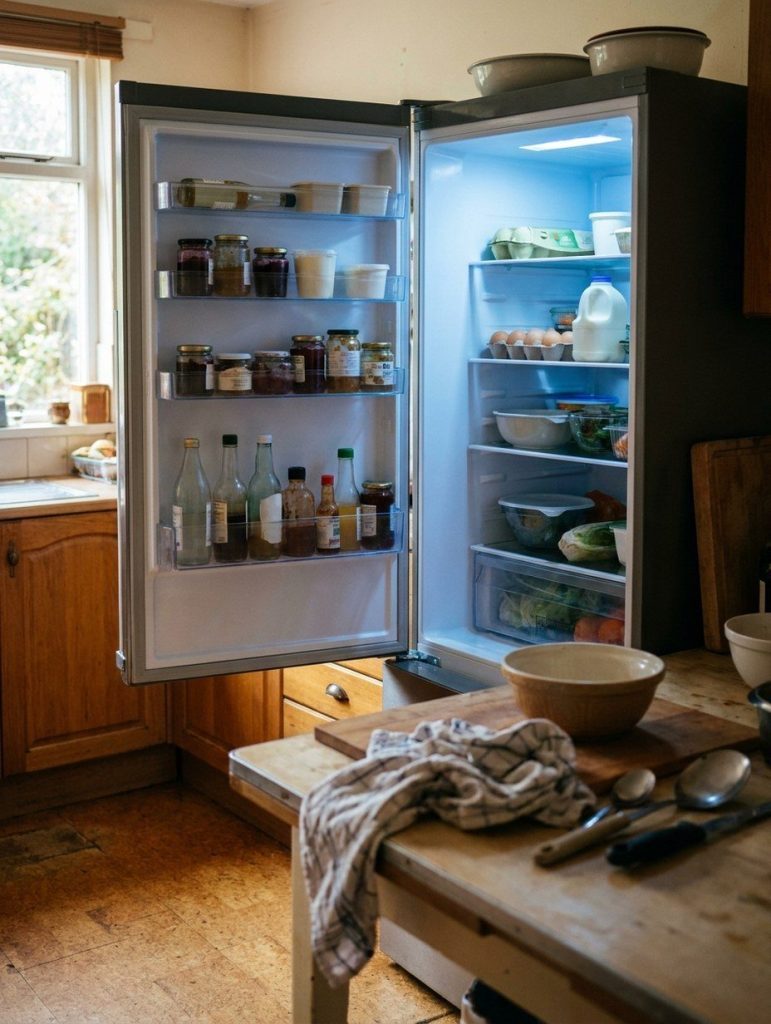
The fridge door is the most convenient shelf in the kitchen. It’s at eye level, it’s the first thing you touch, and everything on it is a single reach away.
It is also the warmest part of the fridge, by a long way — and I’d put money on most of us keeping at least three of these things in it right now.
Why the Door Is Different
Every time you open the fridge, the door swings out into a room that’s around 70°F. The shelves inside barely notice. The door takes the full hit.
Open a fridge ten or fifteen times a day — which is normal in a house with kids — and the door is warming and cooling all day long. It routinely sits five to eight degrees warmer than the back of the middle shelf.
For a bottle of ketchup, that doesn’t matter. For some things it matters a lot.
1. Milk

This is the big one, and it’s on the door in almost every house I’ve been in, usually because the door is where the milk-shaped slot is.
Milk is sensitive to temperature swings, and every warm-cold cycle shortens its life. Milk kept on the door regularly goes off days before its date. Milk kept at the back of a lower shelf usually outlives it.
Back of the bottom shelf. It’s the coldest, steadiest spot in the whole fridge.
2. Eggs
Same story, and again the fridge is designed against you — many still come with a molded egg rack in the door.
Eggs do better at a steady temperature, and the constant swinging is what shortens them. There’s also a practical issue: eggs on a door get knocked about every time it shuts, and hairline cracks you can’t see are a real way for bacteria to get in.
Leave them in the carton they came in and put the carton on a middle shelf. The carton protects them and the printed date stays with them.
3. Raw Meat, Fish or Poultry
I hope nobody is doing this, but I’ve seen it — a pack of bacon or some chicken tucked into the door because the shelves were full.
Two problems. It’s the warmest spot, and raw meat is the thing that least tolerates warmth. And it’s above everything else, so any drip goes down onto whatever is below it.
Bottom shelf, at the back, on a plate or tray. Always the bottom, so nothing can drip onto food you’re not going to cook.
4. Anything You’ve Already Opened and Want to Keep a While
Opened cream. Opened yogurt. Leftover sauces you actually intend to finish. Soft cheeses.
Once a seal is broken, the clock is running, and a warm shelf runs it faster. The door is where half-used things go to be forgotten, and the door is the worst place to forget something.
5. Fresh Herbs and Delicate Greens
Herbs wilt fast at fluctuating temperatures, and the door is where a bunch of parsley usually ends up because it fits nowhere else.
They keep far better standing in a glass with an inch of water, like flowers, on a middle shelf. Basil actually prefers the counter — the fridge turns its leaves black.
6. Anything Already Close to Its Date
This one is a habit rather than a food. The door is where things go when you’re in a hurry, and it’s also where things get lost behind a jar of pickles.
Whatever is nearest its date should be at the front of a shelf where you can see it, not on the door where you can’t.
What the Door Is Actually Good For
Things that don’t care: ketchup, mustard, barbecue sauce, soy sauce, jam, pickles, hot sauce, salad dressing, most condiments.
They’re acidic or salty or both, which is exactly what makes them stable. They were sitting on a shop shelf at room temperature before you bought them.
The door was built for condiments. Give it condiments, and give the milk and the eggs a proper shelf.