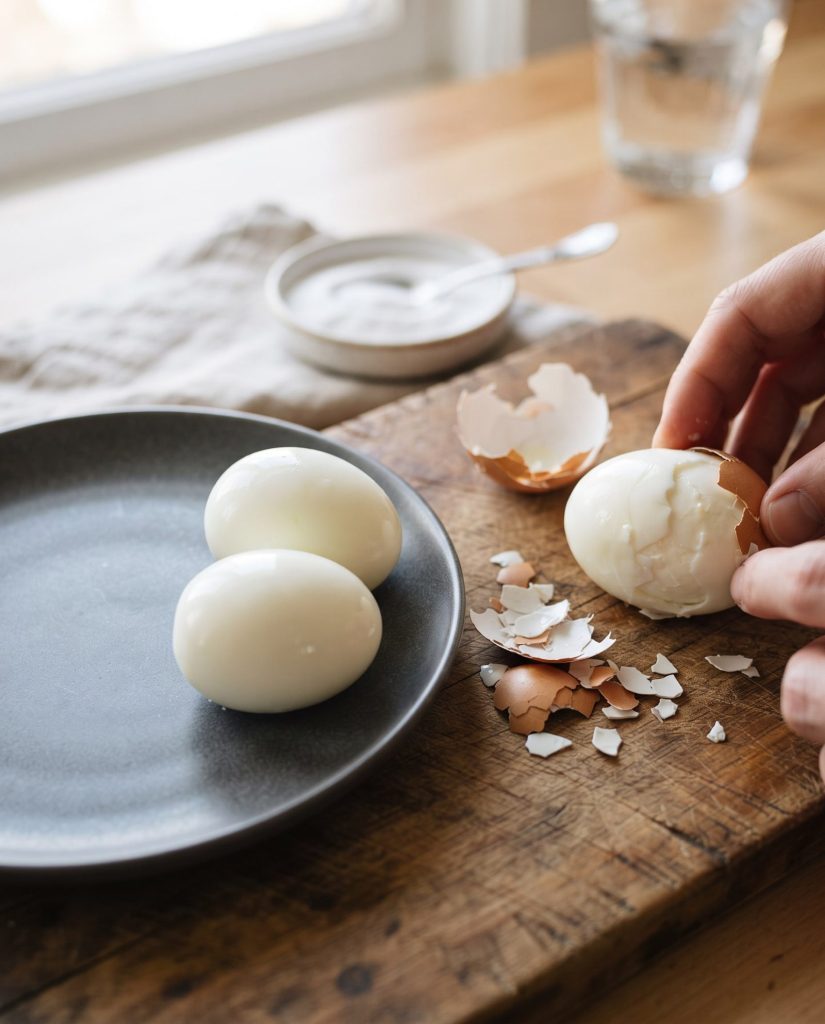
Few things are more frustrating than a hard-boiled egg that peels off in little chunks, taking half the white with it. That’s why so many cooks swear by a little baking soda in the pot.

Why Some Eggs Are Hard to Peel
Very fresh eggs are the hardest to peel. The white of a fresh egg is slightly acidic, and that makes it cling tightly to the thin membrane inside the shell. As an egg ages, it naturally becomes more alkaline, and the white lets go of the membrane more easily. That’s why week-old eggs often peel better than eggs bought yesterday.
What Baking Soda Does
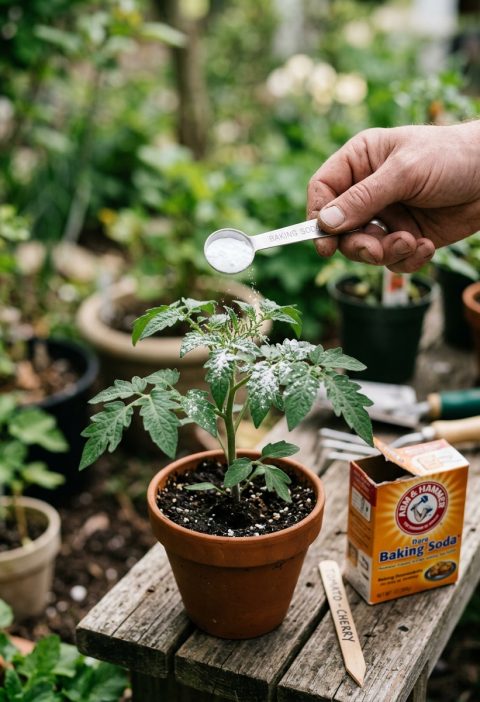
Baking soda is alkaline. Adding it to the water raises the pH a little, which is meant to copy what happens as eggs age and help the white release from the shell.
How to use it: add about 1/2 teaspoon of baking soda to a medium pot of water before you add the eggs.
What to expect: many cooks find it helps, especially with fresh eggs. Others notice little difference, because only a small amount of the alkaline water gets through the shell. It won’t hurt anything, though some people notice a faint sulfur smell.
The Method That Peels Best
Even more than baking soda, two steps make the biggest difference:
- Start with boiling water. Lower cold eggs gently into water that’s already at a full boil, then reduce to a gentle boil for 11 to 12 minutes. The quick heat helps the white pull away from the membrane.
- Ice bath right away. Move the eggs straight into a bowl of ice water for at least 5 minutes. The shock makes the egg shrink slightly from the shell.
Then crack the egg all over, start peeling at the wide end where the air pocket is, and peel under a little running water.
Tips
- Use eggs that are 7 to 10 days old when you can.
- Steaming eggs for 12 minutes instead of boiling also gives very easy peeling.
- Keep peeled eggs in a covered container in the fridge for up to 5 days.
Frequently Asked Questions
Does vinegar help too?
Vinegar mainly helps if an egg cracks, by setting the leaking white quickly. It doesn’t help much with peeling.
Does baking soda change the taste?
In small amounts, no. Too much can give a slight sulfur smell.
Why is there a green ring around the yolk?
That’s from overcooking. Shorter cooking and a fast ice bath prevent it.
A pinch of baking soda is worth a try, but boiling-water starts and an ice bath are the real secret.