A ham wrapped in cheesecloth, salted, and buried three feet underground for 60 days may come back looking firm and smelling pleasantly spiced. That does not make it safe to eat.
Salt curing is a real preservation method, but burying a whole ham in soil is not a reliable curing process. The ground adds uncontrolled temperature swings, moisture, insects, animals, and—most concerning—microbes from the soil itself.
The Backyard Ham Experiment Sounds More Convincing Than It Is
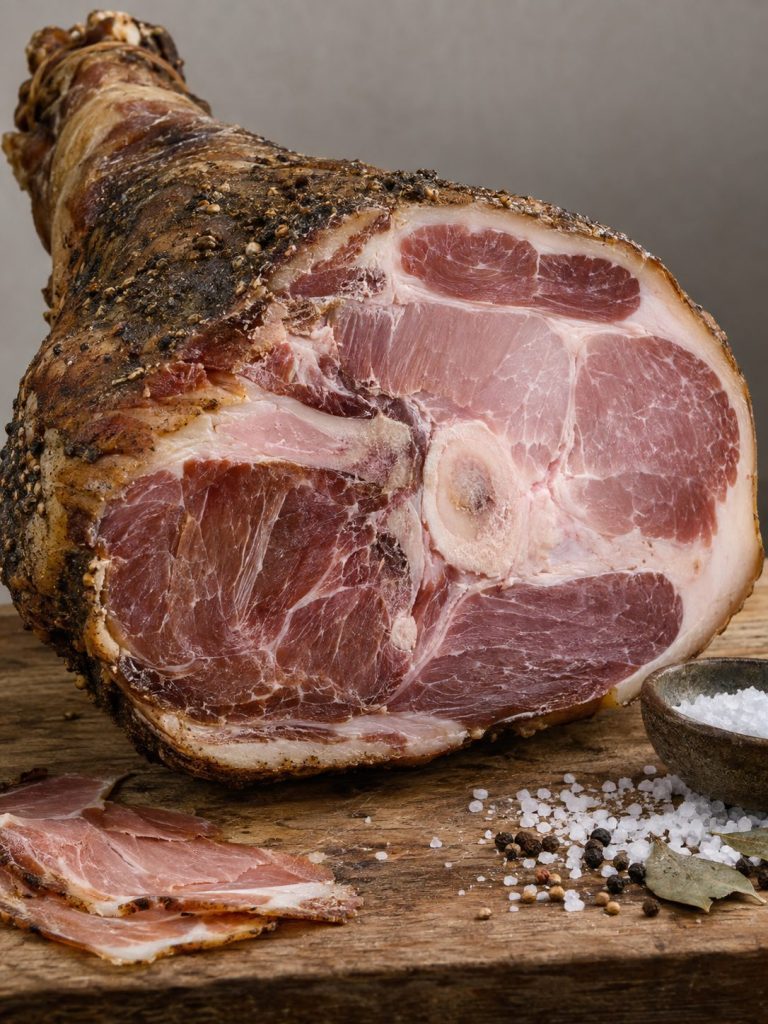
The account starts with a 15-pound bone-in ham coated in kosher salt, black pepper, juniper berries, bay leaves, and cloves. It was wrapped in several layers of cheesecloth, buried in a shaded spot about three feet deep, and left there for 60 days.
When it was dug up, the cheesecloth was intact. The ham had darkened, firmed up, and developed an earthy, spicy smell. There was a salty crust on the outside but no obvious mold or rot.
Those details may sound like proof that curing worked. They aren’t. A cured ham should not be judged by its color, firmness, or smell alone.

Salt Needs to Reach the Inside of the Meat
Salt preserves meat by pulling out moisture and reducing the water available for bacteria to grow. But a heavy coating of salt on the surface does not guarantee that the center of a large, bone-in ham has cured properly.
Traditional dry-cured hams are made with carefully measured salt, controlled temperatures, specific humidity, air circulation, and a long aging schedule. Producers also monitor the ham’s weight loss, because moisture loss is a major part of the process.
A ham buried in soil has none of that oversight. The outside may become dry and firm while the meat near the bone remains too wet, too warm, or insufficiently salted. That’s the part you can’t judge by looking at the rind.
Cheesecloth Keeps Off Dirt, Not Germs
Cheesecloth may keep clumps of dirt and some insects off the ham, but it is not a sanitary barrier. Soil contains bacteria, molds, parasites, and spores. Moisture can move through the cloth, and so can microorganisms.
The backyard itself also is not a curing chamber. Even a shady spot can warm up, cool down, get wet after rain, or stay damp for days. Soil temperature is more stable than direct sun, but “more stable” is not the same as controlled.
That matters because harmful bacteria grow when meat spends too long in unsafe temperature ranges. A cool cellar used for curing is managed for temperature and humidity. A hole under a tree is just a hole under a tree.
Spices Add Flavor, Not Food-Safety Protection
Juniper, cloves, bay leaves, and black pepper can make cured meat smell and taste good. They do not replace a validated curing recipe.
Proper curing recipes may call for curing salt that contains sodium nitrite, used in an exact amount. Nitrite helps control dangerous bacteria, including the kind associated with botulism, while salt and drying do the rest of the preservation work. It is not interchangeable with kosher salt, table salt, or a spice blend.
This is also why you should never improvise with curing salt. Too little may not provide the intended protection; too much can be harmful. Use a tested recipe written specifically for the cut of meat and curing method you’re using.
A Nice Smell Does Not Mean the Ham Is Safe
The buried ham in the account reportedly smelled earthy and musty, with spice and cured-meat notes. It had no visible mold or rot. Those are better signs than slime, a putrid odor, or discoloration—but they are not a safety test.
Some foodborne pathogens do not make meat look or smell spoiled. You cannot taste a thin slice “just to see.” A small bite is enough to expose you to a foodborne illness, and cooking later may not undo every problem created during an uncontrolled cure.
A ham should not taste sour, rotten, sharply chemical, or unpleasantly bitter. But the absence of those flavors is not a green light, either.
What to Do Instead If You Want to Cure Ham
If you want the deep, salty flavor of dry-cured ham, use a tested home-curing recipe from a reliable extension service, food-preservation guide, or experienced curing educator. Follow its salt amounts, curing salt instructions, temperatures, humidity requirements, and aging schedule exactly.
If you do not have a controlled curing space, choose a safer project:
- Make a small cured pork product using a tested refrigerator-curing recipe.
- Buy a country ham or dry-cured ham from a producer that cures under controlled conditions.
- Cook a fresh ham and use a salt-and-spice rub for flavor rather than preservation.
And if you currently have a ham buried in your yard, don’t serve it. Wear gloves to remove it, bag it securely, discard it according to local trash rules, and wash any tools or surfaces that touched it.
Traditional curing takes patience, but it also takes control. Keep the salt, spices, and slow aging—leave the backyard burial out of it.