The short answer: the apple worked. After two weeks in the pantry, the potatoes stored with half an apple had barely sprouted — most sprouts were under a quarter inch — while the batch stored with an onion had sprouts up to an inch long, softer flesh, and more blemishes.
I’d heard for years about tucking an onion in with your potatoes. Then I came across the opposite idea: use an apple instead. So I split a bag of potatoes in two and ran both methods side by side. Here’s what I found.
Why an Apple Instead of an Onion
Apples release ethylene gas, a natural plant hormone. In potatoes, ethylene seems to slow the internal changes that trigger sprouting — it keeps the tubers dormant longer.
Onions do roughly the opposite. They give off moisture and gases that speed spoilage, which is also why standard storage advice says to never keep potatoes and onions together at all. So much for the old onion trick.
The apple had one more selling point: it makes the pantry smell faintly fruity instead of faintly like an onion bin.

How I Set Up the Test
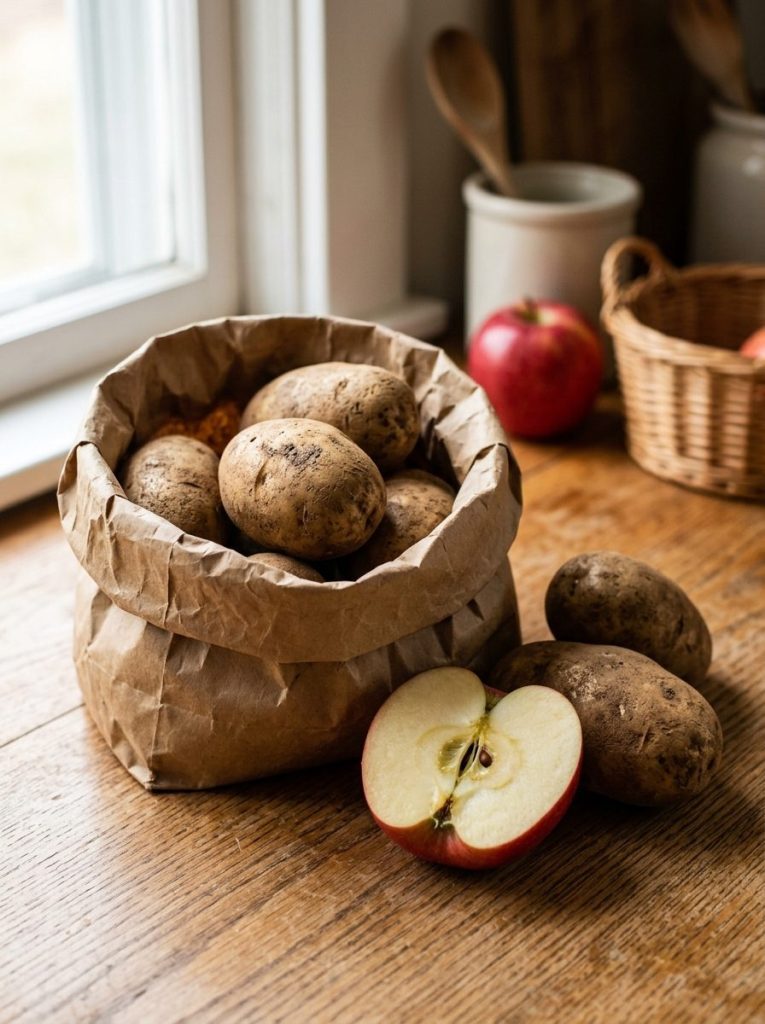
I started with two identical batches of fresh potatoes, exactly 2 pounds each. One went into a paper bag with half an onion, the other into a paper bag with half an apple. Both bags sat on the same shelf in a cool, dark pantry so the conditions matched.
Every three days I checked for sprouts, soft spots, and color changes. Once a week I swapped in a fresh apple or onion half so the effect wouldn’t taper off as the first one dried out.
What Happened, Day by Day
Day 3: nothing to report. Both batches looked identical — no sprouts, no soft spots. The only difference was the smell.
Day 7: the first real split. The onion batch had tiny sprouts just starting to push out of the eyes. The apple batch was clean, and it felt noticeably firmer when I squeezed a few.
Day 14: the gap was obvious. The onion potatoes had sprouts up to 1 inch long, with softer flesh and more blemishes. The apple potatoes had only a few small nubs, most under a quarter inch, and still felt rock firm.
How They Cooked Up
I peeled and boiled a few from each bag and turned them into a simple mash.
The apple-stored potatoes peeled clean and sliced easily — firm all the way through, no off smell. The onion-stored ones were still usable, but softer, and I had to trim more sprouts and spots before they went in the pot.
In the mash, the apple batch tasted fresher. The onion batch was fine, just flatter. If you’d served me both side by side, I could have told you which was which.
Why the Apple Wins
Ethylene is the whole story on the apple side. It’s the same gas that ripens bananas on your counter, and in tubers it appears to delay the sprouting process. Scientists still debate how ethylene affects potatoes over months of commercial storage, but for a two-week stint in a home pantry, the effect was hard to miss.
The onion loses for a simpler reason: moisture. Potatoes store best dry, and an onion slowly leaks humidity into the bag while its gases push the potatoes toward spoilage. Sprouts plus softness plus blemishes — that’s what you get.
When It’s Worth Doing (and When to Skip It)
Bother with the apple if you buy potatoes in bulk, if your pantry runs warm, or if your spuds always seem to sprout before you get through the bag.
Skip it if you’ll cook them within a week. At that point any cool, dark spot works fine, and the apple is just a garnish.
Other Storage Habits That Matter More
The apple helps, but the basics do most of the work:
- Keep potatoes in a cool, dark place. Light and warmth are what really wake up the eyes.
- Give them air. A paper bag, basket, or ventilated bin beats a sealed plastic bag, which traps moisture and invites mold.
- Don’t refrigerate them. Cold turns the starch to sugar, and you’ll end up with oddly sweet potatoes that brown too fast in the pan.
- Check the bag weekly and pull any potato that’s going soft or moldy. One rotten potato really does spoil the bunch.
My Plan Going Forward
Next time I bring home a 5-pound bag, I’m dropping half an apple in and swapping it out each week. It costs me half an apple and keeps the potatoes firm and nearly sprout-free twice as long. That’s a trade I’ll make every time.