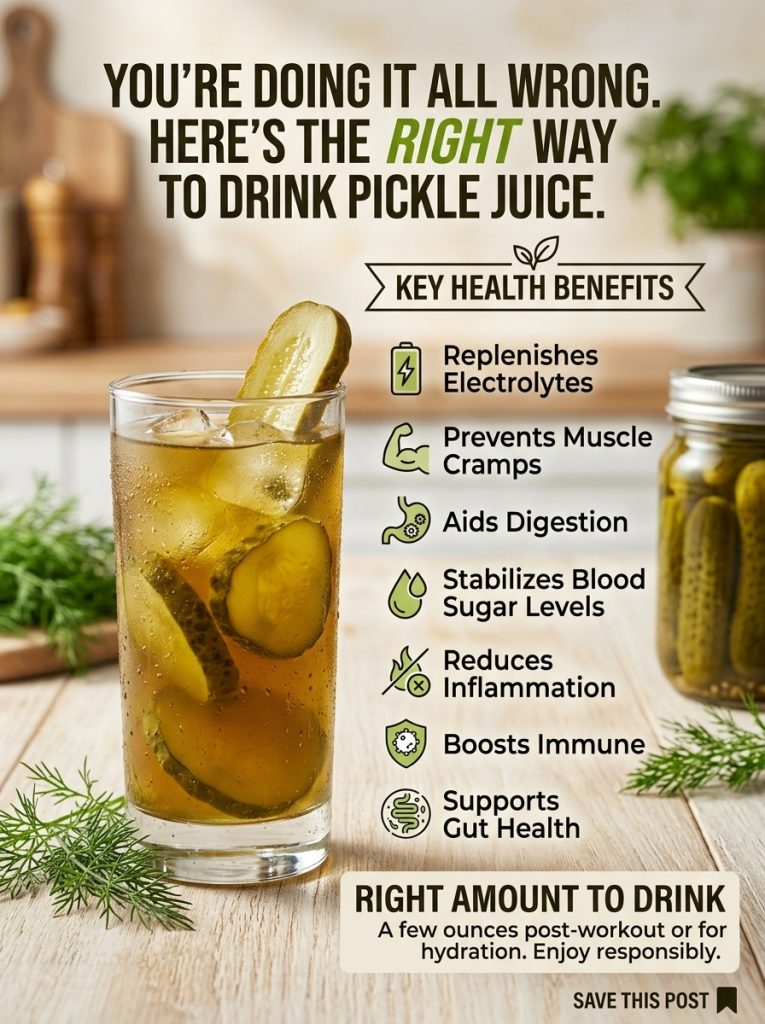
Pickle juice doesn’t exactly scream “health drink,” does it? It’s sharp, salty, and—let’s be honest—usually an afterthought once the pickles are gone. But lately, that tangy brine has been stepping into the spotlight. Athletes sip it mid-game, wellness enthusiasts keep it in their fridges, and social media? Well, it’s having a bit of a moment with it.
So what’s going on here? Is pickle juice actually good for you—or is this just another passing trend?
Here’s the thing: it can be beneficial. But only if you use it right.
Let’s break it down.
So… Why Are People Drinking Pickle Juice Anyway?
At first glance, pickle juice seems like an unlikely hero. But when you look at what’s inside—water, vinegar, salt, and spices—it starts to make sense. It’s simple, yes, but surprisingly functional.
Think of it as a low-cost, no-frills electrolyte drink. No fancy branding. No neon colors. Just… brine.
And for some people, that’s exactly the appeal.
A Quick Boost When Your Body Needs It Most
If you’ve ever had a muscle cramp that hit out of nowhere, you know how intense it can be. Athletes, especially, deal with this often. That’s where pickle juice comes in.
It’s packed with electrolytes like sodium and potassium—key players when your body is low on fluids. These minerals help restore balance and keep your muscles working properly.
Some even swear that pickle juice stops cramps almost instantly. Sounds wild, right? But there’s evidence suggesting that the vinegar may trigger a reflex that helps relax muscles faster than water alone.
Strange, but effective.
Your Gut Might Actually Thank You
Now here’s an angle people don’t always expect—digestion.
The vinegar in pickle juice can stimulate stomach acid production. That might sound intense, but in moderation, it helps your body break down food more efficiently. A sluggish digestive system? This can give it a bit of a nudge.
And if you’re drinking juice from naturally fermented pickles—not the artificially preserved kind—you might also be getting a dose of probiotics. Those are the “good bacteria” your gut relies on.
A healthier gut often means better nutrient absorption, fewer digestive issues, and even a subtle lift in mood. It’s all connected.
Blood Sugar, Inflammation… There’s More Going On
Pickle juice isn’t just about hydration and digestion.
Vinegar has been linked to more stable blood sugar levels, especially after meals. That’s particularly helpful for people managing insulin sensitivity. It doesn’t replace proper nutrition, of course—but it can support it.
On top of that, there are antioxidants in the mix. Not huge amounts, but enough to help combat oxidative stress over time. Less inflammation, more balance. That’s the goal.
Okay, But Let’s Not Overdo It
Here’s where things can go sideways.
It’s easy to think, “If a little helps, more must be better.” Not quite.
Pickle juice is very high in sodium. That’s part of what makes it effective—but also what makes it risky in large amounts. Too much sodium can push blood pressure up and put strain on your kidneys.
And then there’s the acidity. Drinking it straight, especially on an empty stomach, can irritate your digestive lining. Some people feel fine. Others? Not so much.
Also worth noting: not all pickle juice is created equal. Some store-bought versions contain artificial additives, dyes, or preservatives that don’t exactly align with the “health tonic” idea.
So yes—there are benefits. But there are boundaries too.
How Much Is Actually Enough?
You don’t need a full glass. Not even close.
About 1 to 2 ounces is usually enough to get the benefits without overwhelming your system. That’s just a small shot—quick and to the point.
Timing matters too:
- After a workout → helps replenish electrolytes
- Before meals → may support digestion (if your stomach tolerates it)
- During exercise → can help prevent cramps in some cases
It’s not something you sip casually all day. Think of it more like a targeted boost.
A Few Easy Mistakes to Avoid
People often get excited about a “new” health habit—and pickle juice is no exception. But a few missteps can cancel out the benefits.
- Drinking too much, too often
- Taking it on an empty stomach without testing tolerance
- Ignoring sodium intake from other foods
- Choosing artificially preserved pickle juice
It’s not complicated, but it does require a bit of awareness.
A Small Habit That Can Go a Long Way
Here’s the funny part: pickle juice feels both old-school and trendy at the same time. It’s been around forever, yet only recently got this kind of attention.
And honestly? It deserves a bit of it.
Used wisely, it can support hydration, digestion, and recovery. It’s not a miracle solution—but it doesn’t need to be. Sometimes, simple things work quietly in the background.
So if you’re curious, try it. Start small. Pay attention to how your body responds.
You might be surprised.
Final Thoughts: Keep It Simple, Keep It Smart
Pickle juice isn’t for everyone—but it doesn’t have to be.
If it works for you, great. If not, no harm done.
The key is moderation, awareness, and choosing a clean, natural version. No need to overthink it. No need to force it either.
Just a small shot here and there—sharp, salty, and surprisingly useful.