Coffee grounds on a steak. I’d seen it on a steakhouse menu described as a coffee rub and assumed it was a gimmick for the menu writing.
Then I tried it on a cheap cut that needed help, and it was the best crust I’d ever got on a piece of beef at home.
What It Actually Does
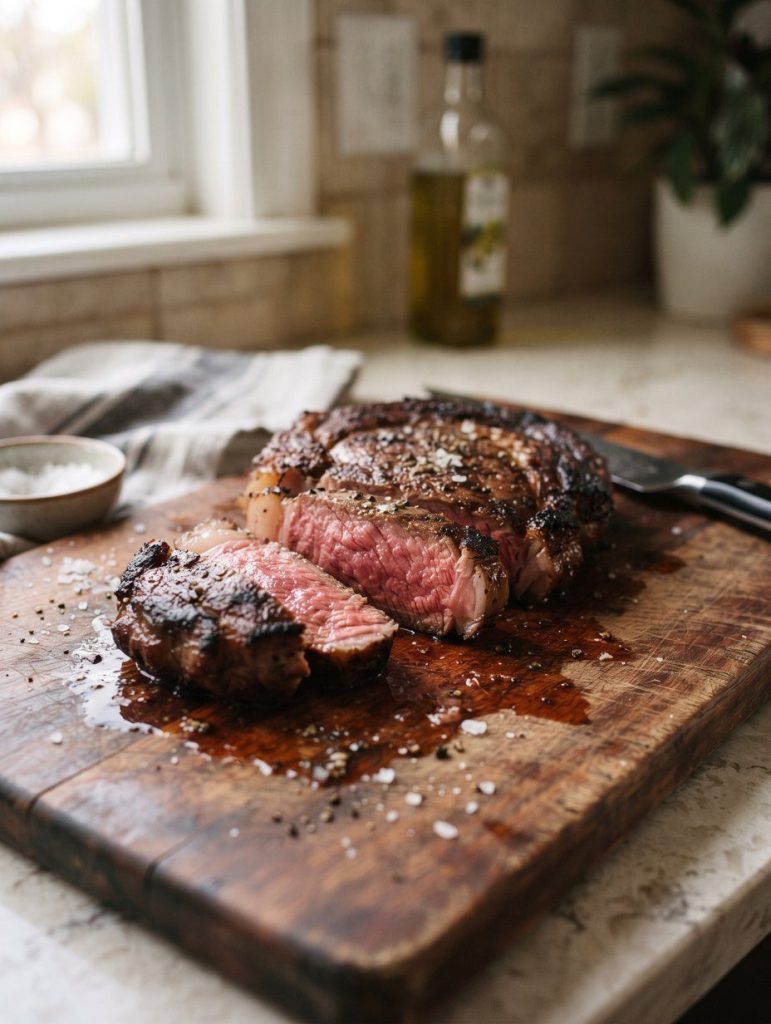
It builds a crust. Ground coffee is dry and slightly coarse. Pressed onto a dry steak it forms a layer that chars and crisps in a hot pan, giving you a thick dark crust that salt and pepper alone don’t produce.
It adds bitterness that reads as roasted. Beef is rich and slightly sweet. Bitterness pushes against that, the same way it does in chili or a chocolate sauce. It tastes like more browning, not like coffee.
There’s a mild tenderizing effect. Coffee is acidic and contains enzymes that work on the surface proteins. It’s a small effect on a short rub, but on a tough cut left an hour it helps.
The Rub
For two steaks:
2 teaspoons finely ground coffee · 2 teaspoons brown sugar · 1 teaspoon smoked paprika · 1 teaspoon coarse salt · 1 teaspoon black pepper · half a teaspoon garlic powder.
Mix, pat the steak completely dry, press the rub on all over.
Rest it thirty minutes at room temperature, or up to a few hours in the fridge for a tough cut.
Cooking It Without Burning the Rub
This is the part that goes wrong.
There’s sugar in the rub and sugar burns. Use a medium-high pan rather than the screaming-hot one you’d use for a plain steak.
Oil the steak, not the pan. Two to three minutes a side for something an inch thick, then finish with butter, garlic and thyme, spooning it over.
Rest it five minutes before cutting. Always.
Use the Right Grind
Fine espresso grind, not coarse filter grounds. Coarse grounds stay gritty and you feel them between your teeth.
Fresh grounds, not used ones from the machine — used grounds have given up most of what you want and just add damp bitterness.
And don’t use flavored coffee unless you want a hazelnut steak.
Which Cuts It Suits
Best on cheaper, beefier cuts: skirt, flank, chuck eye, sirloin. These want a big crust and can take the extra flavor.
I’d leave a good ribeye or fillet alone. A cut you paid properly for tastes of itself and doesn’t need covering up.
Where Else It Works
The same rub is excellent on pork shoulder before a long roast, on short ribs before braising, and on a brisket.
Anything slow-cooked and beefy takes it. Anything delicate does not.