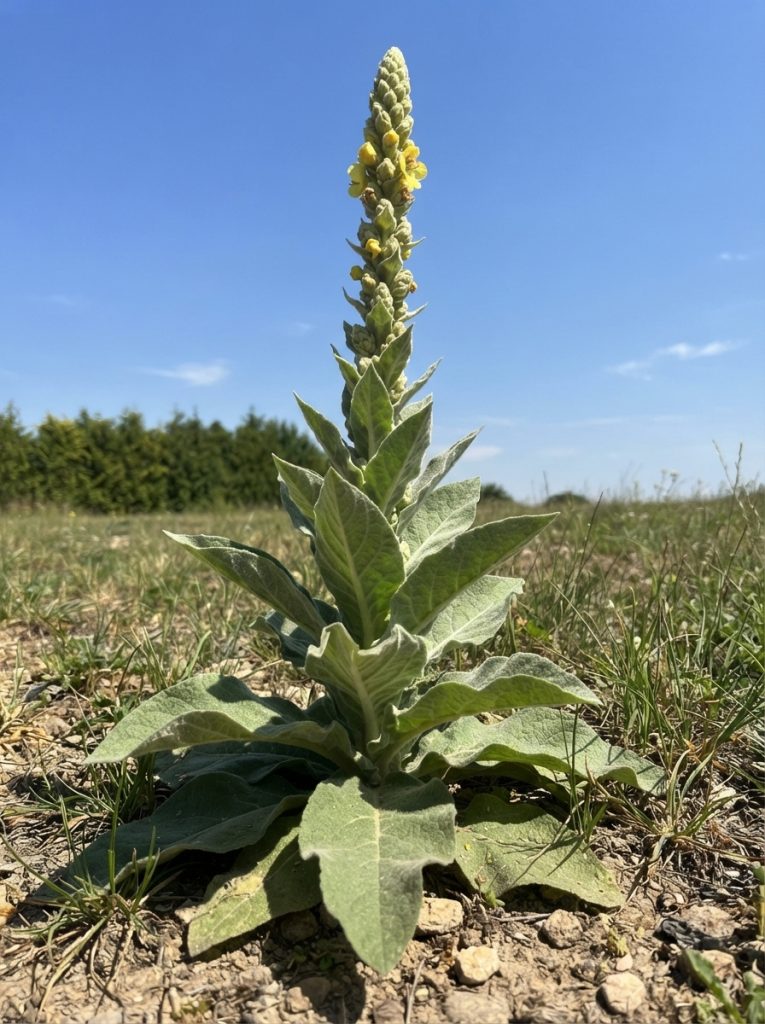
You’ve probably seen it. Tall. Slightly awkward-looking. Kind of fuzzy, like it didn’t quite decide what it wanted to be.
And you kept walking.
Most people do.
But here’s the thing—this plant you’ve ignored a dozen times? It’s been quietly earning a reputation for centuries. Not hype. Not trends. Just steady, practical use.
It’s called mullein (Verbascum thapsus), and once you recognize it, you’ll start noticing it everywhere. Roadsides. Empty lots. Dry fields that look like nothing could grow there.
Funny how something so common can feel like a secret once you know what it actually is.
A Plant With Stories (and a Bit of Mystery)
Mullein didn’t just show up in herbal books recently—it’s been around the block. Way around.
Ancient Greeks and Romans leaned on it for lung-related issues. In medieval Europe, people dipped its dried stalks in tallow and used them as makeshift torches. They even gave it names like Hag’s Taper, which… yeah, sounds dramatic, but also kind of fitting.
And then there’s folklore. Some believed it kept evil spirits at bay. Others planted it near homes for protection. Whether you buy into that or not, it says something: people paid attention to this plant.
Even Native American communities used it—especially for coughs, wounds, and inflammation.
So no, it’s not just a “weed.” It’s more like a quiet veteran of natural medicine.
So What Does It Actually Look Like?
Once you know, you can’t unsee it.
Mullein usually grows tall—sometimes up to six feet—with a single, straight stalk. No branches. Just confidence.
At the base, you’ll find large, soft leaves arranged in a circle. They’re thick, almost velvety. Touch one and you’ll get why people remember it—it’s like nature decided to make a plant feel like fabric.
Then come the flowers. Small. Yellow. Packed tightly along the top spike like tiny suns stacked together.
It’s not flashy in the usual sense. But it stands out once your eyes adjust.
Why It Grows Where Nothing Else Wants To
You’ll often find mullein in places that look… neglected.
Dry soil. Gravel. Edges of roads. Open land that’s been disturbed.
And honestly, that’s part of its charm.
It doesn’t need perfect conditions. It just grows. Quietly. Reliably. Almost stubbornly.
It’s a biennial plant, which means it plays the long game:
- Year one: just leaves, low to the ground
- Year two: boom—tall stalk and flowers
There’s something oddly reassuring about that rhythm. No rush. No drama. Just timing.
Let’s Talk Benefits—Because This Is Where It Gets Interesting
Alright, this is the part where people usually expect a long, clinical list. And yes, mullein does check a lot of boxes—but let’s keep it human.
Breathing Feels Easier
This is what mullein is best known for. If your chest feels heavy, or a cough won’t let go, mullein tea has a long track record of helping loosen things up.
Not magic. Just effective.
It Calms Things Down
Inflammation—whether in joints, skin, or internally—tends to respond well to mullein. Think of it like turning the volume knob down on irritation.
It Fights Back (Gently)
Mullein has mild antimicrobial qualities. It won’t replace modern medicine, but it supports your body when it’s dealing with everyday bugs and infections.
Skin Loves It
Cuts, burns, rashes—nothing extreme—but for small stuff, mullein can be surprisingly soothing. It’s one of those “why not try this first?” remedies.
Digestion Gets a Break
If your stomach feels off—bloating, mild cramps—mullein tea can help settle things. Not dramatically, just enough to notice.
It’s Quietly Protective
Those antioxidants? They’re doing behind-the-scenes work. You won’t feel them immediately, but they matter over time.
And Then There’s the Calm
This one’s subtle. Mullein isn’t a sedative, but it has a grounding effect. A cup of tea in the evening, and suddenly things feel… softer.
You know what I mean?
Why People Are Coming Back to Plants Like This
Here’s a small tangent—but it matters.
There’s been a shift lately. People are getting curious again. Not in a “reject everything modern” way, but more like:
“What did people use before all this?”
And mullein keeps coming up.
It’s accessible. It’s familiar once you notice it. And there’s something satisfying about recognizing a plant in the wild and actually knowing what it does.
It slows you down a bit. Makes you look twice.
If You Want to Use It—Start Simple
You don’t need complicated setups.
Most people start with tea:
- Dry the leaves or flowers
- Steep in hot water
- Strain well (those tiny hairs can be irritating)
That’s it.
Some go further—tinctures, infused oils, especially for earaches—but honestly, tea covers a lot of ground.
If you’re harvesting it yourself, just make sure it’s from a clean area. No roadside pollution, no pesticides.
Seems obvious, but worth saying.
A Quick Reality Check
Mullein is generally safe, but it’s not a free-for-all.
Some people get mild skin irritation. Others might react differently when ingesting it. If you’re pregnant, breastfeeding, or dealing with ongoing health issues, it’s smart to check with a professional.
And always—start small.
Nature is powerful, but it’s not something to use carelessly.
Maybe It Was Never “Just a Weed”
Here’s the funny part.
Nothing about mullein changed.
It didn’t suddenly become useful. It always was.
The only thing that changed is awareness.
Next time you’re walking and you see that tall, fuzzy plant standing there like it owns the place—pause for a second.
Look closer.
Because sometimes, the things we overlook the most… are the ones quietly offering the most.