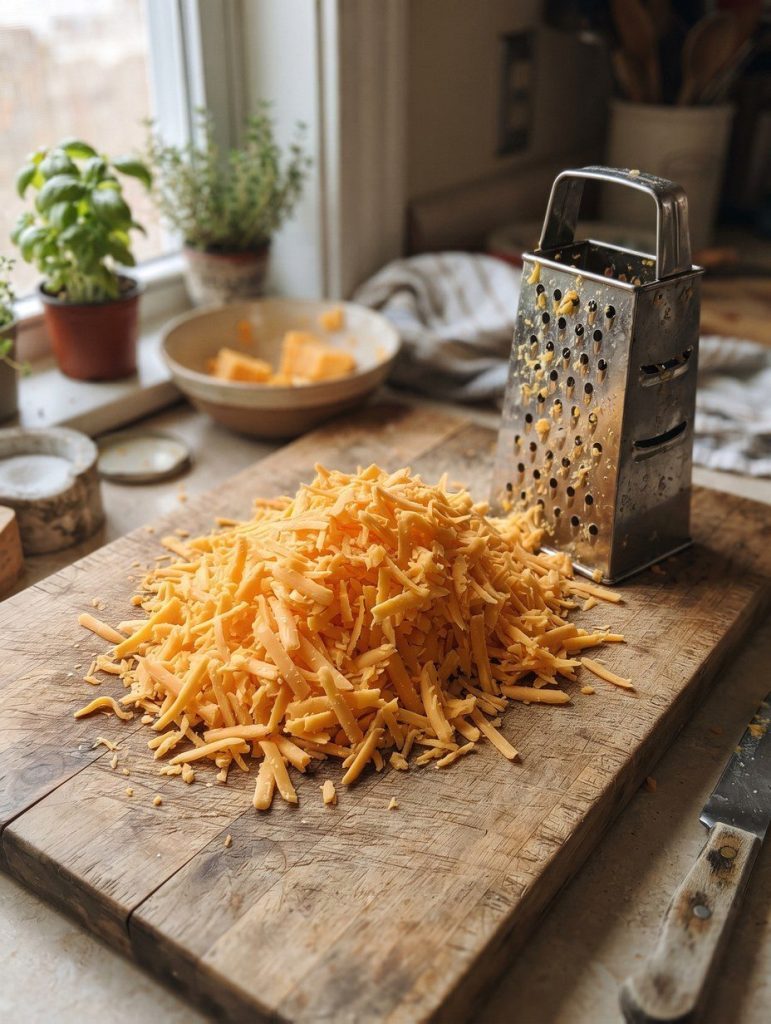
Grating cheese is one of those small jobs that’s worse than it should be. Half of it sticks to the grater, your knuckles are at risk, and soft cheese turns into a paste rather than shreds.
Fifteen minutes in the freezer fixes nearly all of it.
What Changes
Cheese is soft because its fat is soft. Chill the fat and the whole block firms up.
A firm block shears against the grater instead of smearing across it. You get separate shreds instead of a clump, and far less stays behind on the metal.
It also means you can push harder without the block squashing, which is what makes grating soft cheese so slow.
How Long
Fifteen to twenty minutes for a block of cheddar or similar.
You want it firm, not frozen solid. A properly frozen block will fight you and can crumble rather than shred.
Softer cheeses — mozzarella, young gouda, anything springy — benefit most and can take the full twenty. Hard cheese like parmesan doesn’t really need it.
The Other Half of the Trick
Oil the grater. A light wipe of cooking oil or a quick spray on the blades before you start, and almost nothing sticks. It washes off just as easily afterwards.
Between the two — cold cheese, oiled grater — the job goes from annoying to quick.
Why You Should Be Grating It At All
Worth saying, because bagged shredded cheese exists and it’s tempting.
Pre-shredded cheese is coated with an anti-caking agent — usually potato starch, cellulose or cornstarch — so the shreds don’t glue together in the bag.
That coating is also why bagged cheese doesn’t melt smoothly. It makes sauces grainy and it’s the usual reason a homemade mac and cheese splits or goes gritty. If you’ve ever wondered why restaurant cheese sauce is silky and yours isn’t, this is normally it.
Grate your own for anything that melts. Bagged is fine scattered on top of something going under a grill.
While We’re Here
Freezing cheese for storage. Hard cheeses freeze well for cooking. They go crumbly when thawed, so they’re no good on a cheeseboard afterwards, but they’re perfect grated into a sauce. Grate before freezing and it’s ready to use from the bag.
Mold on hard cheese. Cut an inch around and below it and the rest is fine — hard cheese is too dense for mold to send threads far. On soft cheese, shredded cheese or anything crumbly, the whole lot goes.
The wet cloth under the board. Not about cheese, but it stops the board sliding while you’re pushing hard, which is where most grater injuries happen.
Try It Tonight
Put the block in the freezer when you start cooking, and grate it when you’re ready for it.
By the time you need the cheese it’ll be exactly right, and you’ll get a noticeably bigger pile from the same block.