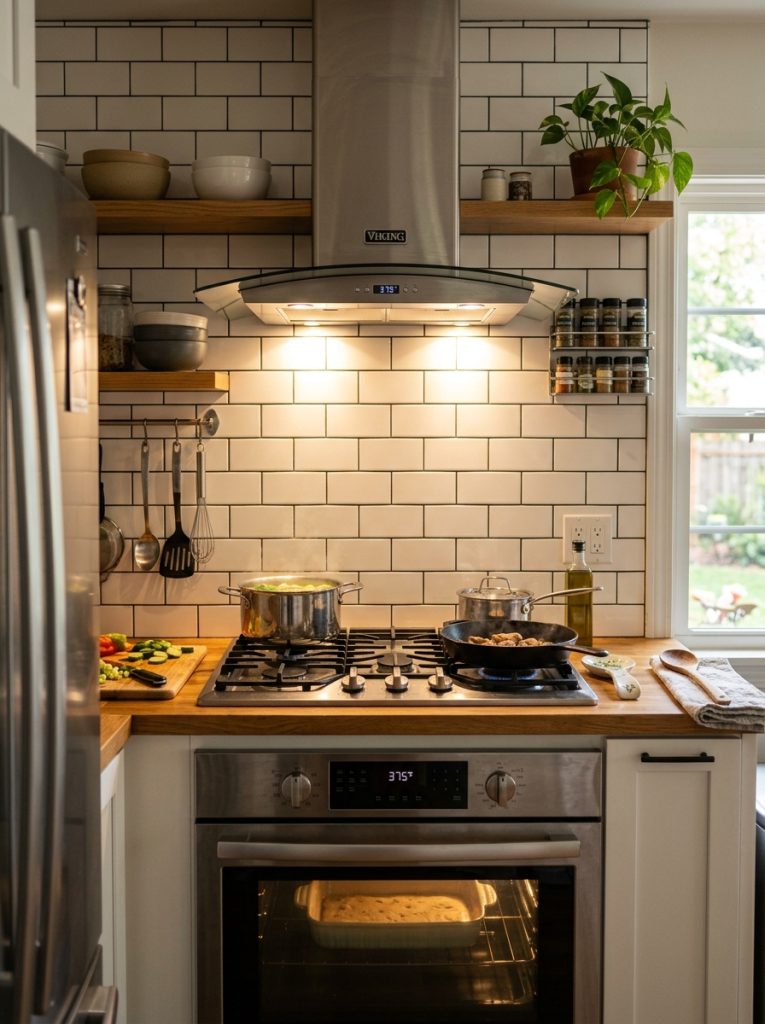
It’s late. The house is quiet. You wander into the kitchen for a glass of water—half asleep, slightly disoriented—and there it is: a soft glow from the range hood.
Comforting, right?
But then the question creeps in later, maybe the next morning while you’re making coffee: Did I leave that on all night? And more importantly… does it matter?
You’re not overthinking it. This is one of those small, everyday habits that quietly sits at the intersection of safety, cost, and convenience. So let’s unpack it properly—no fluff, just clarity.
The Short Answer (Because You’re Busy)
Yes, it’s generally safe to leave your range hood lights on overnight—especially if they’re LED.
But “safe” doesn’t automatically mean “ideal.”
You’re trading a bit of energy efficiency and bulb lifespan for convenience, safety, or peace of mind. And depending on your home setup, that trade might make perfect sense… or not.
Let me explain.
Why Some People Actually Prefer Leaving Them On
A little light goes a long way at 2 a.m.
There’s something oddly reassuring about a dim kitchen light when the rest of the house is dark. It’s not just aesthetic—it’s practical.
Think about those half-awake moments:
- Walking in for water
- Grabbing a midnight snack
- Checking on a baby
- Helping an older family member navigate safely
No harsh overhead light. No fumbling for switches. Just… visibility.
And honestly? That matters more than people admit.
Falls at home—especially at night—are more common than you’d think. A small, steady light can reduce that risk in a space filled with hard surfaces and sharp edges.
It quietly boosts your home’s “someone’s awake” vibe
Here’s the subtle part: light suggests presence.
A softly lit kitchen, especially if visible from outside, can give the impression that someone’s up. Not a full security system, obviously—but a low-effort psychological layer.
You know what? Sometimes that’s enough.
Convenience is underrated
We talk a lot about efficiency these days. Less about friction.
Leaving the light on removes one tiny point of friction from your life. And while that sounds trivial, those small conveniences stack up—especially for:
- Parents with newborns
- Night-shift workers
- People in unfamiliar homes or new layouts
It’s one less thing to think about. And that has value.
But… There Are Trade-Offs (Of Course There Are)
Let’s not pretend it’s all upside.
Energy use—small, but not zero
If you’re using modern LED bulbs, the cost is almost negligible. We’re talking a few dollars a year.
Still, “almost nothing” isn’t the same as nothing.
And if you’re someone who tries to keep energy use tight—or just hates waste on principle—it can feel unnecessary.
Older bulbs? That’s a different story. Halogen and incandescent lights burn noticeably more power. If you’ve got those, it’s worth reconsidering.
Bulbs don’t last forever
Even LEDs—despite their long lifespan—wear out faster with constant use.
It’s not dramatic, but it’s real. Instead of lasting, say, a decade, you might shave off a year or two.
And replacing range hood bulbs? Not always fun. Tight spaces, grease buildup… it’s rarely a five-minute job.
Light and sleep don’t always get along
Here’s where it gets a bit more personal.
Some people can sleep through anything. Others? A faint glow from the kitchen is enough to mess with their rest.
Light—especially cooler, bluish tones—can interfere with melatonin production. That’s your body’s sleep signal. Disrupt it, and suddenly you’re tossing and turning for no obvious reason.
If your kitchen opens into your living or sleeping space, this becomes more noticeable.
Heat (mostly a non-issue—but still worth noting)
If you’re using LEDs, you can ignore this.
Older bulbs, though? They generate heat. Not dangerous in normal conditions, but not ideal either—especially in summer.
And here’s the bigger point: grease buildup + heat = something you don’t want to ignore.
Which brings us to something people often overlook…
The Real Risk Isn’t the Light—It’s the Maintenance
Let’s be clear: the biggest safety concern isn’t leaving the light on.
It’s neglect.
Grease accumulates. Filters clog. Fixtures get dusty. Over time, that creates a less safe environment—regardless of whether the light is on or off.
A quick monthly wipe-down? That does more for safety than obsessing over overnight usage.
So… What’s the Smart Middle Ground?
You don’t have to pick extremes here. There’s a middle path—and it’s actually pretty easy to set up.
1. Switch to warm LED lighting
If you haven’t already, this is step one.
- Lower energy use
- Less heat
- Softer, sleep-friendly tone
Aim for that warm, slightly yellow light (around 2700K). It’s easier on the eyes at night.
2. Use a timer or smart control
This is where things get interesting.
Set the light to turn off after an hour or two. Or schedule it to shut off once you’re definitely asleep.
You still get the benefits—without committing to all-night usage.
3. Try motion sensors (seriously)
This might be the best option for a lot of homes.
Light when you need it. Darkness when you don’t.
No wasted energy. No manual switching. No overthinking.
Just… responsiveness.
4. Lower the brightness
If your setup allows it, dim the light.
A soft glow is often enough. You don’t need full task lighting at 3 a.m.
A Quick Reality Check
Here’s the slightly contradictory truth:
Leaving your range hood light on overnight is both completely fine and somewhat unnecessary.
And that’s okay.
Because this decision isn’t purely technical—it’s personal.
So What Should You Do?
Ask yourself a few simple questions:
- Do I feel safer or more comfortable with a light on?
- Does it affect anyone’s sleep in my home?
- Am I using efficient bulbs?
- Is my kitchen clean and well-maintained?
If the answers lean toward comfort and safety, leaving it on—especially dimmed—is perfectly reasonable.
If they lean toward efficiency and darkness? Then timers or motion sensors are your friend.
The Bottom Line (No Overthinking Required)
Leaving your range hood lights on overnight:
- Is generally safe
- Costs very little with LEDs
- Can improve nighttime safety and comfort
But it can also:
- Slightly increase energy use
- Shorten bulb life
- Interfere with sleep in some setups
So don’t chase perfection.
Pick what works for your home, your habits, and your peace of mind.
Because honestly? A well-lit kitchen at midnight isn’t just about visibility.
It’s about how your home feels when the world goes quiet.