Closing a crisper drawer vent can help vegetables stay crisp, but only if you control the extra moisture. I lined the drawer with paper towels, kept the vent fully closed for two weeks in July, and found that greens, herbs, cucumbers, and zucchini held up noticeably better.
It didn’t turn my refrigerator into a produce-preserving miracle box. Broccoli, green beans, and bell peppers were more mixed, and anything put away wet still spoiled faster. But the paper towels prevented the humid drawer from becoming a little vegetable swamp.
Why I Closed the Vent in the First Place
Crisper drawer vents control airflow and humidity. A closed vent holds moisture inside the drawer, which helps produce that wilts easily, such as lettuce, spinach, herbs, cucumbers, and summer squash.
That extra humidity has a downside: condensation. When moisture settles under produce, leafy greens can turn slick, herbs get soft, and the bottom of the drawer develops that unpleasant mystery puddle.
Paper towels gave the moisture somewhere else to go. They absorbed dampness before it pooled against the vegetables.

How I Set Up the Drawer
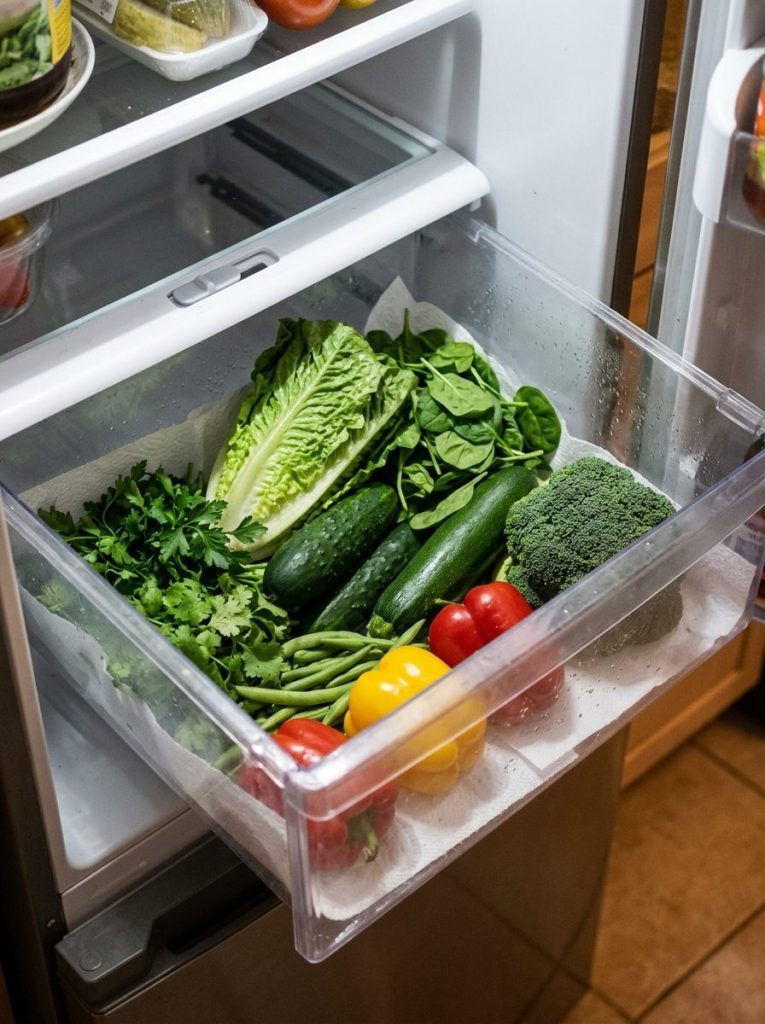
I emptied and washed one bottom crisper drawer, dried it completely, and moved the humidity vent to fully closed. Then I covered the bottom with two overlapping sheets of plain, unscented paper towel.
I stored the produce mostly loose or in the thin bags it came home in. I didn’t individually wrap every cucumber or build a complicated storage system. The goal was to see if this would work during a normal busy week.
The drawer held romaine, baby spinach, cilantro, parsley, cucumbers, green beans, zucchini, broccoli, and bell peppers. I kept apples, pears, peaches, avocados, and other ethylene-producing fruits somewhere else. Those fruits can speed up the aging of nearby vegetables, which would have muddied the result.
Greens Were the Biggest Winners
The romaine lasted about nine days before it began to lose its crunch. That was roughly two to three days longer than I usually get when I toss it straight into an unlined drawer.
Baby spinach lasted about seven days before the first leaves at the bottom started to soften. Even then, the whole clamshell wasn’t slimy. I could remove the handful of tired leaves and use the rest.
The paper towels seemed especially helpful under greens. By day six, the towels felt definitely damp, so I replaced them. That quick change appeared to buy the greens another day or two of good texture.
This is the balance you want: humid air around the leaves, but no wet surface underneath them. Wet spinach pressed against cold plastic breaks down fast.
Herbs Needed One Extra Step
Cilantro and parsley improved, though they were pickier than the lettuce. The first bunches went into the drawer a little damp after rinsing, and the leaves got patchy and soft by day five.
For the second round, I dried the herbs thoroughly, loosely wrapped the stems in a barely damp paper towel, and laid them in the drawer. That worked better. Parsley stayed usable for about eight days, while cilantro made it about six to seven days.
Herbs don’t do well with either extreme. Dry refrigerator air makes them shrivel, but trapped droplets on the leaves make them rot. Closing the drawer vent helped with dehydration, but only after I stopped putting damp herbs away.
Cucumbers and Zucchini Stayed Firm Longer
The cucumbers were another clear success. They stayed firm for 10 to 12 days, while I often notice soft ends or wrinkled skin by day seven.
Both zucchini held their glossy skin and firm texture for around nine days. One eventually developed a soft patch, but it lasted longer than I expected during a hot July stretch.
Higher humidity helps these vegetables avoid drying out. Still, they need to go into the drawer dry. Humid air is useful; beads of water sitting on the skin are not.
Broccoli, Beans, and Peppers Didn’t Need the Fully Closed Setting
Green beans stayed crisp for about six days and remained edible around day eight, but they lost that fresh snap. Broccoli looked good for its first week, then developed a stronger cabbage-like smell and some moisture around the cut stem by day nine.
Bell peppers were fine, but not dramatically better. One developed a soft spot where it had been pressed against the side of the drawer.
If I were storing mostly broccoli, beans, and peppers, I’d still use the paper towels. But I’d leave the vent partly open for a little more airflow. These vegetables didn’t seem to benefit from fully trapped humidity in the same way as lettuce and cucumbers.
The Paper Towels Did More Than I Expected
The drawer never developed standing water during the two weeks. I saw light condensation on the walls once, during a particularly warm day with lots of fridge-door traffic, but the towels kept moisture from collecting underneath the produce.
They also made maintenance easy. When the towels felt cool and damp, I swapped them out. It took less than a minute and made it obvious when the drawer needed attention.
Don’t overcrowd the drawer, though. I kept larger vegetables in a loose layer where possible. Packing the space tightly would trap more moisture and reduce airflow around the produce.
What I’ll Keep Doing
I’m keeping paper towels in my high-humidity drawer, especially during summer. They’re a simple moisture buffer, and they make cleanup much less annoying.
For greens, herbs, cucumbers, and zucchini, I’ll use the fully closed setting. For broccoli, peppers, and green beans, I’ll likely crack the vent open a bit.
The most useful rule is also the least exciting: dry produce before you refrigerate it. Close the vent if your main problem is wilting, replace damp paper towels as needed, and don’t expect a wet drawer to fix wet vegetables.