There’s a very specific kind of kitchen heartbreak that happens when butter burns.
One second, everything smells incredible — warm, rich, almost bakery-like. Then suddenly the pan starts smoking, tiny black specks appear, and your beautiful buttery aroma turns sharp and bitter in about ten seconds flat.
Now the kitchen smells scorched. The smoke alarm is threatening your peace. And somehow your dinner tastes like regret.
If this keeps happening to you, honestly, you’re not a bad cook. Butter is just a little dramatic.
People assume butter behaves like cooking oil, but it doesn’t. It’s fussier. More delicate. Kind of high-maintenance, actually. And once you understand why it burns so fast, preventing it becomes surprisingly manageable.
Because good butter — real butter — can transform food. Toasted vegetables, golden fish, silky sauces, crisp grilled cheese, scrambled eggs… butter makes ordinary food taste comforting in a way few ingredients can.
You just have to keep it from turning into charcoal first.
Butter Isn’t Pure Fat — And That’s The Problem
Here’s the thing many home cooks never get told: butter isn’t just fat.
It also contains water and milk solids. Those milk solids are what create butter’s rich flavor, but they’re also the reason it burns so quickly.
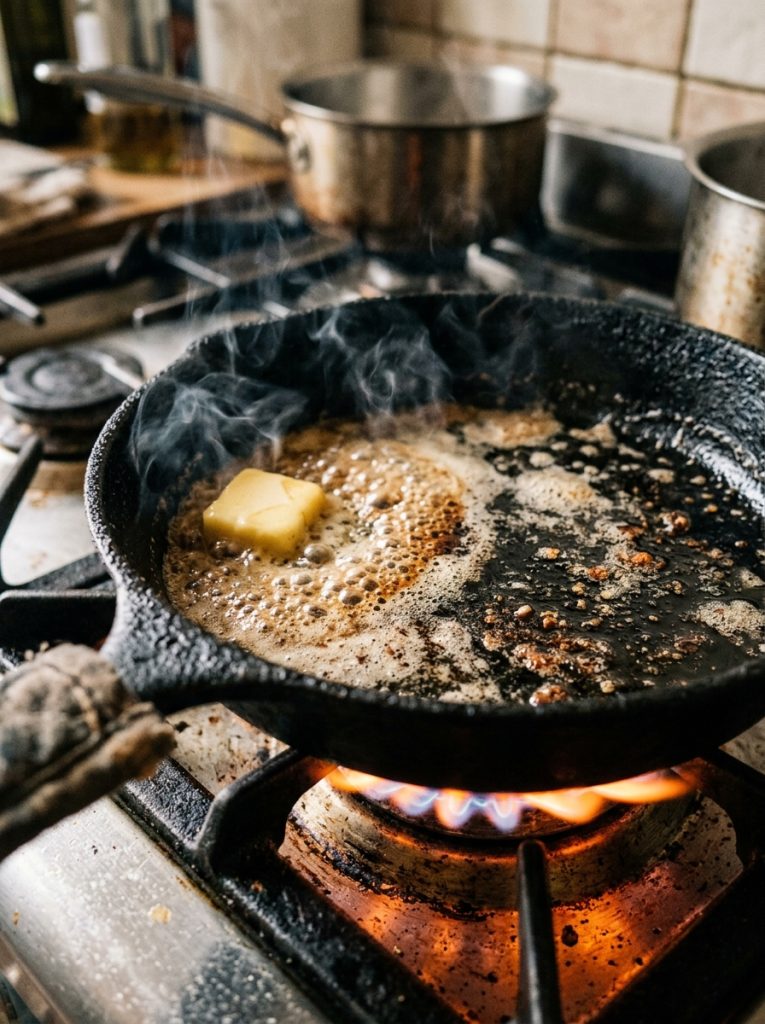
When butter heats up, the water starts evaporating first. Then the milk solids settle into the pan and begin browning. Keep the heat climbing, and those browned bits move past golden and straight into burnt territory.
Fast.
That’s why butter can go from perfect to ruined in what feels like one distracted text message.
Most standard butter contains roughly:
- 80% fat
- 16–18% water
- Small amounts of milk proteins and sugars
Those extra components make butter flavorful — but also fragile.
Compared to oils, butter has a pretty low tolerance for aggressive heat.
And honestly, once you realize that, a lot of cooking frustrations suddenly make sense.
Smoke Points Matter More Than People Think
You know that moment when butter starts smoking aggressively in the pan?
That’s the smoke point being crossed.
Butter’s smoke point sits around 350°F, which is relatively low compared to many oils. Meanwhile, oils like avocado oil, peanut oil, or canola oil can handle temperatures closer to 400–500°F depending on the type.
That difference matters.
A lot of people crank the stove to high because they want a good sear quickly. But butter at high heat is like wearing a winter coat in August — it simply wasn’t built for that environment.
This doesn’t mean butter is bad for cooking. Not at all.
It just means butter works best when paired with the right technique.
And sometimes the smartest move is combining butter with oil instead of forcing butter to do all the heavy lifting alone.
The Butter-And-Oil Combo Is Basically A Cheat Code
Professional kitchens do this constantly.
A little neutral oil goes into the pan first — something with a higher smoke point like grapeseed, vegetable, or canola oil. Then butter gets added afterward for flavor.
The oil acts like backup support. It stabilizes the cooking fat mixture and gives you more flexibility with heat.
You still get the buttery richness. You just don’t get the panic-smoke situation five seconds later.
Honestly, this one trick solves a huge percentage of butter-burning problems.
Especially when cooking things like:
- Chicken cutlets
- Fish fillets
- Grilled sandwiches
- Sautéed vegetables
- Pancakes
- Eggs
The butter still shines through beautifully. It simply survives longer.
Clarified Butter Changes Everything
If you cook with butter often, clarified butter or ghee is worth knowing about.
Really worth knowing about.
Clarified butter is basically butter with the water and milk solids removed. What remains is mostly pure butterfat, which can tolerate much higher temperatures without burning.
Suddenly you can sear, sauté, and roast more aggressively while still getting that deep buttery flavor.
And ghee has this subtle toasted aroma that’s incredible in everything from roasted potatoes to pan-seared shrimp.
It’s especially useful if you love cast iron cooking, because cast iron holds heat intensely. Regular butter in cast iron can become dangerous surprisingly fast if you aren’t paying attention.
Clarified butter gives you more breathing room.
Plus, it stores well and feels oddly fancy even though it’s simple.
Your Stove Might Be Too Hot From The Beginning
A lot of home cooks accidentally start cooking at restaurant-level heat.
That sounds impressive until the butter turns black before the onions soften.
Here’s the thing: most everyday cooking doesn’t need screaming-hot pans.
Medium heat is often plenty.
Actually, many stovetops run hotter than people realize, especially gas burners or powerful induction ranges. What looks like “medium-high” may behave more like high heat in practice.
So butter burns before the food even gets going.
One of the easiest fixes? Slow down the preheat.
Let the pan warm gradually over medium or medium-low heat instead of blasting it immediately. Then add butter once the pan feels evenly warm — not scorching.
Cooking gets calmer almost instantly.
And honestly, calmer cooking usually tastes better.
Preheat The Pan — Not The Butter
People often throw butter into a cold pan and crank the burner afterward. Or worse, they heat the empty pan until it’s blazing hot and then toss butter in like a sacrifice.
Neither approach works particularly well.
A better method is this:
- Warm the pan gently first
- Lower the heat slightly if needed
- Then add the butter
This gives the butter a smoother melt and more control.
You want butter to foam softly, not explode into angry smoke.
That foaming stage is actually useful. It tells you the water is evaporating and the butter is heating properly. Once the foam settles, the butter starts browning rapidly — which means your timing matters.
And yes, timing with butter is a real thing. It’s less forgiving than oil.
Adding Butter Later Can Save The Whole Dish
This trick feels backward at first, but it works beautifully.
Instead of starting with butter, add it after the food goes into the pan.
Why?
Because the food itself absorbs some of the heat. That lowers the immediate stress on the butter and slows the burning process.
For example:
- Sear chicken lightly in oil first
- Then add butter midway through cooking
- Spoon the melted butter over the meat as it finishes
Same with vegetables. Same with fish.
The butter becomes part of the finishing process rather than the first victim of high heat.
And the flavor stays fresher too.
Moisture Is Secretly Helping You
A little moisture in the pan can protect butter more than people realize.
Wine. Broth. Lemon juice. Even vegetables releasing natural water.
These ingredients create steam and slightly reduce the pan temperature, making it harder for butter to scorch immediately.
That’s why buttery pan sauces work so well. The liquid stabilizes the environment enough for butter to melt into the sauce instead of burning instantly.
French cooking leans heavily on this principle.
And honestly, once you notice it, you start seeing butter differently — less like a frying fat and more like a finishing ingredient that thrives with balance.
The Pan You Use Actually Matters
Some pans create brutal hot spots.
Cheap thin skillets especially tend to heat unevenly, which means certain areas become scorching hot while others stay relatively cool. Butter burns in those overheated zones almost immediately.
Heavy-bottomed pans distribute heat more evenly:
- Stainless steel
- Cast iron
- Carbon steel
- Quality nonstick pans
They hold heat steadily instead of spiking unpredictably.
And steady heat is exactly what butter likes.
Nonstick pans can also help because they require less fat overall. Sometimes you only need a small amount of butter for flavor rather than a whole puddle.
Less butter exposed to intense heat means less opportunity for disaster.
Different Foods Need Different Butter Strategies
Butter behaves differently depending on what you’re cooking.
Delicate foods like fish or eggs benefit from lower heat and gentler cooking. Thick steaks or chops may need oil first and butter later.
Vegetables sit somewhere in the middle.
This is where cooking becomes less about strict rules and more about observation.
If butter starts smelling sharp or acrid, the heat is probably too high. If it’s foaming softly and turning golden, you’re usually in a good place.
And honestly, your nose becomes one of the best kitchen tools over time.
Good butter smells nutty and warm.
Burnt butter smells aggressive. You’ll know.
Some Viral Butter Hacks Are Surprisingly Smart
Internet cooking hacks are hit-or-miss. Sometimes they’re genius. Sometimes they belong nowhere near a kitchen.
But a few butter tricks actually help.
Frozen Butter
Frozen butter melts more slowly, which buys extra time before burning. This works especially well for:
- Pan sauces
- Biscuits
- Sautéed vegetables
- Finishing pasta
Grating frozen butter also helps distribute it evenly.
Butter Cubes
Adding butter gradually in small cubes instead of one giant chunk gives better control over melting and heat exposure.
Restaurant kitchens do this constantly while mounting sauces.
Cold Butter For Finishing
Adding cold butter at the very end creates glossy sauces without scorching the fat.
It’s simple but makes food feel oddly luxurious.
Brown Butter Isn’t Burnt Butter
Now here’s where things get interesting.
Brown butter — properly made brown butter — is intentionally pushed close to the edge. But not over it.
The milk solids toast gently until they become golden and nutty instead of black and bitter.
And the flavor? Incredible.
Warm, toasted, almost caramel-like.
Brown butter makes:
- Chocolate chip cookies taste deeper
- Pasta sauces richer
- Mashed potatoes more complex
- Roasted vegetables feel restaurant-worthy
The trick is attention.
Once butter starts browning, it keeps going quickly. Swirl the pan gently. Watch the color carefully. The moment it smells nutty and turns amber, pull it off the heat.
Because there’s about a fifteen-second window between “perfect brown butter” and “why does my kitchen smell like a tire fire?”
Not exaggerating.
So How Do You Keep Butter From Burning?
Most of the time, it comes down to slowing down and controlling heat.
That’s really the heart of it.
Use moderate temperatures. Pair butter with oil when needed. Add it later in the cooking process. Choose better pans. Let butter work with your food instead of sacrificing it to an overheated skillet.
Because butter isn’t difficult exactly.
It’s just sensitive.
Treat it gently, and it rewards you with flavor that feels rich, comforting, and almost nostalgic. The kind of flavor people associate with good restaurants and holiday dinners and the smell of something wonderful cooking in the kitchen.
Burn it, though?
Well… you already know how that ends.