There’s always that moment during a holiday meal.
The turkey is resting. The mashed potatoes are done. Someone’s asking where the serving spoon went. And right when everything should feel under control, you glance at the gravy and realize it’s… lumpy.
Not slightly textured. Not rustic. Actually lumpy.
It’s frustrating because gravy feels deceptively simple. A few drippings, a little flour, some stock — how hard could it be? But gravy can turn against you fast, especially during the chaos of holiday cooking when burners are crowded and everyone suddenly needs something at the exact same time.
The good news is that smooth gravy isn’t luck. There’s a reason lumps happen, and once you understand what’s going on in the pan, they become a lot easier to avoid.
Here’s what causes lumpy gravy in the first place — and the small cooking habits that make a huge difference.
Why Gravy Gets Lumpy So Fast
Most lumps start with flour.
When flour hits liquid unevenly, especially hot liquid, the outer layer cooks immediately while the inside stays dry. That creates little flour pockets that refuse to break apart no matter how aggressively you stir.
And honestly, gravy is particularly unforgiving because it thickens quickly. One rushed pour of cold stock into a hot roux can create lumps in seconds.
Temperature matters too.
If gravy sits too long without being stirred, it thickens unevenly and forms little clumps around the edges of the pan. Sometimes the gravy was smooth earlier — then suddenly looks grainy right before dinner.
That’s why cooks always say gravy needs attention. Not constant panic. Just attention.
The Roux Matters More Than People Think
A smooth gravy usually starts with a proper roux.
The basic formula is simple: equal parts fat and flour.
Butter works. Pan drippings work. Bacon fat works too if you’re making something extra savory.
The important part is making sure every bit of flour gets coated in fat before liquid enters the picture. If dry flour remains, lumps become much more likely later.
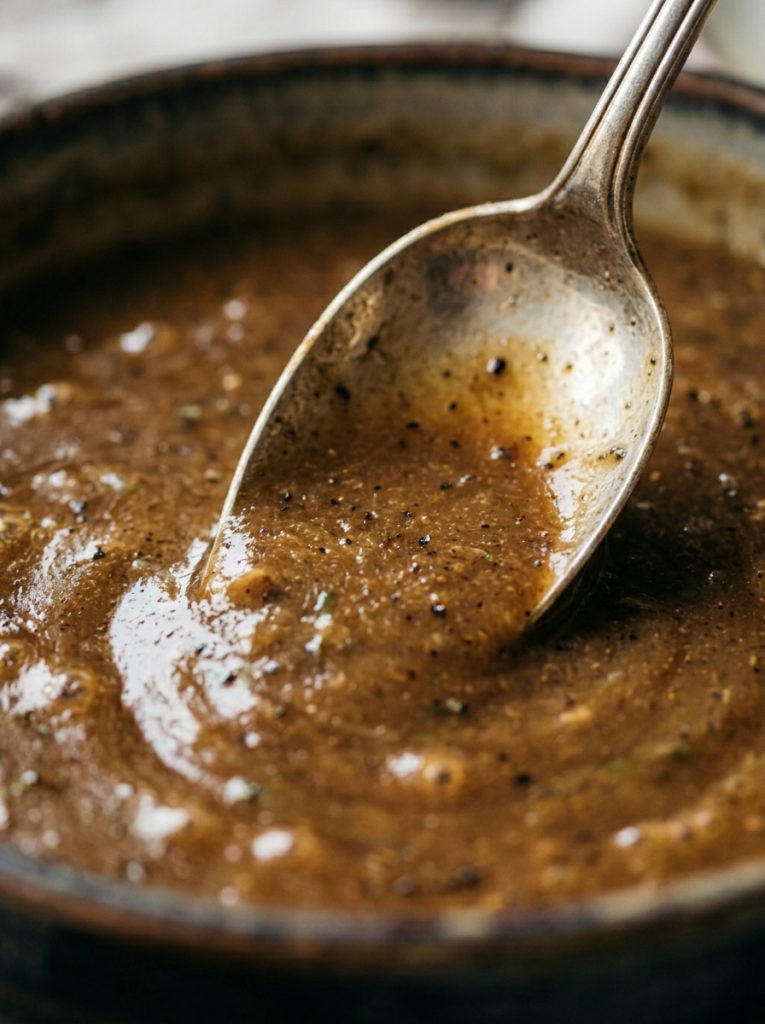
A good roux should look smooth and slightly glossy — almost like wet sand.
Not dry. Not greasy.
And yes, people absolutely eyeball this all the time. Sometimes it works. Sometimes Thanksgiving gets stressful.
Don’t Rush the Flour Stage
One mistake that causes weird gummy gravy? Undercooked flour.
After adding flour to the fat, let it cook for a couple minutes while stirring constantly. The raw flour smell should disappear.
The color changes slightly too. It usually shifts from pale white to a soft golden shade.
That small step creates deeper flavor and smoother texture.
It’s similar to toasting spices before adding them to soup — not complicated, but it changes the final result more than people expect.
And if you accidentally brown the roux too much? The gravy will still work, though the flavor becomes darker and nuttier. Not necessarily bad. Just different.
Warm Stock Makes a Big Difference
Here’s one of those tiny cooking details that sounds fussy but genuinely helps.
Warm your stock before adding it.
Cold liquid hitting hot roux can make the flour tighten up immediately, which encourages lumps. Warm stock blends more gradually and creates a smoother texture almost instantly.
You don’t need boiling stock. Just warm.
Even microwaving it for a minute or two helps.
Professional kitchens do this constantly because it keeps sauces stable during busy service. Home cooks skip it because they’re juggling twelve other things already.
Understandable, honestly.
Whisking Isn’t Just Stirring Faster
People say “whisk constantly,” but nobody really explains why.
A whisk breaks up flour particles before they have time to clump together. It also keeps ingredients moving so nothing settles at the bottom of the pan.
And yes, the whisk itself matters.
A balloon whisk usually works best for gravy because it reaches more surface area and moves liquid efficiently through the pan. Flat whisks work nicely too, especially in shallow skillets.
The biggest thing is consistency.
Start whisking the second liquid hits the roux and keep going until the gravy smooths out fully.
It feels excessive for about thirty seconds. Then suddenly the texture comes together.
Add Liquid Slowly — Slower Than You Want To
This is probably the hardest step for impatient cooks.
Instead of pouring all the stock in at once, add a little first and whisk until smooth. The roux will turn into a thick paste at the beginning.
That’s normal.
Once smooth, add more liquid gradually while continuing to whisk.
It takes a few extra minutes, but it prevents most gravy disasters before they happen.
Dumping all the liquid in immediately usually overwhelms the flour, which creates stubborn lumps that never fully dissolve.
A lot of cooking shortcuts are harmless.
This usually isn’t one of them.
Simmer Gently — Don’t Let It Boil Wildly
Once the gravy thickens, resist the urge to crank the heat.
Boiling aggressively can make gravy separate or become uneven. A gentle simmer works much better because it thickens slowly and evenly.
You want little bubbles around the edges.
Not volcanic activity.
Low, steady heat gives the starches time to relax and absorb liquid properly. The texture becomes smoother, silkier, more balanced.
Also, stir occasionally while it simmers. Especially near the bottom of the pan where thickening happens fastest.
The Cornstarch Trick for Emergency Fixes
Sometimes gravy simply isn’t thick enough.
And unfortunately this realization usually happens five minutes before serving.
That’s where a cornstarch slurry helps.
Mix cornstarch with cold water first — always cold — until smooth. Then whisk it gradually into simmering gravy.
It thickens quickly, which makes it perfect for last-minute adjustments.
Too much, though, and gravy starts feeling oddly glossy or gelatinous.
So go slowly.
You can always add more.
Already Lumpy? It’s Probably Fixable
Honestly, even experienced cooks get lumpy gravy sometimes.
Holiday cooking is chaotic. Burners are crowded. Someone asks a question right when you’re whisking. It happens.
The fastest fix is usually an immersion blender.
A few quick pulses smooth out most lumps almost immediately.
No immersion blender? A fine mesh strainer works too. Pour the gravy through into a clean pan and press the liquid through with a spoon.
It sounds annoying, but it takes maybe two minutes and saves the entire batch.
And nobody at the table will ever know.
Straining Makes Gravy Feel Restaurant-Level Smooth
A lot of cooks skip this step.
Professional kitchens almost never do.
Running finished gravy through a fine mesh sieve catches tiny lumps, herb stems, bits of flour, or stray browned pieces from the roasting pan.
The final texture becomes noticeably smoother.
Especially for holiday meals where gravy sits front and center next to mashed potatoes.
Sometimes those small finishing steps create the biggest difference visually.
Make Gravy Ahead and Save Yourself Stress
This might be the most underrated holiday cooking tip.
Make the gravy ahead of time.
Seriously.
Gravy reheats surprisingly well if warmed gently over low heat. If it thickens too much in the fridge, whisk in warm stock until it loosens back up.
That alone removes one of the most stressful last-minute cooking tasks from the holiday rush.
And honestly, holiday meals become much more enjoyable when you aren’t panic-whisking while relatives hover nearby asking when dinner’s ready.
Gluten-Free and Dairy-Free Gravy Can Still Be Smooth
People sometimes assume alternative gravies are harder to make smooth, but that’s not really true.
Cornstarch, arrowroot, and gluten-free flour blends all work well when handled properly.
The key difference is that some starches thicken faster than regular flour, so the gravy can go from thin to overly thick very quickly.
Dairy-free gravies work beautifully with olive oil, vegan butter, or pan drippings instead of traditional butter.
The technique matters more than the ingredient label.
A Few Small Mistakes That Cause Big Problems
A surprising number of gravy issues come from tiny habits.
Like not tasting it.
Underseasoned gravy tastes flat even if the texture is perfect. Salt matters more than people realize.
Another common issue is letting gravy sit uncovered too long. A skin forms across the top, then breaks into little lumps once stirred back in.
And of course — adding liquid too quickly. Probably the number one culprit.
Gravy rewards patience.
Annoying advice maybe, but true.
Final Thoughts
Lumpy gravy feels dramatic in the moment, especially during a holiday meal when everything else already feels slightly chaotic. But most gravy problems come down to a handful of fixable things: rushing the liquid, uneven heat, undercooked roux, or not whisking consistently.
Once you slow the process down a little, gravy becomes much easier.
And honestly, even imperfect homemade gravy usually tastes better than store-bought versions anyway.
People remember warm meals, second helpings, and conversations around the table far more than they remember whether the gravy was absolutely flawless.
Still… smooth gravy definitely helps.