Burner grates catch every drip and splatter, and the heat bakes it on. The trick isn’t a stronger chemical. It’s time: a long soak softens the grease so it wipes off.
Let the grates cool completely before you start.

Step 1: The Hot Soak
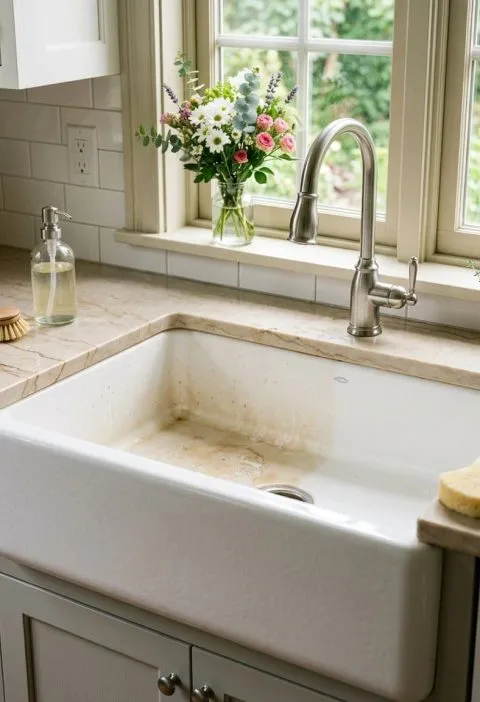
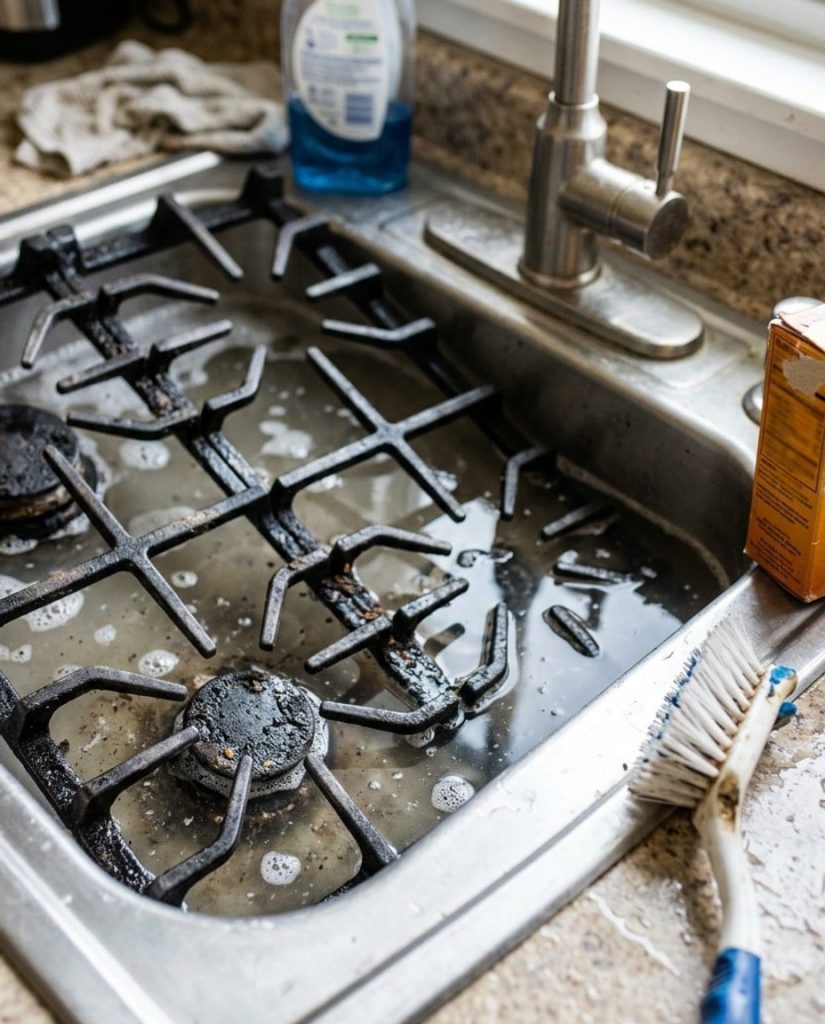
Fill the sink or a large tub with the hottest tap water. Add a good squirt of dish soap and half a cup of baking soda. Lay the grates in and leave them for at least an hour. Overnight is better for heavy buildup.
Step 2: The Paste
Mix 3 parts baking soda with 1 part water into a thick paste. Spread it over any stubborn spots and let it sit 20 minutes.
Step 3: Scrub and Rinse
Scrub with a stiff brush or a non-scratch pad. Rinse with hot water.
Step 4: Dry Right Away
Cast iron grates rust fast. Dry them with a towel, then set them back on the stove and run the burners for a minute to drive off the last moisture.
For Cast Iron Grates
If they look dull or gray after cleaning, rub a very thin layer of cooking oil on them with a paper towel. It protects them from rust.
What to Skip
- Ammonia in a sealed bag. It works, but the fumes are harsh and it’s easy to do unsafely.
- The dishwasher, unless your stove manual says the grates are dishwasher safe. Many aren’t.
- Steel wool on enamel-coated grates. It scratches the coating.
A Safety Note
Never mix bleach with vinegar, ammonia or any other cleaner. It makes toxic gas.
Keep Them Cleaner
Wipe the grates with a damp soapy cloth once they’re cool after a messy meal. A weekly wipe means you rarely need the long soak.
Frequently Asked Questions
How often should I deep clean grates?
Every month or two for a busy stove.
Why are my grates sticky after cleaning?
Too much oil. Use only a thin film and wipe off the extra.
Can I use oven cleaner?
Check your manual. It can damage some finishes.