Grout is rough and full of tiny holes. Mop water, soap film and kitchen grease settle into it, and the lines slowly go from light to dark. The fix is a paste that can sit in the lines, plus a stiff brush.

The Paste
- 1/2 cup baking soda
- 1/4 cup 3% hydrogen peroxide
- 1 teaspoon dish soap
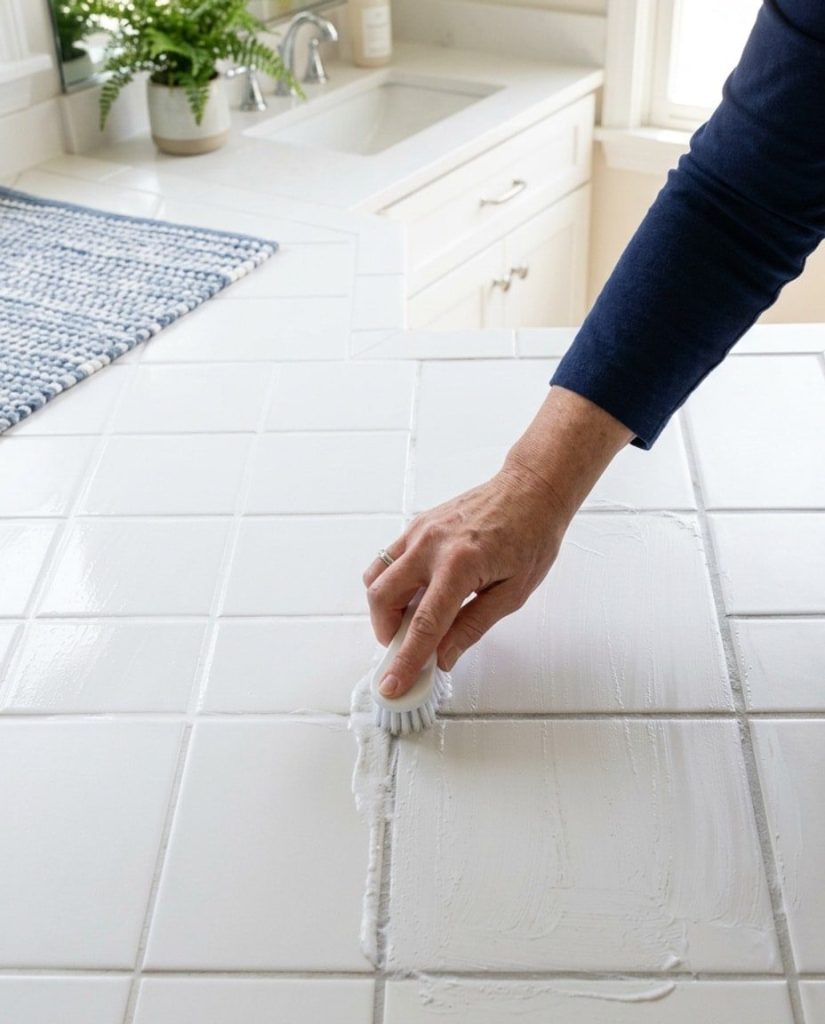
Mix into a paste. Spread it along the grout lines with a spoon or your finger. Let it sit for 10 to 15 minutes. Scrub with a stiff grout brush or an old toothbrush. Wipe with a damp cloth and rinse with clean water.
The baking soda scrubs, the peroxide lightens stains, and the dish soap cuts grease.
For Bathroom Mildew
Spray the lines with plain 3% hydrogen peroxide, wait 10 minutes and scrub. Run the fan and squeegee the shower after use so it doesn’t come back.
For Kitchen Floors
Grease is the main problem. Use hot water and dish soap first, then the paste on what’s left.
What to Skip
- Vinegar on unsealed grout. Acid slowly eats cement grout.
- Wire brushes. They scratch tile and wear grout away.
- Colored cleaners on white grout. They can stain.
Seal It
Once the grout is clean and fully dry, a grout sealer makes the lines much easier to keep clean. Reapply once a year in showers.
A Safety Note
Never mix bleach with vinegar, ammonia or any other cleaner. It makes toxic gas. Don’t mix hydrogen peroxide with vinegar in the same container either.
Frequently Asked Questions
Will peroxide bleach colored grout?
It can lighten it slightly. Test a hidden spot first.
How often should I clean grout?
A deep clean two or three times a year is enough if you wipe up spills.
My grout is still dark. Now what?
Old stains can be permanent. A grout pen or re-grouting is the next step.