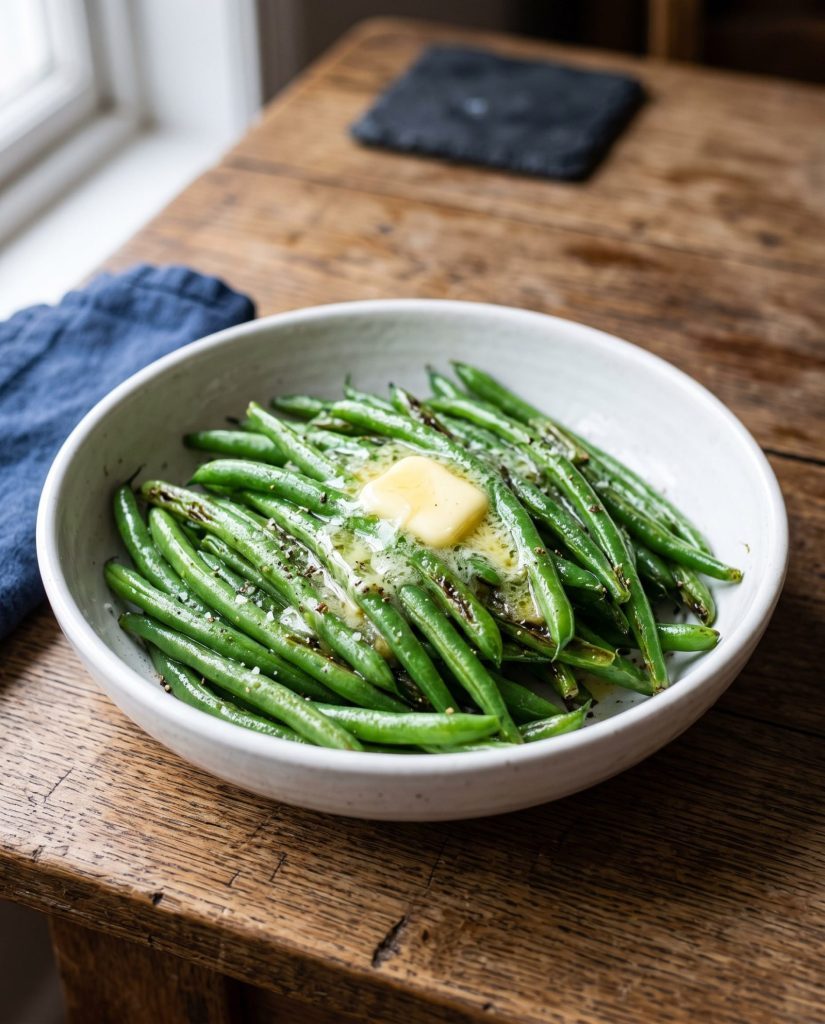
Some old recipes call for a pinch of baking soda in the pot when you cook green beans. It does keep them bright green, but there’s a reason most cooks today skip it.

Why Green Beans Turn Dull
Green vegetables get their color from chlorophyll. When they cook, natural acids are released into the water, and that acid slowly turns bright green chlorophyll an olive or army green. The longer they cook, the duller they get.
What Baking Soda Does
Baking soda is alkaline, so it neutralizes those acids. That keeps the chlorophyll bright green even after longer cooking. That’s why it shows up in old recipes for long-simmered beans.
The Catch
- Mushy texture. An alkaline pot also breaks down the beans’ cell walls faster, so they can turn soft and mushy, sometimes in just a few minutes.
- Lost vitamins. Alkaline water destroys some vitamin C and B vitamins.
- A soapy taste. Too much baking soda leaves a slightly bitter, soapy flavor.
A Better Way to Keep Them Green
- Use plenty of salted water at a full rolling boil.
- Cook uncovered, so the acids can escape with the steam.
- Keep it short: 4 to 6 minutes, until crisp-tender.
- Shock them in a bowl of ice water if you aren’t serving them right away.
For Southern-style beans simmered with bacon and onion for an hour, dull green is part of the charm, and the flavor is worth it.
If You Still Want to Try It
Use no more than 1/8 teaspoon in a large pot, and watch closely. Pull the beans the moment they’re tender.
Frequently Asked Questions
Does baking soda work on other vegetables?
It has the same effect on broccoli, peas and spinach, with the same risk of mushiness.
Why do canned green beans look so dull?
They’re cooked a long time in the can, which turns the chlorophyll olive green.
Does adding lemon keep beans green?
No, acid makes them dull faster. Add lemon right before serving.
Bright beans are nice, but a quick boil and an ice bath get you there without the mush.