Your refrigerator does one job well: the cold slows bacteria and mold on foods that spoil fast. Meat, dairy, leftovers, and cut produce genuinely need it. But a lot of what crowds those shelves never needed the cold at all.
Some foods carry their own protection — salt, acid, sugar, low moisture. Others are actively damaged by refrigeration. The starch changes, the ripening stalls, the texture turns mealy. Here are ten things to pull out of the fridge, and where to put them instead.
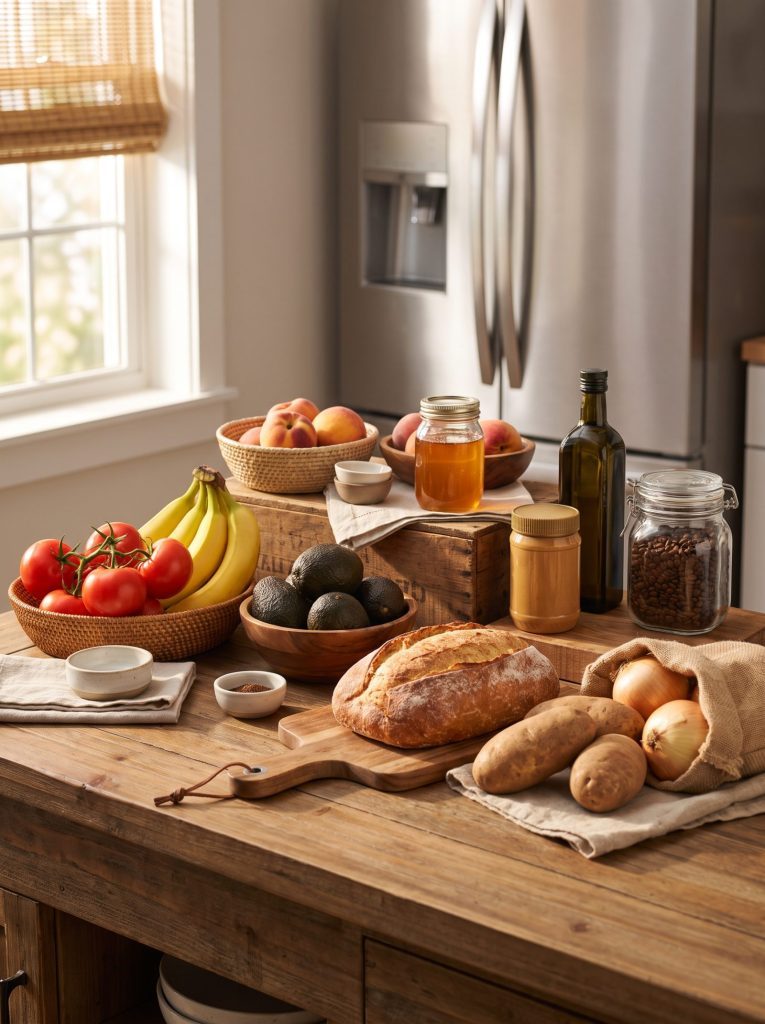
1. Tomatoes
Cold air breaks down the cell membranes in a tomato and shuts off the compounds behind its aroma. The result is that familiar disappointment: a mealy, watery, bland tomato in January that somehow also happens in July.
Keep tomatoes on the counter, out of direct sunlight, and let them ripen fully. If one gets soft before you can use it, the fridge is the lesser evil — just bring it back to room temperature before eating.

2. Bread
This one surprises people: bread goes stale faster in the fridge than on the counter. Refrigerator temperatures are the sweet spot for starch retrogradation — the starch molecules recrystallize and push water out of the crumb. You get dry, hard slices in a day or two.
Store bread in a breadbox or a loosely closed bag on the counter. If you won’t finish a loaf within a few days, freeze it. Frozen bread toasts straight from the freezer with no thawing needed.
3. Potatoes
At refrigerator temperatures, the starch in potatoes starts converting to sugar. That’s why cold-stored potatoes taste oddly sweet and turn dark too fast when you fry or roast them — the surface burns before the inside crisps.
A cool, dark, ventilated spot is what they want. A paper bag or basket in the pantry works. Skip the sealed plastic bag, which traps moisture. And don’t store them next to onions — each one speeds the other’s spoilage.
4. Onions
Whole onions need dry air and ventilation. The humidity inside a fridge softens their layers and invites mold, so a mesh bag or open basket in a cool cupboard keeps them firm much longer.
The exception matters: once an onion is peeled or cut, it goes in the fridge in a sealed container. Garlic and shallots follow the same rule as whole bulbs — counter or pantry, never cold.
5. Fruit That’s Still Ripening
Bananas, avocados, peaches, and kiwis all ripen after picking, and cold interrupts that process. A refrigerated peach never develops its full sweetness. An avocado in the fridge stays rubbery for days.
Let these fruits ripen on the counter first. Once they’re where you want them, the fridge can buy you a day or two — a banana peel will blacken in the cold, but the fruit inside stays fine.
6. Coffee Beans
Coffee beans are porous. In the fridge they pick up moisture and absorb every odor nearby, which is not the flavor profile you’re paying for.
Keep beans in an airtight container in a cool, dark cupboard, and buy amounts you’ll use within a few weeks. That’s it. Your morning cup will taste noticeably better.
7. Honey, Peanut Butter, Soy Sauce, and Cooking Oil
These four pantry jars all fail in the fridge for different reasons:
- Honey preserves itself — its low water content and acidic pH keep bacteria from growing. Cold just makes it crystallize into a grainy sludge. If yours has crystallized, set the jar in a bowl of warm water and it will loosen back up.
- Peanut butter has low enough moisture to stay safe in the pantry, and refrigerating it turns it into a spackling paste you can’t spread. If a jar of natural peanut butter takes you months to finish, the fridge will slow the oil from going rancid — otherwise the cupboard is fine.
- Soy sauce is fermented and very salty, so it resists spoilage even after opening. Room-temperature storage keeps it ready to pour. The fridge is optional for long-term quality, not required for safety.
- Olive and vegetable oils turn cloudy and semi-solid in the cold, and refrigeration can dull their flavor. Heat and light are the real enemies here — a dark cupboard away from the stove is the right home.
The Rule of Thumb to Keep
Whole, uncut, naturally preserved foods — the ten above — live outside the fridge. Anything cut, peeled, cooked, or perishable (meat, dairy, most cooked leftovers) stays in it.
The practical move: take five minutes tonight and sweep your shelves. You’ll free up real estate for the foods that actually need the cold, and the things you move out will taste better for it. The fridge was never meant to be a food hotel.