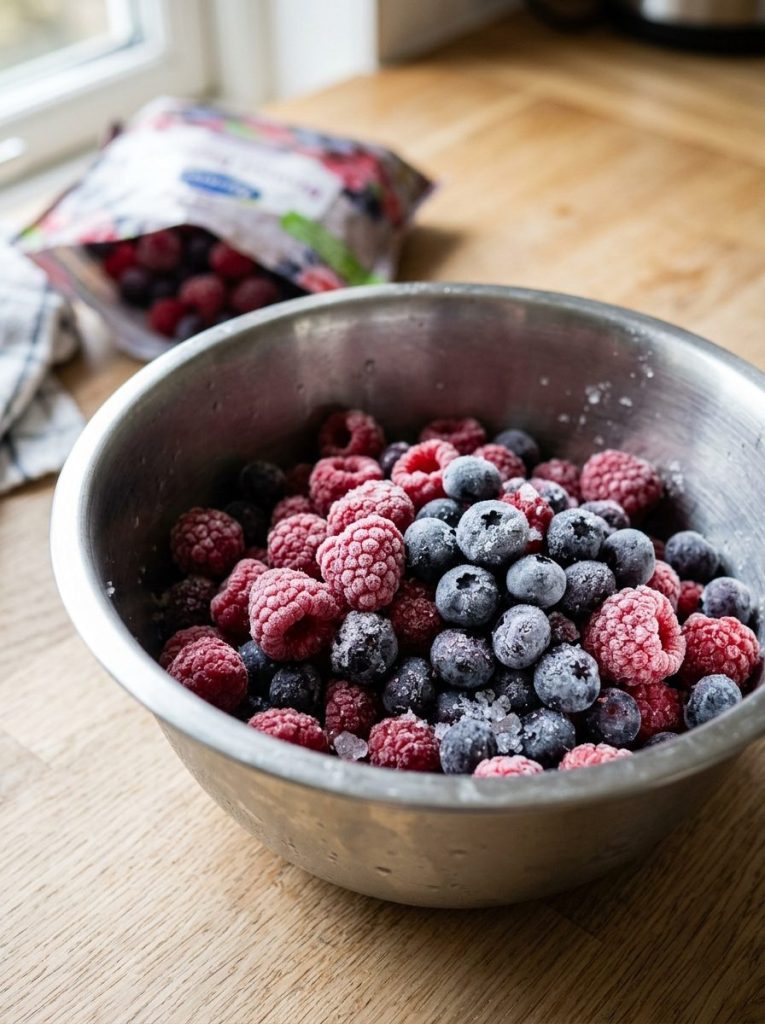
Frozen berries feel like the cleanest food in the kitchen. Sealed bag, rock-hard fruit, often “pre-washed” right on the label. So it’s fair to wonder: do they actually need rinsing?
Yes — especially if they’re going in raw. Freezing doesn’t kill bacteria. It just puts them to sleep, and they wake up when the berries thaw. A quick rinse under cold water is cheap insurance, and for smoothies it’s the only safety step you’ve got.
Here’s what the freezer does, what it doesn’t, and how to rinse without turning your berries to mush.
What Freezing Actually Does to Bacteria
Freezing preserves fruit by slowing everything down. The water inside the berry’s cells turns to ice crystals, and the bacteria, yeasts, and molds riding on the surface go dormant. Dormant is the key word. They’re not dead — they’re waiting.
Once the berries thaw, surviving bacteria become active again. Some pathogens are particularly good at this. Listeria monocytogenes, for example, can survive freezing temperatures and start growing again at fridge or room temperature.
Think of the freezer as a pause button, not a delete button.
What a Rinse Removes

A rinse under cold running water washes off what freezing can’t touch: surface dirt, pesticide residue, and a share of whatever bacteria the berries picked up between the field and the bag.
Most frozen berries are washed before packaging. But a lot happens after that wash — processing, packing, shipping, the occasional torn bag or warm spot in transit. A second rinse at home takes ten seconds and covers those gaps.
Why Smoothies Are the Risky Case
Heat is the great equalizer in the kitchen. Berries baked into a cobbler or simmered into jam get hot enough to kill off bacteria, so cooked uses are safe by default.
A smoothie has no kill step. It goes bag, blender, glass. Whatever was on the berry ends up in your drink.
And this isn’t theoretical: past outbreaks of foodborne illness have been traced to frozen berries, usually involving norovirus or hepatitis A. Both are viruses, both handle freezing without much trouble, and neither cares that the bag said “ready to eat.” That phrase is about convenience, not a guarantee.
This matters most if you’re serving kids, older adults, or anyone with a weakened immune system. For them, the rinse stops being optional.
Does Rinsing Ruin the Texture?
Barely — and frozen berries are already soft. Those ice crystals that form during freezing rupture the cell walls, which is why thawed berries slump and leak juice while fresh ones stay firm. The texture change happened in the freezer, not under your tap.
If you’re still worried, two habits help. Rinse right before blending, not ahead of time. And keep it quick — a fast shower under cold water, never a soak.
How to Rinse Them the Right Way
This takes about 15 seconds:
- Tip the berries into a colander.
- Run cold water over them, tossing gently with your hand.
- Shake, let them drain for a minute, and use them.
Don’t soak them. Berries left sitting in water waterlog and bleed juice, and you lose flavor along with it. If you need them dry — say, for folding into muffin batter — spread them on a clean kitchen towel and pat gently.
For smoothies, rinse, drain, and blend straight away. If your mornings are rushed, portion berries into bags or containers ahead of time so the whole routine stays quick.
When You Can Skip the Rinse
Anything cooked. Pie, cobbler, crisp, stovetop sauce, jam — the heat handles the safety question for you, so rinsing there is optional.
Anything raw gets the rinse: smoothies, yogurt bowls, oatmeal toppings, a handful over ice cream. The rule is simple — if no heat is coming, add water.
A Ten-Second Habit Worth Keeping
I keep a colander in the cabinet right above the blender now. Berries in, cold water over, shake, blend. That’s the whole system.
Frozen berries are still one of the best shortcuts in the freezer aisle — picked ripe, always on hand, and cheaper than fresh half the year. Rinsing doesn’t change any of that. It just closes the one gap the freezer leaves open.