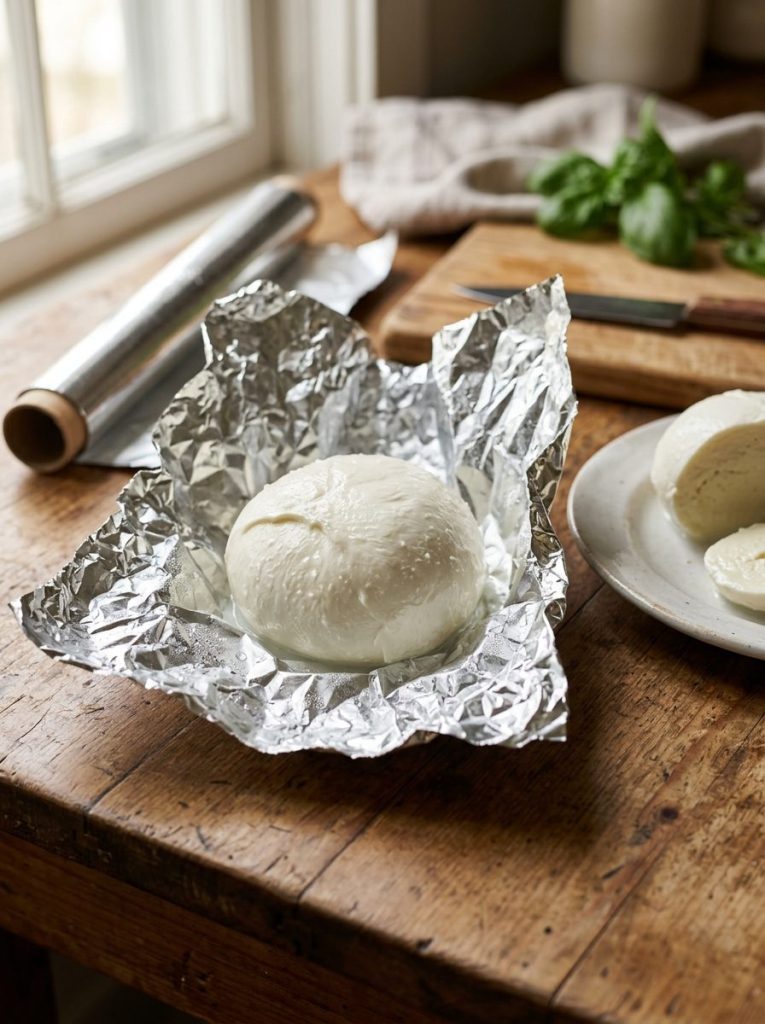
The cheese came out of the foil wet, patchy, and smelling sour, and it went straight into the trash. Two weeks earlier it had been a smooth, mild piece with a clean, milky smell. Foil felt like the quick, tidy way to store it. It wasn’t.
Two things worked against me. Foil traps moisture right against the surface of a soft cheese, and fresh cheese was never going to last two weeks in the fridge no matter what I wrapped it in. Here’s what went wrong, how to spot cheese that’s turned, and the storage method that actually works.
What the Cheese Looked Like After 14 Days
The surface told the story first. Some spots were wetter and patchy; others had dried out. Droplets of condensation clung to the inside of the foil. The cheese felt denser than it did on day one, with none of the gentle spring it started with.
The smell had shifted from clean and milky to sharp and sour. A light tang can be normal in fresh cheese, but this had crossed the line. I tasted the smallest corner. Bitter. That was the end of the experiment.
Why Foil Is the Wrong Wrap

Fresh cheeses — mozzarella, queso fresco, paneer, farmer cheese, fresh goat cheese — hold a lot of water, often 50% to 80% depending on the style. That moisture is what makes them soft and mild, and it’s what makes them spoil fast.
Foil seals tight and doesn’t breathe. Any moisture on the cheese stays put, and whatever the cheese releases has nowhere to go. Condensation builds inside the wrap and sits against the surface for days, and that constant damp contact is what invites slime and souring. Parchment or a paper towel absorbs some of that moisture. Foil absorbs nothing — it just holds the wetness in place.
There’s a flavor issue too. Fresh cheese has a gentle tang and enough moisture to be slightly reactive, and foil can leave delicate foods tasting off. Mine didn’t taste metallic exactly. It tasted stale and muddled, like the inside of the refrigerator.
Signs Fresh Cheese Should Be Tossed
I check fresh cheese before using it now, every time. These signs end the discussion:
- A sour, yeasty, or ammonia-like smell
- A slimy or sticky surface
- Pink, blue, green, gray, or black spots
- Heavy weeping, broken-down curds, or a rubbery outside with a mushy middle
And don’t trim fresh cheese the way you might trim a hard aged cheddar. With a firm, dry cheese, cutting well around a mold spot can work. Fresh cheese is too wet — spoilage moves through it easily. If part of it looks bad, the whole piece is done.
Fresh Cheese Has a Short Clock
Even without the foil mistake, two weeks was never going to end well. Opened fresh cheese is a days-long food, not a weeks-long one. In a fridge held between 34°F and 40°F, this is what I plan around:
- Fresh mozzarella: 3 to 5 days after opening
- Ricotta: 3 to 5 days
- Queso fresco: 5 to 7 days for best quality
- Cottage cheese: 5 to 7 days
- Goat cheese log: about a week
- Paneer: 5 to 7 days
- Burrata: same day, or 1 to 2 days at most — that creamy center goes fast
If the package label gives a shorter window, follow the label.
How I Store It Now
If the cheese came packed in brine or whey, keep it in that liquid in a covered container. Don’t top it off with plain water — that dilutes the flavor.
For queso fresco, paneer, or farmer cheese, wrap the piece loosely in wax paper or parchment, then set it in a container. If the cheese is very damp, line the container with a dry paper towel or leave the lid slightly vented. The goal is balance: protected from drying out, but not sitting in trapped condensation.
Two more habits cost almost nothing. Write the open date on a strip of painter’s tape — five seconds, and you’ll never stand in front of the fridge wondering if it’s been four days or fourteen. And store the cheese in the coldest, steadiest spot, the back of a middle shelf, not the door. A busy fridge door can run 5°F to 10°F warmer from all the opening and closing. Keep it away from chopped onions, fish, and leftover chili too, because fresh cheese picks up odors fast.
If It’s a Little Dry but Still Fine
Sometimes cheese hasn’t spoiled, it’s just dried at the edges. If it smells clean and looks normal, use it in something cooked rather than serving it fresh. Slightly dry mozzarella is fine on pizza or in baked pasta. Firmer queso fresco still crumbles nicely over beans or roasted vegetables. A quesadilla or a pan of scrambled eggs forgives a lot.
If there’s any real doubt about safety, skip it. No dinner depends on one ingredient that badly.
The Actual Fix
Foil wasn’t my only mistake — losing track of the date was the bigger one. Fresh cheese rewards buying it with a plan: tomatoes and basil on day one, grilled cheese on day two, omelets or pasta by day three or four. Work through it in 2- to 4-ounce portions instead of saving the whole piece for a special occasion that never comes.
So skip the foil, keep the brine, and write the date. And when in doubt, make the quesadilla sooner.