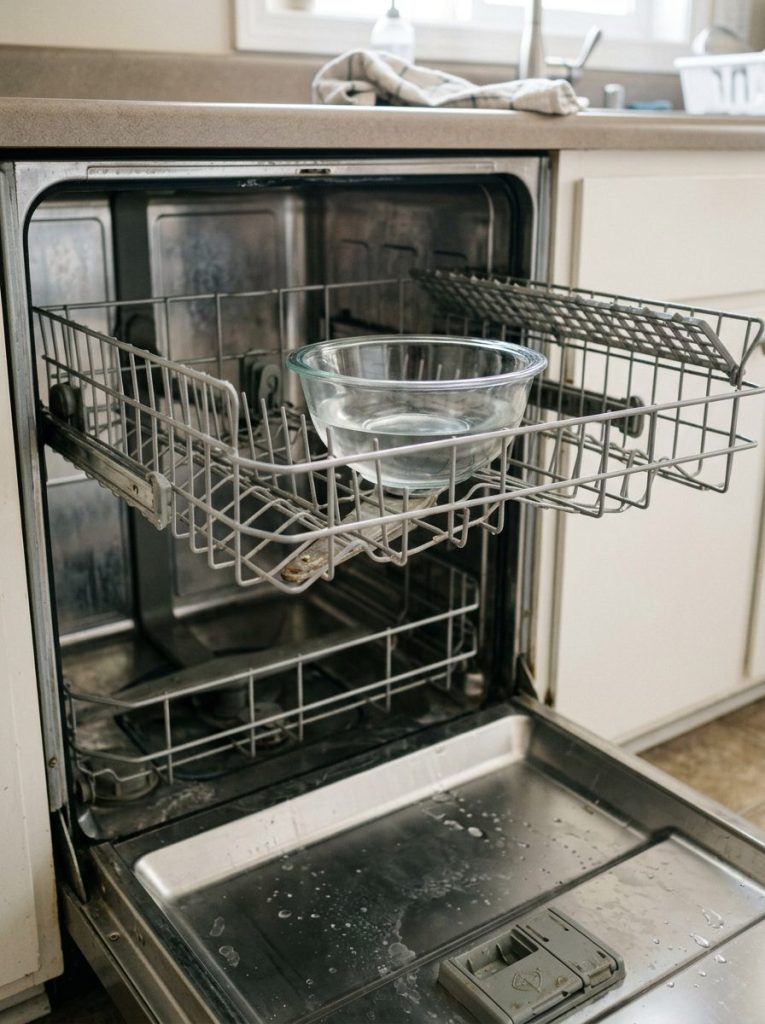
My dishwasher had started leaving behind a musty smell, cloudy glasses, and the occasional bit of residue on supposedly clean dishes. After nine years without cleaning the machine itself, I ran an empty hot cycle with a bowl of white vinegar on the top rack.
The difference was obvious when I opened the door: the interior looked brighter, the smell was gone, and the next load of dishes came out cleaner. But the vinegar cycle also revealed a problem I’d been ignoring: there was old debris in the filter and mineral buildup in the spray arms that needed hands-on cleaning.
Why the Dishwasher Started Smelling and Cleaning Poorly

A dishwasher washes dirty dishes, but it doesn’t send every bit of food, grease, detergent, and hard-water mineral down the drain. Some of it stays behind in the filter, around the door seal, inside the spray arms, and on the tub walls.
Over time, that buildup can create a stale or musty odor. Mineral deposits can also clog the tiny holes in the spray arms, so water doesn’t spray with the same force. Then your glasses come out cloudy and a bowl in the top rack still has a suspicious crumb stuck to it.
My dishwasher had reached that point. It still ran, but it no longer seemed to finish a load as cleanly as it once did.
How I Set Up the Vinegar Cycle
I began with an empty dishwasher. No dishes, utensils, or detergent.
Before adding vinegar, I checked the bottom of the machine for loose food pieces and cleaned out the filter. This matters because vinegar can loosen grime, but it won’t magically make a wad of old pasta or a label fragment disappear. If the filter is packed with debris, clean that first.
Then I poured 2 cups of plain white vinegar into a dishwasher-safe bowl and set it upright on the top rack. I chose the hottest, longest cycle available and let the dishwasher run as usual.
The bowl keeps the vinegar from draining out at the start. As the dishwasher fills and sprays, the vinegar gradually mixes into the hot water and circulates through the machine.
What the Vinegar Was Actually Cleaning
White vinegar is acidic, which helps dissolve hard-water minerals and soap scum. Those chalky white spots and dull streaks are often mineral deposits, not dirt in the usual sense.
The hot water helped the diluted vinegar reach the stainless steel interior, detergent dispenser, spray arms, racks, and other areas I rarely think about. It also helped cut through some greasy film that had built up inside the tub.
Vinegar can help with odors, too, because it removes some of the residue feeding the smell. It left a light vinegar scent at first, but that faded quickly. More important, the old musty dishwasher smell was gone.
The First Thing I Noticed After the Cycle
The inside of the dishwasher looked cleaner right away. The stainless steel walls had lost their dull, hazy look, and the plastic cutlery basket and detergent compartment looked less cloudy.
The odor change was even more noticeable. Before the cleaning cycle, opening the dishwasher door released a stale smell that lingered around the sink. Afterward, the machine smelled neutral once the vinegar scent dissipated.
It wasn’t a brand-new-appliance transformation. Some stubborn mineral spots remained, especially in corners and around parts that don’t get much direct spray. Still, the overall difference was hard to miss.
The Vinegar Also Loosened Hidden Gunk
The cleaning cycle made one thing very clear: a lot of the problem had been hiding where I wasn’t looking.
The filter collected loosened debris, and the spray arms showed mineral buildup around some of their water holes. Vinegar softened those deposits, but it didn’t remove every bit of them on its own. I still needed to wipe the filter and inspect the spray arms afterward.
That’s the common mistake with any dishwasher-cleaning trick: running one cycle and assuming the appliance is now spotless. If the filter is dirty or the spray holes are partly blocked, take a few extra minutes to clean them manually. The dishwasher can’t scrub its own filter.
Did the Next Load of Dishes Come Out Better?
Yes. The first regular load after the vinegar cycle looked cleaner, especially the glassware. The cloudy film I had been seeing was reduced, and plates and utensils came out without the residue that had started showing up before.
That makes sense. Cleaner spray arms can move more water, and less mineral buildup inside the machine means fewer deposits have a chance to redeposit on dishes.
Still, vinegar didn’t solve every possible dishwasher problem. A dishwasher with a damaged pump, worn rack, broken heating element, or serious drainage issue needs more than a bowl of vinegar. This is maintenance, not appliance repair.
What I’d Do Differently Now
I wouldn’t wait nine years again.
The vinegar cycle was simple and inexpensive, but the bigger lesson was to clean the filter regularly and check the spray arms if dishes suddenly stop coming out clean. Those two jobs address the food debris and clogs that an empty cleaning cycle may only partly remove.
If you try vinegar, use plain white vinegar, keep the dishwasher empty, place 2 cups in a dishwasher-safe bowl on the top rack, and run a hot cycle. Check your dishwasher manual, too: some manufacturers have specific cleaning instructions and may recommend a dishwasher cleaner instead of vinegar for routine care.
Don’t Wait for the Musty Smell
A vinegar cycle gave my dishwasher a much-needed reset: a cleaner interior, a fresher smell, and better results on the next load. But the real fix was paying attention to the filter and spray arms that had been collecting grime for years.
Start there, then run the cleaning cycle before your dishwasher starts making clean dishes look questionable.