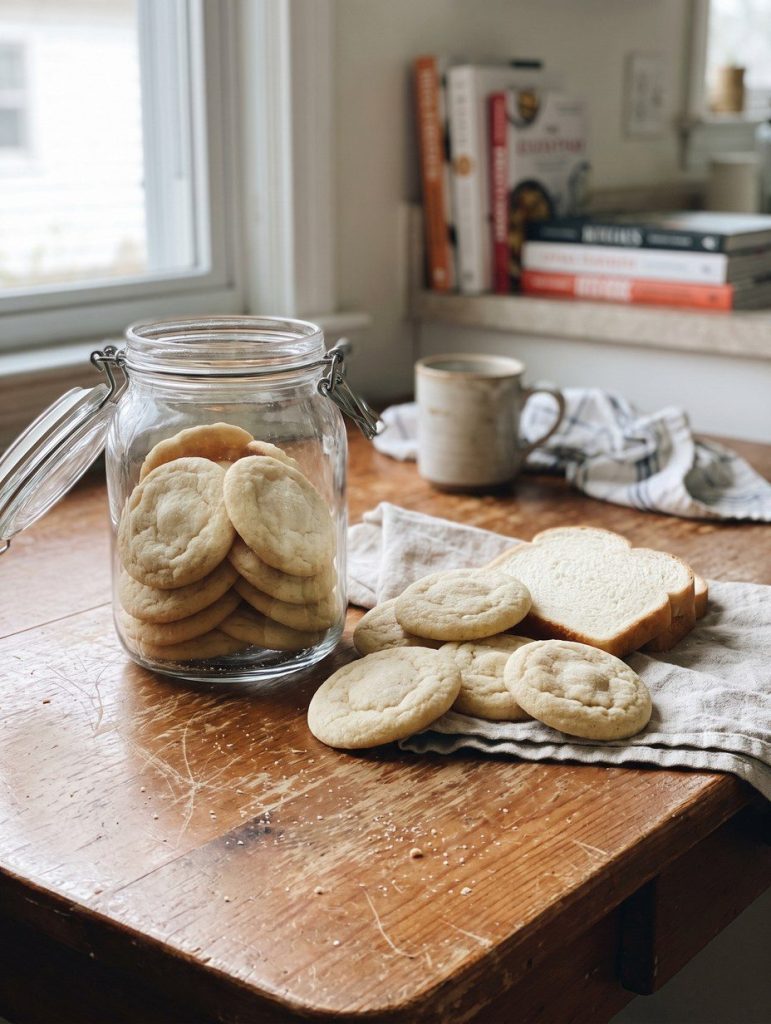
My grandmother kept a slice of white bread in the cookie tin. Not wrapped in anything, not in a corner — just sitting in there among the cookies like it belonged.
I thought it was one of those things old people did for reasons nobody could explain anymore. Then one Christmas I baked four dozen sugar cookies on a Tuesday for a party on a Thursday, and by Wednesday afternoon they had gone from soft to something you could file your nails on.
So I tried it. One slice of plain white sandwich bread, dropped into the container, lid on, left overnight.
What I Found the Next Morning
The cookies were soft again. Not damp, not weirdly sticky — soft, the way they’d been coming off the tray.
And the bread was hard as a cracker. Completely dried out, stiff enough to snap.
That’s the whole trick, and once you see it you understand it immediately: the moisture moved.

Why It Works
Sealed containers reach an equilibrium. Everything inside slowly matches everything else in moisture content.
A cookie that’s gone hard has lost water to the air. A fresh slice of bread is holding a lot of water. Put them in a sealed box together and the water moves from the bread into the cookies until both sides even out.
The bread takes the hit. The cookies come back.
It’s the same reason a bag of chips goes soft in a humid kitchen, just running in the direction you want for once.
How to Actually Do It
One slice of plain white sandwich bread per container. That’s it.
Plain is important. Whatever is in that bread will end up faintly in your cookies, so a rye or a sourdough is a bad idea and anything with seeds is worse. Cheap soft white bread is perfect — this is the one job it was born for.
Give it six to eight hours. Overnight is easiest.
Then take the bread out. Leave it in there for days and you’ll go past soft into slightly damp, and the cookies can start to taste a little bready.
If they’re still not where you want them, put a fresh slice in for another night.
What It Works On
Sugar cookies, shortbread, chocolate chip, snickerdoodles, soft molasses cookies — anything that started soft and dried out.
It also brings back brown sugar that’s gone into a brick, which is the other thing my grandmother used it for. Hard brown sugar, one slice of bread, sealed container, overnight. Scoopable by morning.
Same for a dry slab of cake or a hardening loaf of banana bread.
What It Won’t Do
It will not rescue a cookie that was baked too long. A cookie that came out of the oven dry is dry all the way through — the structure is set and there’s nothing to soften.
It also won’t help biscotti, gingersnaps or anything that’s meant to be crisp. Those will just go sad and chewy, which is the opposite of the point.
And it can’t undo staleness in the flavor sense. It puts moisture back. It doesn’t make a three-week-old cookie taste fresh.
The Other Direction
Worth knowing the reverse, because it’s the same rule.
If you’ve got crisp cookies you want to keep crisp, never store them in the same container as soft ones. The soft ones will give up their moisture and the crisp ones will absorb it, and within a day you’ll have two batches of mediocre middle-ground cookies.
Crisp with crisp. Soft with soft. And a slice of bread in with the soft ones.
Why I Keep Doing It
It costs nothing. It uses the end of the loaf nobody wants. And it has saved me from re-baking on more than one occasion when guests were already on their way.
My grandmother never explained it. She just did it, every time, and the cookies in her house were always soft.