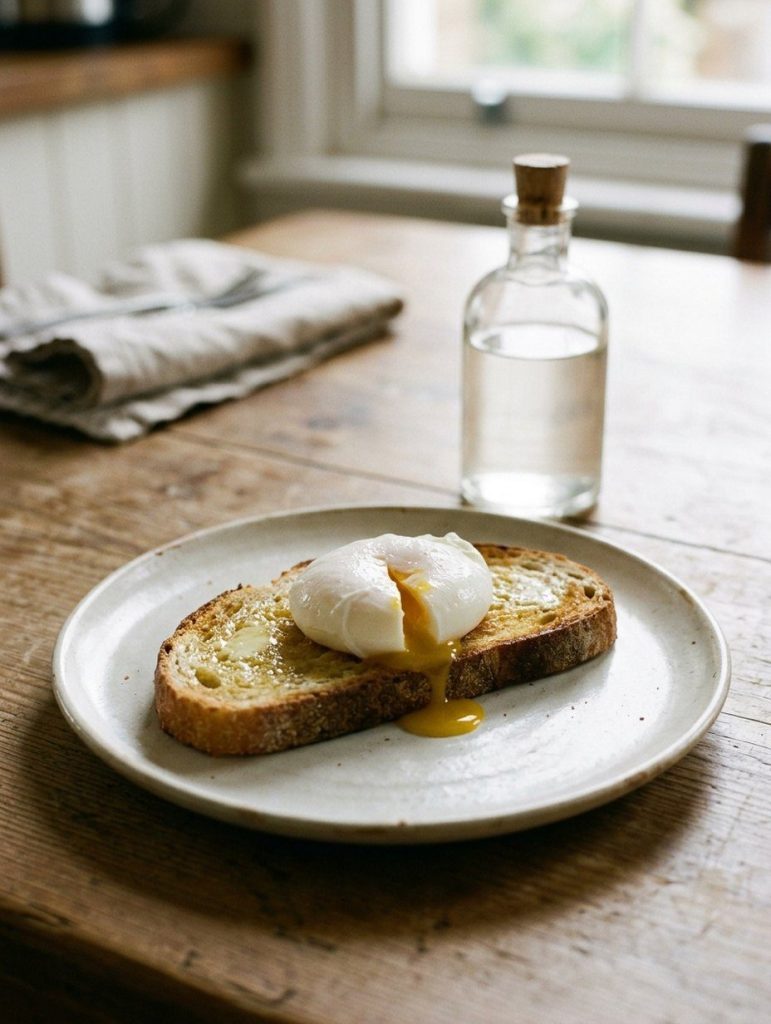
Poached eggs used to defeat me. I’d get a pan of white wisps and a sad naked yolk sitting on the bottom.
A splash of vinegar in the water fixed it on the first try.
Why It Works
Egg white is protein. Acid makes protein set faster.
When the egg hits acidulated water the outside of the white firms up almost immediately, which holds the rest of it together instead of letting it drift off into the pan.
Without acid, the thin outer white has time to spread before it cooks, and that is the cloud you’re left skimming out.
How Much
One tablespoon of white vinegar per liter of water. That’s it.
More than that and you can taste it on the egg, and the white can go slightly rubbery at the edges.
Plain white vinegar. Not balsamic — it will tint the whites gray-brown. Lemon juice works too, in the same amount.
The Other Three Things That Matter More Than the Vinegar
Use the freshest eggs you can. This is the big one. In a fresh egg the white is thick and holds together on its own. In an older egg the white has thinned and will spread whatever you do. If your eggs are two weeks old, vinegar is doing damage control.
Don’t let it boil. You want the water barely trembling, around 180°F. A rolling boil tears the egg apart physically, which no amount of acid prevents.
Strain the egg first. Crack it into a fine sieve over a bowl and let the loose watery white drain away for a few seconds. That thin white is the only part that makes wisps. Remove it and you barely need the vinegar at all.
The Method That Works Every Time
Wide pan, about three inches of water, one tablespoon of vinegar, brought up until small bubbles rise but the surface is still.
Crack the egg into a sieve, drain, then tip it into a small cup.
Lower the cup to the surface and let the egg slide in. Don’t drop it from a height.
Three minutes for a runny yolk, four for jammy. Lift out with a slotted spoon onto kitchen paper.
The Whirlpool
Stirring the water into a vortex and dropping the egg in the middle does work, and it’s what everyone teaches.
But it only works for one egg at a time, and if you’ve strained the egg you don’t need it. For more than one, skip the vortex and use the sieve.
Doing Them Ahead
Poach them, then drop straight into cold water. They’ll keep in the fridge for a couple of days.
To serve, lower into hot water for thirty seconds. This is how cafés get poached eggs onto a plate in two minutes, and it works perfectly at home for a crowd.