Restaurant food often tastes better for a few simple reasons: hot pans, properly seasoned ingredients, and sauces that get a little attention. You don’t need a culinary school kitchen to get there.
The goal isn’t to copy every last detail from a restaurant plate. It’s to make a dinner with a crisp crust, glossy sauce, tender meat, or melted cheese—the parts that make a meal feel special.
1. Creamy Garlic Shrimp Pasta and Margherita Pizza
Creamy garlic shrimp pasta comes together quickly, but timing matters. Cook the pasta until it still has a little bite, then finish it in the sauce so it absorbs flavor instead of sitting under a puddle of cream.
Use fresh shrimp if you can, real cream, garlic, Parmesan, and a splash of white wine. Don’t crowd the skillet with shrimp; they need direct contact with the hot pan to brown instead of releasing water and turning rubbery.
For a Margherita pizza, fewer toppings are better. Spread a thin layer of tomato sauce over dough, then add fresh mozzarella and bake it on a pizza stone or a preheated baking sheet. The hot surface starts setting the crust right away, which helps prevent that pale, soft middle.
Add basil after baking or near the end, so it stays green and fragrant. A pizza buried under cheese and wet toppings may still be pizza, but it won’t have that crisp-chewy pizzeria crust.

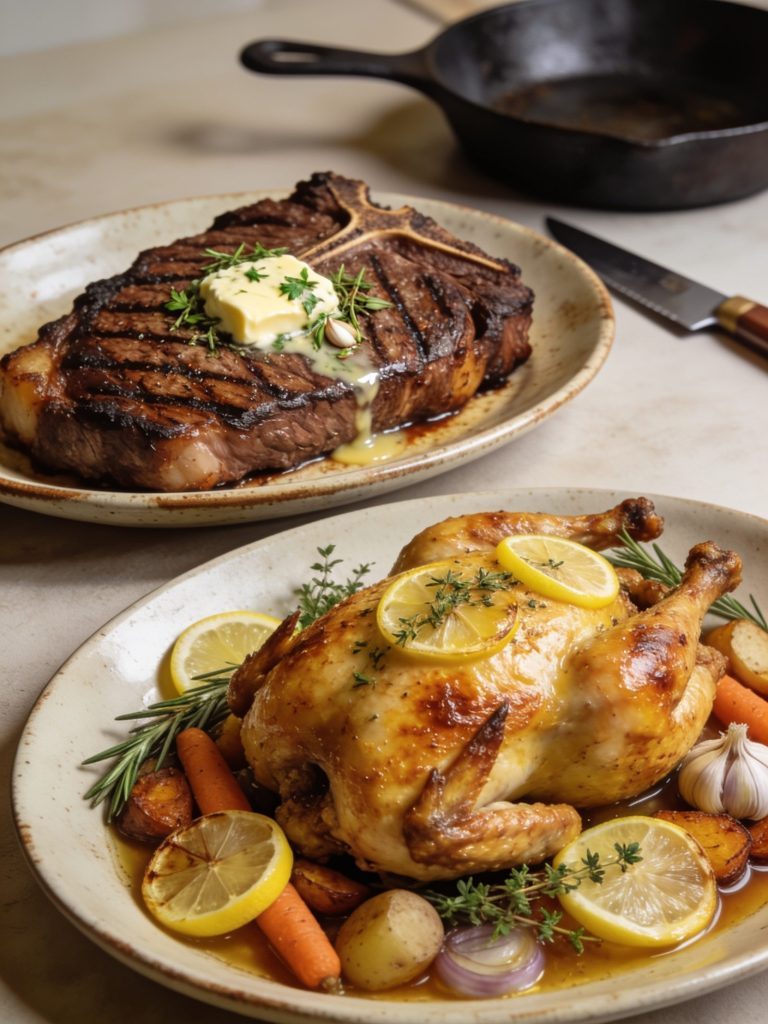
2. Seared Steak and Lemon Herb Roast Chicken
A good steak doesn’t need much beyond salt, pepper, a hot cast-iron skillet, and time to rest. Ribeye and filet mignon are both classic choices because they stay tender and cook quickly.
Pat the steak dry before it hits the pan. Surface moisture creates steam, and steam keeps you from getting the dark brown crust that gives steak much of its flavor. Sear it, then add herb butter made with parsley, garlic, and thyme while the steak rests.
Lemon herb roast chicken uses the same basic idea: dry skin and direct heat. Rub the chicken with lemon zest, garlic, rosemary, thyme, salt, and pepper, then roast until the skin is crisp and the meat is cooked through.
Don’t keep opening the oven door to check it. Each peek lets out heat and slows browning. Serve it with roasted vegetables cooked in the same pan if there’s room; the chicken drippings do useful work.
3. Chicken Parmesan and French Onion Soup
Chicken Parmesan feels like a restaurant dinner because it has contrast: crisp breading, tangy marinara, melted mozzarella, and Parmesan with a salty edge. The common mistake is drowning the chicken in sauce before baking it.
Fry breaded chicken cutlets until golden first. Then use enough marinara to flavor the chicken without soaking the crust. Top with mozzarella and Parmesan, then bake until the cheese melts and starts to brown.
French onion soup asks for patience rather than difficult technique. Cook the onions slowly until they become deep brown and sweet, then simmer them in beef broth. The onions darken because their natural sugars brown over time—not because they need to be scorched.
Top each bowl with baguette and Gruyère, then broil until the cheese bubbles. Keep an eye on it. Gruyère goes from golden to burnt with surprising speed.
4. Thai Green Curry and Tacos al Pastor
Thai green curry is one of the easiest ways to make a dinner with big flavor from a few ingredients. Store-bought green curry paste and coconut milk do most of the heavy lifting.
Cook the curry paste briefly before adding the coconut milk so its aromatics wake up in the heat. Add vegetables and tofu or chicken, then serve the curry over jasmine rice. Choose vegetables that will stay distinct rather than collapse into the sauce; bell peppers, green beans, and eggplant work well.
Tacos al Pastor rely on a pork marinade with spices, pineapple juice, and vinegar. The juice and vinegar bring sweetness and tang while helping flavor the meat. Grill or roast the pork, then chop it into small pieces for warm corn tortillas.
Keep the toppings simple: cilantro, onion, lime, and pineapple if you have it. A taco piled high with shredded cheese, sour cream, and random extras can be tasty, but it hides the pork instead of letting it lead.
5. Sushi Rolls and Chocolate Lava Cakes
Homemade sushi rolls are less about advanced knife skills than careful rice preparation. Seasoned sushi rice should be slightly sticky so it holds together, but not mashed into paste.
Use nori sheets and fillings you like, then roll firmly so the center doesn’t fall out when sliced. If you’re using raw fish, buy it from a reputable seller that can advise you on appropriate handling and intended use. Cooked shrimp, crab-style seafood, vegetables, and avocado also make excellent rolls.
Chocolate lava cakes look complicated because the center flows out when you cut into them. Really, the trick is pulling them from the oven when the edges are set but the middle is still soft.
Overbake them and you’ll have small chocolate cakes, which is hardly a tragedy, but you’ll lose the molten center. Serve them right away with vanilla ice cream or powdered sugar.
Put Your Attention Where It Counts
You don’t need specialty tools for every one of these meals. Start with one useful habit: preheat the pan, oven, or baking sheet before the food goes in.
That single step helps steak brown, pizza crisp, chicken skin roast properly, and cheese bubble instead of slowly melting into a sad blanket. Restaurant-style cooking is usually just good heat, good ingredients, and not rushing the parts that need a minute.