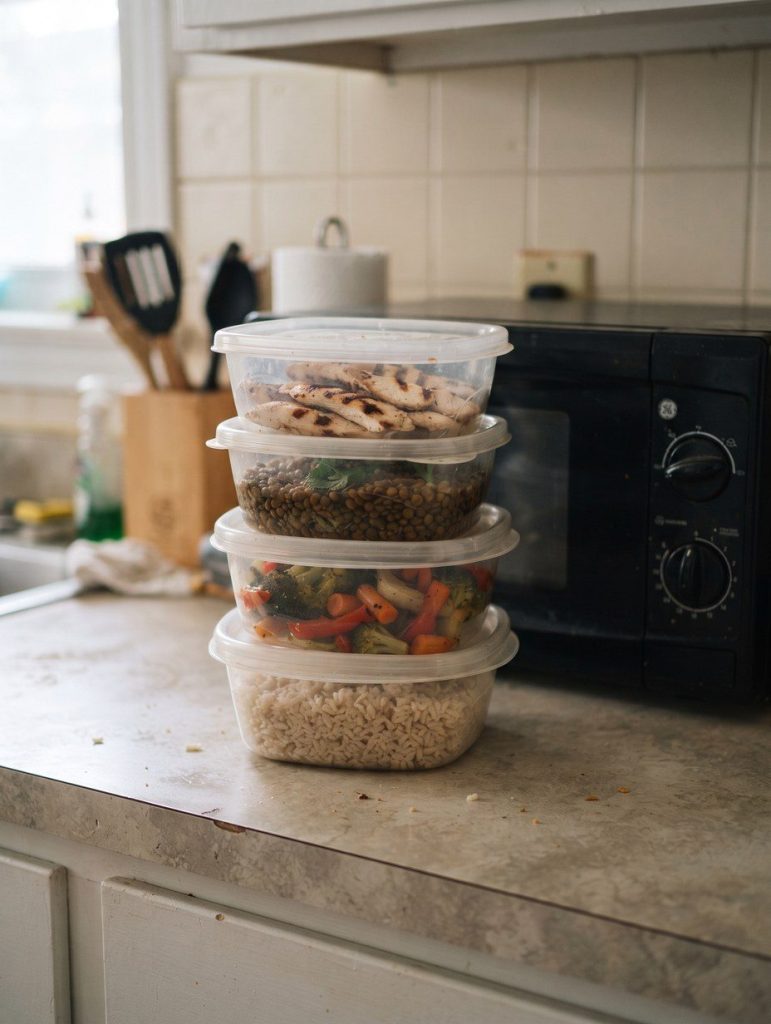
Turn over a plastic tub from your cupboard and you’ll find a little triangle of arrows with a number in the middle, usually somewhere between 1 and 7.
Most of us read it as a recycling instruction. It is partly that. But the number is really telling you what the plastic is made of — and that matters a lot more for the ones you keep food in.
What the Number Actually Is
It’s a resin identification code. It says which plastic was used, which tells you how it behaves with heat, with oil, and over time.
Here’s the short version of each.
1 — PET or PETE
Water bottles, soda bottles, jars of peanut butter.
Designed for single use. It’s not built to be washed and refilled repeatedly, and it isn’t meant to go in a dishwasher or a microwave. Widely recycled.
2 — HDPE
Milk jugs, detergent bottles, yogurt tubs, ice cream containers.
One of the sturdiest and most stable food plastics. Handles cold well. Widely recycled. If you’re going to reuse a container, this is a good one.
3 — PVC or V
Cling film of the older sort, some squeeze bottles, a lot of non-food items like pipes.
This is the one to keep away from heat and away from fatty foods. Rarely recycled kerbside.
4 — LDPE
Bread bags, squeezable honey bottles, freezer bags, the film on a lot of packaging.
Flexible and low risk. Not usually accepted in household recycling bins, though many supermarkets have a collection point for soft plastics.
5 — PP
Most reusable food containers, takeaway tubs, medicine bottles, straws, yogurt pots.
This is the one you want for food storage. It has a high melting point, which is why most genuinely microwave-safe containers are number 5. Increasingly recycled.
6 — PS
Disposable cups, egg cartons of the foam sort, takeaway clamshells, plastic cutlery.
Polystyrene. It softens at low temperatures and should be kept well away from hot food and microwaves. Rarely recycled.
7 — Other
A catch-all for everything that isn’t 1 to 6, including mixed and newer plastics.
Because it’s a category rather than a material, you can’t say anything reliable about a number 7 without knowing what it actually is. For food storage, I’d rather use a 5.
The Practical Rule I Use
For anything that holds food and goes in the microwave: 5, and preferably one that also says microwave safe in words.
For storing cold food: 2 or 5.
For reheating: honestly, glass. It costs more once and then never worries you again.
Two Things Worth Knowing
“Microwave safe” is about the container, not the food. It means the plastic won’t warp or melt at microwave temperatures. It’s a durability claim.
Heat and fat are what stress plastic. Oily food heats hotter than watery food and works on plastic harder. A tub that’s fine holding cold pasta salad is under far more strain holding hot bolognese.
When to Retire a Container
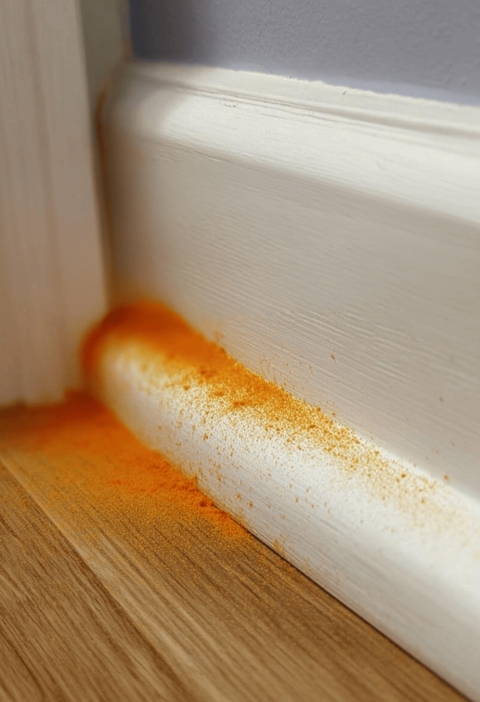
Whatever the number, a container has had its day when it’s cloudy, scratched, warped, stained orange, or smells of the last thing that lived in it.
Scratches hold bacteria and are hard to clean properly. Warping means it’s already been hotter than it should. A permanent smell means the plastic has absorbed oils it isn’t giving back.
Turn one over now and see what number you’ve been reheating your leftovers in. Mine was a 6 and I hadn’t looked in years.