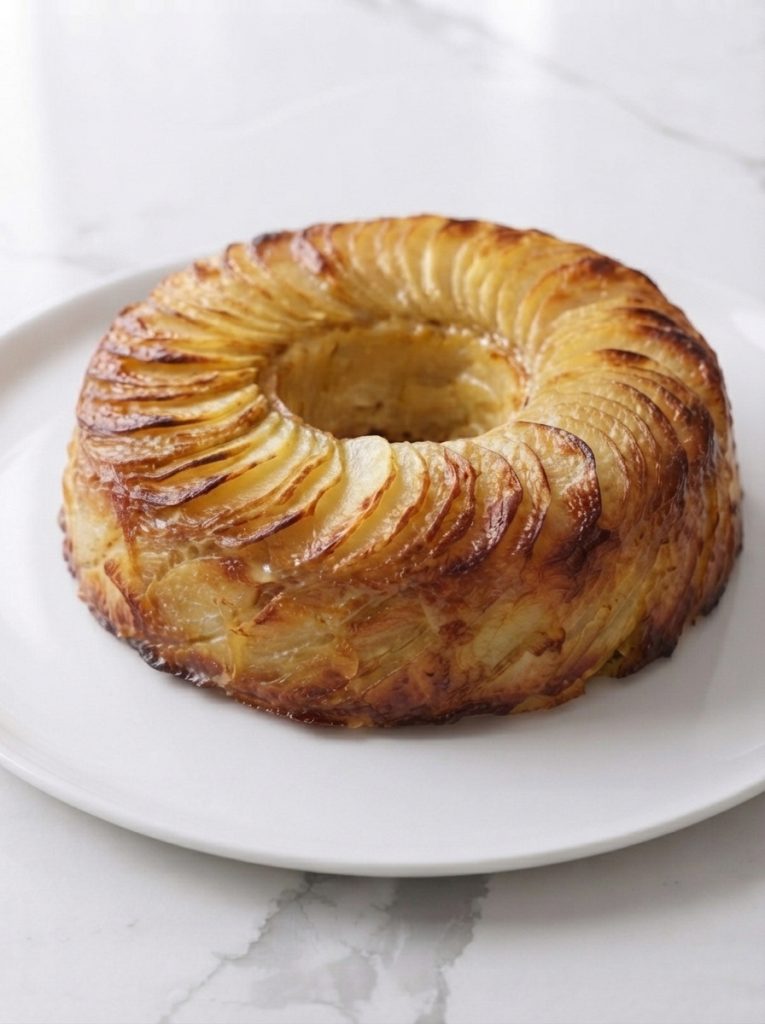
This golden potato ring is crisp around the edges, creamy in the center, and fancy enough for Easter without being fussy. Thinly sliced potatoes bake with butter and cream in a ring mold until tender and deeply golden. You’re going to love how a short ingredient list turns into such a showstopping side dish.
Why You’ll Love It
- Makes dinner feel special — this golden potato ring turns a simple ham or lamb dinner into an occasion.
- Short ingredient list — potatoes, butter, heavy cream, salt, and pepper are all you need.
- Crispy and creamy — the outside gets bronzed and crisp while the layers inside turn soft and custardy.
- Flexible timing — a 10- to 15-minute rest gives the ring time to set before serving.
Ingredient Notes
Use russet or Yukon Gold potatoes, whichever you can get your hands on. Russets bake up a little lighter and almost soufflé-like inside, while Yukon Golds have a richer, creamier feel. Red potatoes are fine potatoes, but they don’t give quite the same layered tenderness. Try our Oven Baked Amish Roasted Potatoes and Onions next.
Heavy cream means heavy cream. This is not the day for half-and-half, skim milk, or any of those “light” swaps we all pretend will work. They won’t give you that soft, luxurious interior. Whole milk is edible, certainly—but “edible” is not the bar for a holiday side dish.
For butter, unsalted allows you to control the salt. Kerrygold is lovely if you’re feeling fancy, but regular store-brand unsalted butter works just fine. Don’t let the internet convince you every potato needs boutique dairy products flown in from a meadow. If you like this, you'll love our Oven Baked 3-Ingredients Buttermilk Baked Potatoes.
Freshly ground black pepper is optional, technically. It adds a nice flavor, though it can be left out.
Ingredients
- 3 pounds russet or Yukon Gold potatoes, peeled
- 6 tablespoons unsalted butter, melted, plus a little extra for greasing the mold
- 1 1/2 cups heavy cream
- 1 1/2 teaspoons kosher salt
- 1/2 teaspoon freshly ground black pepper, optional but I usually add it
- Butter or neutral oil, for greasing a 10- to 12-cup ring mold or Bundt pan—be generous with it, truly

Instructions
Heat your oven to 375°F and put a rack in the middle position. Generously grease a 10- to 12-cup ring mold or Bundt pan with butter or neutral oil. Get into every little crease if you’re using a fancy Bundt pan. This is not a place to be stingy. A stuck potato ring will still taste good, but it may make you say words you would not appreciate.
Peel the potatoes and keep them in a bowl of cold water while you work so they don’t brown. Then slice them into thin rounds, about 1/8 inch thick. A mandoline makes this easier and more even, but please use the guard. A sharp knife works too; just take your time.
In a big bowl, whisk together the melted butter, heavy cream, kosher salt, and black pepper if you’re using it. Pat the potato slices dry with a clean kitchen towel. Don’t skip that part, or the cream mixture gets a little watery. Add the dry potato slices to the bowl and gently toss until every slice gets coated in that buttery cream. Your hands work best, though a big spoon is less messy. I usually start with a spoon and then give up.
Arrange the first layer of potato slices in the bottom of the prepared mold, overlapping them in a neat circular fan. This is the part that will show when you flip it out, so make it pretty. Not museum-pretty. Just prettier than the rest. This first layer does matter. For another easy option, see our 5-Ingredient Slow Cooker Potato Corn Chowder.
Keep layering the potato slices, overlapping and pressing them down lightly as you go so there aren’t big air pockets. Spoon some of the remaining cream mixture over every couple of layers. Use all the potatoes and all the liquid, then smooth the top as evenly as you can. It does not have to be perfect. Mine rarely is, and it still comes out looking rather grand.
Cover the mold tightly with foil and set it on a rimmed baking sheet in case any buttery cream escapes. Bake covered for 45 minutes. Carefully remove the foil—the steam will come at your face like it has a personal grievance—then bake uncovered for another 30 to 40 minutes. The potatoes should be very tender when you poke them with a knife, and the top edges should be deep golden and crisp.
Take the mold out and let it rest on a cooling rack for 10 to 15 minutes. I know you’ll want to flip it right away. Don’t. The resting lets everything settle and helps the ring keep its shape.
Run a thin knife or flexible spatula around both the inner and outer edges of the mold. Put a warm serving plate upside down over the top, hold on with oven mitts, and flip the whole thing over in one confident motion. Confidence is key, even if it’s pretend confidence. Lift the mold straight up. If a few potato bits stick, tuck them back in place and move on. Nobody needs to know.
If butter or cream pools around the bottom, dab it away with a paper towel if you want a cleaner look. Slice the potato ring into wedges with a sharp knife and serve it hot, while the crust is still crisp and the center is soft and layered.
Variations
Yukon Gold potatoes and a tiny pinch of freshly grated nutmeg in the cream give this a slightly old-fashioned French flavor—nothing loud, just warm and a little mysterious. Turning the oven up to 400°F for the last 10 minutes gives a darker crust, though you have to watch it closely. The edges can go from glorious to “well, that’s certainly brown” faster than you’d think.
A version with thinly sliced sweet potatoes is not this. The cream and sweet potatoes become a little too sweet and soft for this recipe.
You can use russets for that fluffier interior, or Yukon Golds for a denser, butterier one. You can also leave out the pepper for picky eaters. The only changes I wouldn’t recommend are reducing the cream or skimping on the butter in the pan. This recipe gets its drama from that crisp golden shell, and the fat is what helps make it happen. You might also like our Creamy Pour-Over Baked Potatoes.
Storage & Reheating
If you have leftovers, cool them promptly, cover them, and refrigerate within two hours. They’ll keep well for a few days, though the crust won’t be quite as crackly after the first night. Nothing is, really. I store wedges in a covered container and reheat them until steaming hot.
For a larger leftover portion, put it in a baking dish, cover loosely with foil, and warm it in a 325°F oven until hot through. If you’re reheating the whole ring, you can do that in the mold, covered with foil, at 325°F, then unmold it again before serving. It can be baked up to a day ahead, cooled completely, covered, and refrigerated.
The microwave works in a pinch—of course it does—but it makes the outside softer. Sometimes that’s fine. Tuesday night is not Easter dinner, and we all have limits.
Final Notes
There is something about bringing this to the table whole that still gets me. The golden ring, the white platter, the little pause before the first slice. Try our Slow Cooker 4-Ingredient Pork Chops and Scalloped Potatoes next.
The potato ring comes out crisp around the edges and soft in the middle, ready for serving. If you like this, you'll love our Slow Cooker Amish Cube Steak with Brown Gravy.
Oven-Baked 3-Ingredient Potato Ring Mold
Want This Recipe Later?
Ingredients
- 3 pounds russet or Yukon Gold potatoes peeled
- 6 tablespoons unsalted butter melted, plus a little extra for greasing the mold
- 1 1/2 cups heavy cream
- 1 1/2 teaspoons kosher salt
- 1/2 teaspoon freshly ground black pepper optional
- butter or neutral oil for greasing a 10- to 12-cup ring mold or Bundt pan; be generous
Instructions
- Heat the oven to 375°F and place a rack in the middle position.
- Generously grease a 10- to 12-cup ring mold or Bundt pan with butter or neutral oil, getting into every crease if using a decorative Bundt pan.
- Peel the potatoes and keep them in a bowl of cold water while you work so they do not brown, then slice them into thin rounds about 1/8 inch thick.
- In a large bowl, whisk together the melted butter, heavy cream, kosher salt, and black pepper if using.
- Pat the potato slices dry with a clean kitchen towel, add them to the bowl, and gently toss until every slice is coated in the buttery cream mixture.
- Arrange the first layer of potato slices in the bottom of the prepared mold, overlapping them in a neat circular fan because this layer will show when the ring is unmolded.
- Continue layering the potato slices, overlapping and pressing them down lightly as you go, spooning some of the remaining cream mixture over every couple of layers until all the potatoes and liquid are used.
- Cover the mold tightly with foil, set it on a rimmed baking sheet, and bake for 45 minutes.
- Carefully remove the foil and bake uncovered for another 30 to 40 minutes, until the potatoes are very tender when pierced with a knife and the top edges are deep golden and crisp.
- Remove the mold from the oven and let it rest on a cooling rack for 10 to 15 minutes so the ring can set and hold its shape.
- Run a thin knife or flexible spatula around the inner and outer edges, place a warm serving plate upside down over the mold, flip confidently with oven mitts, lift the mold straight up, dab away any pooled butter or cream if desired, and slice into wedges to serve hot.
Notes
Nutrition
Made this recipe? Tap a star to rate it.
Nutrition values are estimates based on the listed ingredients and serving count. Actual values vary with brands, cuts and portion sizes.