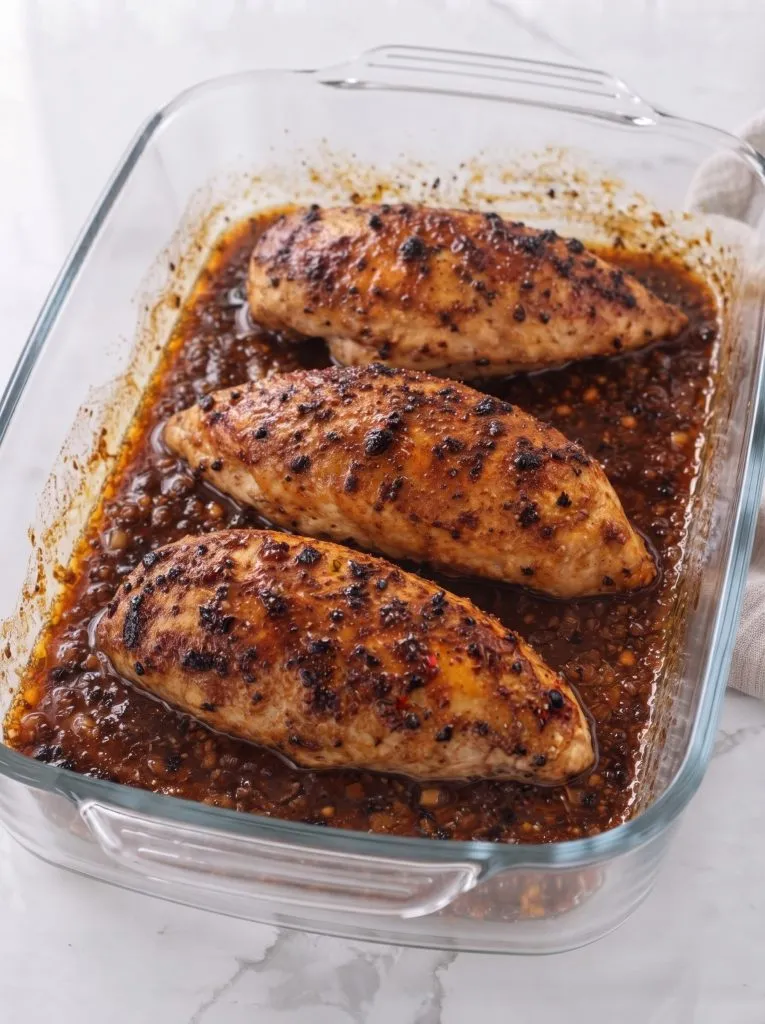
This three-ingredient Chicken Huntington is sweet, tangy, and wonderfully easy, with tender chicken baked in a glossy apricot dressing sauce. You’re going to love how simple it is to get on the table, and those sticky caramelized edges are worth scraping right from the dish. Serve it with mashed potatoes, rice, or buttered noodles and spoon that amber sauce over everything.
Why You’ll Love It
- Only three ingredients — chicken, bottled dressing, and apricot preserves are all you need.
- Easy weeknight dinner — the sauce does most of the work while the chicken bakes.
- Juicy, sticky chicken — baking covered first keeps the chicken tender, then uncovered baking caramelizes the sauce.
- Great with simple sides — mashed potatoes, rice, and buttered noodles all soak up the sauce beautifully.
- Leftovers reheat well — the chicken makes an easy lunch the next day.
Ingredient Notes
For the dressing, use bottled French or Catalina. I tend to reach for Catalina because I like the little extra tang and that reddish color, but classic French dressing works beautifully too. The kind with a bit of sweetness is what you want here. This is not the moment for a fancy vinaigrette with grains of mustard floating around like pond debris. Try our How to Make "The Best Chicken Ever" — Hands Down, No Lie next.
Apricot preserves are the heart of it. I use whatever regular grocery-store brand is on sale—Smucker’s, Bonne Maman if I’m feeling flush, store brand if I’m feeling practical, which is most days. Jam works too, as long as it’s apricot and reasonably smooth. If there are big hunks of fruit, just whisk a little harder. You’ll survive.
As for chicken breasts, try to get four that are roughly similar in size. “Roughly” is doing a lot of work there. Chicken breasts these days can be the size of a paperback novel, and then the next package has little dainty ones like they came from a completely different bird. If yours are very thick, slicing them horizontally into thinner cutlets helps them cook evenly. I have skipped that step when I was tired, though, so I’m not going to pretend it’s mandatory. If you like this, you'll love our Mom Dumps Stuffing Mix Over Chicken and Lets the Oven Do the Work — So Good.
And please don’t rinse raw chicken in the sink. I know some of us were raised that way—I was—but it splashes germs around, and I have enough cleaning to do without sanitizing the faucet because of dinner.
Ingredients
- 2 pounds boneless, skinless chicken breasts (about 4 medium breasts; fully thawed, not half-frozen from your freezer excavation)
- 1 cup bottled French or Catalina salad dressing (I usually use Catalina, but either one is fine)
- 1 cup apricot preserves or apricot jam (the ordinary jarred kind—no need to get precious about it)

Instructions
Heat your oven to 375°F. Lightly grease a glass 9×13-inch baking dish. I use cooking spray because I am not trying to create extra dishes for myself, bless it. A little butter or oil works too. The sauce will bubble around the chicken and caramelize at the edges, and you want at least a fighting chance of getting it out of the dish later.
Pat the chicken breasts dry with paper towels and trim off any obvious excess fat. Lay them in a single layer in the baking dish, leaving a bit of room between them if you can. Don’t stack them. I did that once when I was trying to squeeze in an extra breast and wound up with unevenly cooked chicken and a cranky evening. Nobody needs that sort of excitement.
In a medium bowl, whisk together the French or Catalina dressing and the apricot preserves until smooth. It will look shiny and orange-amber, almost too cheerful for a Tuesday. If the preserves are stubborn, give them a minute to loosen up. I sometimes warm the jar briefly in the microwave with the lid off—just a few seconds—but honestly, a good whisk usually gets it done.
More recipes you might like


Pour the sauce all over the chicken. Use a spoon to nudge some sauce over any bare spots. The chicken should be well coated, with sauce pooling around it in the dish. This is not a subtle recipe.
Cover the dish tightly with foil and bake it on the middle rack for 25 minutes. That covered time keeps the chicken from drying out before the sauce gets a chance to do its glossy little thing. While it bakes, make mashed potatoes or rice if you like. Or stand in the kitchen and watch half an episode of whatever detective show is on—your call. I recently got sucked into one of those British mysteries where everybody owns a cottage and somehow has time to murder people between tea breaks. For another easy option, see our Slow Cooker 4-Ingredient Country Gravy Chicken.
Carefully remove the foil after 25 minutes. Watch the steam; it will come at your face like it has a personal grievance. Spoon some of the hot sauce from the bottom of the dish over the tops of the chicken breasts.
Return the dish to the oven uncovered and bake another 15 to 20 minutes, until the chicken is cooked through and the sauce has thickened and started to caramelize around the edges. The thickest part of the chicken needs to reach 165°F. A thermometer is your friend here. I used to poke chicken with a fork and “just know,” which was a ridiculous amount of confidence for a person who once put a whole load of laundry through the wash without noticing a blue crayon in a pocket.
If you want those deeper, sticky, almost lacquered edges, turn the broiler to high for the final 2 to 3 minutes. Stay right there and watch it. Apricot preserves contain sugar, and sugar goes from gorgeous to burnt faster than you can say, “Why does it smell like that?” Ask me how I know. Actually, don’t.
Let the chicken rest in the hot sauce for 5 to 10 minutes before serving. This is hard because it smells terrific, but it helps the chicken stay juicy. Lift each breast out with a fork or tongs, let the extra sauce drip back into the dish for a second, then spoon plenty over the top.
Variations
Russian dressing works well sometimes, which gives it a sharper, tangier edge. You can also add a dash of hot sauce for a little extra heat. You can stir in 1 to 2 teaspoons of crushed red pepper flakes if you like a little heat.
Orange marmalade works in place of the apricot preserves, and peach preserves are lovely too—use the same full cup so the sauce stays thick and glossy. I tried grape jelly once, because it was in the refrigerator and I was feeling resourceful. It wasn’t terrible, exactly. It was also not good. The color alone was enough to put everybody off, sort of a mauve chicken situation. We do not speak of it.
If your chicken breasts are especially thick, either slice them into cutlets before baking or add another 5 to 10 minutes to the covered baking time. Still check that temperature. Chicken doesn’t care how rushed you are.
Storage & Reheating
Let leftovers cool, then store the chicken with its sauce in an airtight container in the refrigerator for 3 to 4 days. Get it into the fridge within 2 hours—especially in summer, when my kitchen turns into a damp little sauna every time I use the oven. You might also like our 4-Ingredient Creamy Herb Butter Chicken.
For reheating, microwave it gently with some of the sauce spooned over the chicken. Cover it loosely so it doesn’t splatter all over the inside of the microwave, which mine does anyway because apparently no one in this family has ever heard of covering food. You can also warm it in a low oven, covered, with a splash of water in the dish to keep things from drying out.
Sliced cold leftovers are excellent over greens, though I say that as someone who will then add too much dressing and a handful of croutons. Or tuck the chicken into a sandwich with lettuce and mayo.
Final Notes
Chicken Huntington is not fancy. It doesn’t need a garnish, doesn’t need an inspiring backstory, and certainly doesn’t need me to pretend it changed anyone’s life. But it has fed people I love on ordinary evenings, when the table was cluttered with homework papers and somebody’s phone charger and, one memorable time, a petrified science-fair potato.
It has shown up when I needed dinner to be easy but not sad.
Make mashed potatoes if you can, or rice, or just tear open a bag of salad and call it balanced. Spoon every last bit of that sauce over something. And if somebody asks what’s in it, you can tell them. Try our Oven Baked 3-Ingredient Chicken Americana next.
Or you can squint a little and say, “Oh, just a little something.” If you like this, you'll love our Crockpot Catalina Chicken — The Retro Dinner That Still Wows.
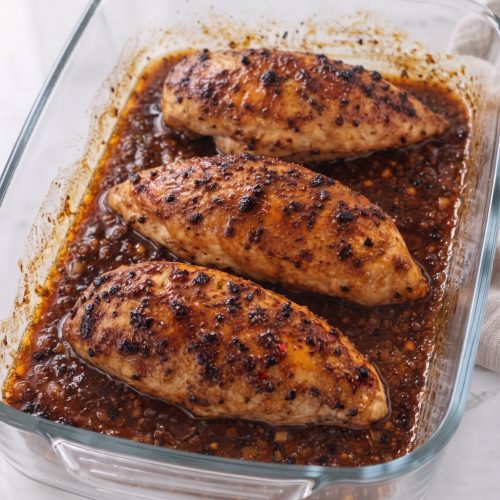
Oven Baked 3-Ingredient Chicken Huntington
Want This Recipe Later?
Ingredients
- 2 pounds boneless, skinless chicken breasts about 4 medium breasts, fully thawed
- 1 cup bottled French or Catalina salad dressing Catalina recommended, but either works
- 1 cup apricot preserves or apricot jam ordinary jarred kind, reasonably smooth
Instructions
- Preheat the oven to 375°F and lightly grease a glass 9x13-inch baking dish with cooking spray, butter, or oil.
- Pat the chicken breasts dry with paper towels, trim any obvious excess fat, and arrange them in a single layer in the prepared baking dish without stacking.
- In a medium bowl, whisk together the French or Catalina dressing and the apricot preserves until smooth and glossy.
- Pour the sauce all over the chicken, using a spoon to cover any bare spots so the chicken is well coated and sauce pools around it.
- Cover the dish tightly with foil and bake on the middle rack for 25 minutes to help keep the chicken tender.
- Carefully remove the foil, watching for steam, and spoon some of the hot sauce from the bottom of the dish over the tops of the chicken breasts.
- Return the dish to the oven uncovered and bake for another 15 to 20 minutes, until the chicken reaches 165°F in the thickest part and the sauce has thickened and started to caramelize around the edges.
- For deeper sticky edges, turn the broiler to high for the final 2 to 3 minutes, staying nearby because the sugar in the preserves can burn quickly.
- Let the chicken rest in the hot sauce for 5 to 10 minutes before serving, then lift each breast from the dish and spoon plenty of sauce over the top.
Notes
Nutrition
Made this recipe? Tap a star to rate it.
Nutrition values are estimates based on the listed ingredients and serving count. Actual values vary with brands, cuts and portion sizes.