There is a lot of noise about this. Cast iron people talk like non-stick is poison, and non-stick people point out that they have never had to season anything in their lives.
Both are right about their own pan and wrong about the other one. They do different jobs.
What Cast Iron Is Actually Good At
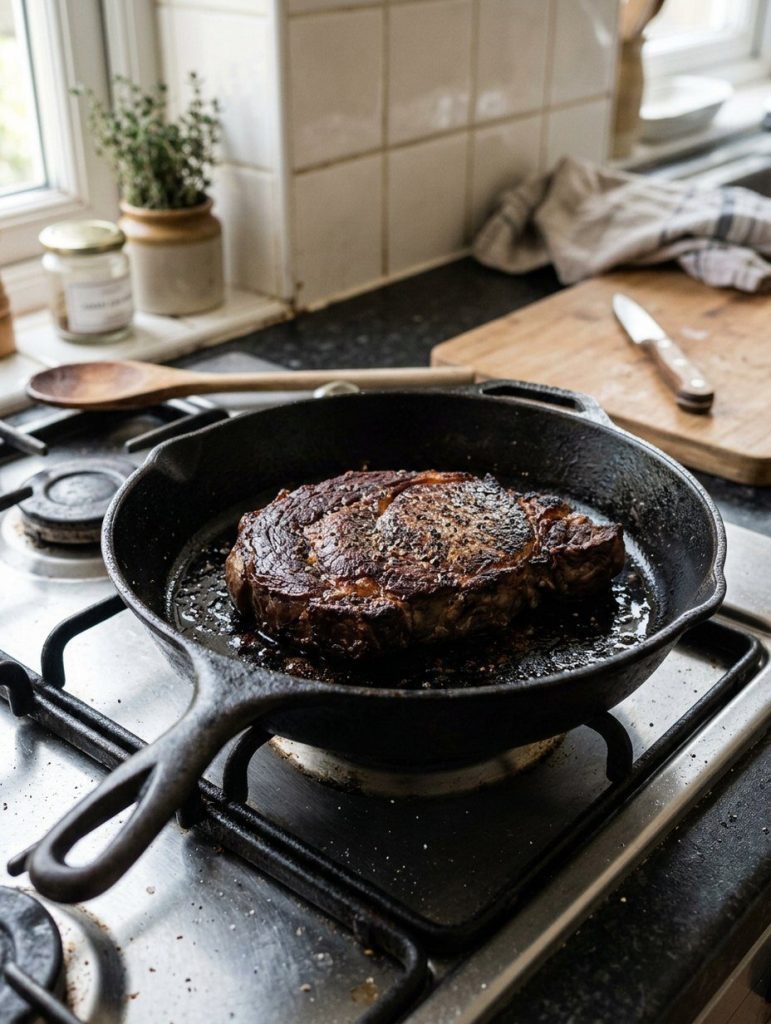
Heat retention. This is the real advantage and it is not about how hot the pan gets — it is about how much heat it holds. Put a cold steak in a cast iron pan and the pan barely drops in temperature. Put it in a thin pan and the temperature crashes and the steak steams instead of searing.
Searing and browning. Anything where you want a hard crust.
Going in the oven. Start on the stove, finish under heat. No plastic handle to worry about.
Cornbread, skillet cookies, roasting a chicken.
Lasting forever. A cast iron pan is a one-time purchase. People use their grandmother’s.
What Non-Stick Is Actually Good At
Eggs. All of them. Scrambled, omelettes, fried. Nothing else comes close and no amount of seasoning makes cast iron as easy.
Fish with delicate skin. Which sticks and tears in almost anything else.
Pancakes and crepes.
Cooking with very little fat.
Anything you want to be easy. That is a real advantage, not a lazy one.
What Each One Is Bad At
Cast iron and acid. Tomato sauce, wine, lemon. A long simmer with acid strips the seasoning and can give the food a metallic taste. Short exposure is fine; an hour of tomato sauce is not.
Cast iron and weight. A 12-inch skillet is heavy, and that is a genuine problem for a lot of people.
Non-stick and high heat. Above roughly 500°F the coating starts to break down. This is the real limit — do not use it for searing, and never preheat an empty non-stick pan.
Non-stick and lifespan. It wears out. Three to five years with care, less without. It is a consumable, and pretending otherwise is how people end up cooking on a scratched pan.
The Honest Answer
Own both. They cost less together than one good stainless pan and they cover everything between them.
A 10 or 12-inch cast iron skillet for meat, roasting and anything that needs a crust. A 10-inch non-stick for eggs and fish, replaced when it starts to stick.
If you can only have one and you cook eggs most mornings, get the non-stick. If you cook meat more than eggs, get the cast iron.
Two Things That Make Either One Last
Cast iron: dry it on the heat after washing, and wipe a thin film of oil in it. That is all seasoning is. Soap is fine — the idea that soap ruins cast iron has not been true since lye soap.
Non-stick: no metal tools, no dishwasher, medium heat only, and do not stack other pans inside it.