A dishwasher runs hotter than your hands can stand and uses a detergent far more aggressive than dish soap. That combination cleans well and destroys a short list of things.
Six items that come out worse than they went in.
1. Cast Iron

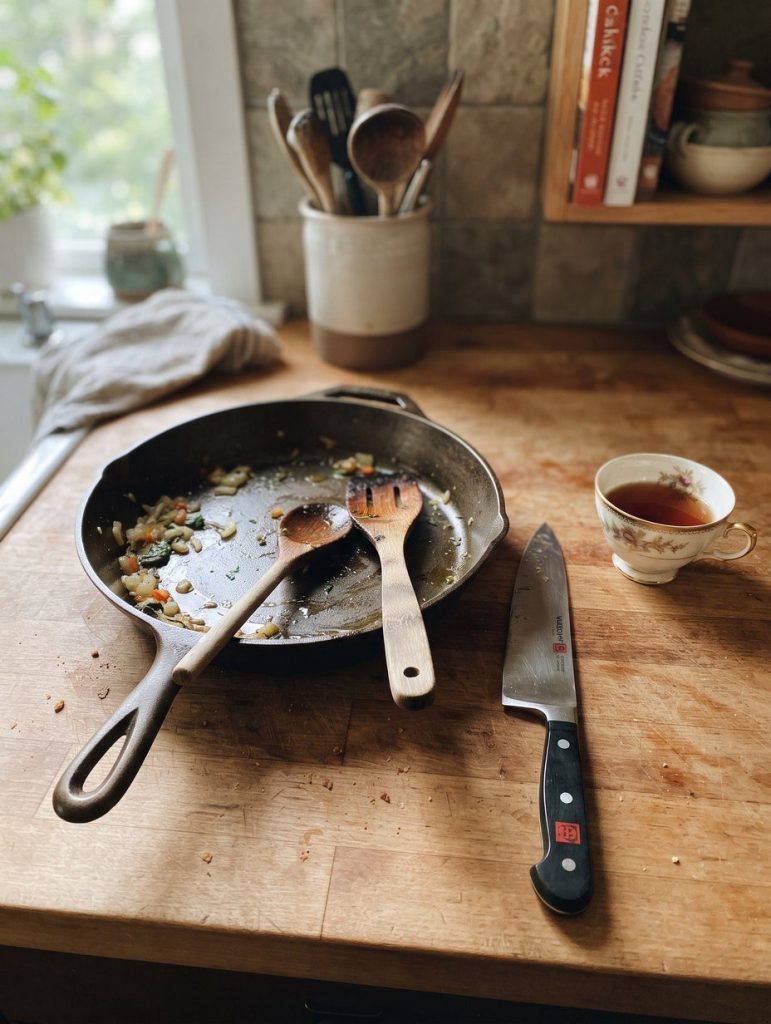
The seasoning on a cast iron pan is a layer of polymerized oil bonded to the metal. Dishwasher detergent is strongly alkaline and it strips exactly that.
The pan comes out dull gray, sticky food sticks to it, and it starts rusting within a day because there is nothing protecting the bare iron.
Hot water, a brush, dry it on the burner, wipe a little oil in it.
2. Wooden Spoons, Boards and Handles
Wood absorbs water. A long hot cycle swells it, and the drying cycle shrinks it again fast.
That cycle splits the grain and raises the surface, and a cracked wooden board is much harder to keep clean than a smooth one. Knife handles come loose the same way.
Hand wash quickly and dry it standing up.
3. Sharp Knives
Two things happen. The detergent is abrasive enough to dull a fine edge, and knives knock against other items during the cycle and get micro-chips along the blade.
A good knife also often has a wooden or composite handle that will not survive either.
Ten seconds under the tap is all a knife needs.
4. Non-Stick Pans
Even the ones labeled dishwasher safe. The detergent degrades the coating a little on every cycle, and “safe” only means it will not fall apart immediately.
A non-stick pan washed by hand lasts years longer than the same pan in the dishwasher. This is the single biggest thing you control about how long it lasts.
5. Aluminum and Anodized Aluminum
Alkaline detergent reacts with bare aluminum and leaves it chalky, pitted and permanently dull gray.
On anodized aluminum it strips the anodized layer, which was the whole point of the pan.
This also goes for aluminum baking sheets, which come out looking burnt even when they are clean.
6. Anything Old, Hand-Painted or Gold-Rimmed
Gold and silver trim comes off — it is applied on top of the glaze, not under it, and the detergent takes it away a little at a time.
Hand-painted decoration fades the same way, and older ceramics can have fine crazing in the glaze that lets water in and cracks the piece.
If it belonged to someone before you, wash it by hand.
Two More Worth Knowing
Insulated travel mugs and flasks. Water gets between the two walls through the seal and stays there. The mug never dries and then it smells, and the insulation stops working.
Thin or crystal glassware. Heat plus soft water plus strong detergent etches glass permanently, and the film that appears never comes off.
One Thing People Wrongly Avoid
Plastic containers are usually fine on the top rack. What melts them is the heating element at the bottom, not the wash itself.
Top rack, and no heated dry cycle, and they will be fine.