A garbage disposal is a set of blunt spinning teeth, not a blender. It cannot cut and it cannot dissolve — it grinds things small enough to wash away.
These six are the ones that jam it, dull it, or block the pipe a few feet past it where a plumber has to come and take the pipe apart.
1. Coffee Grounds

They go down easily, which is why everyone does it. That is the problem.
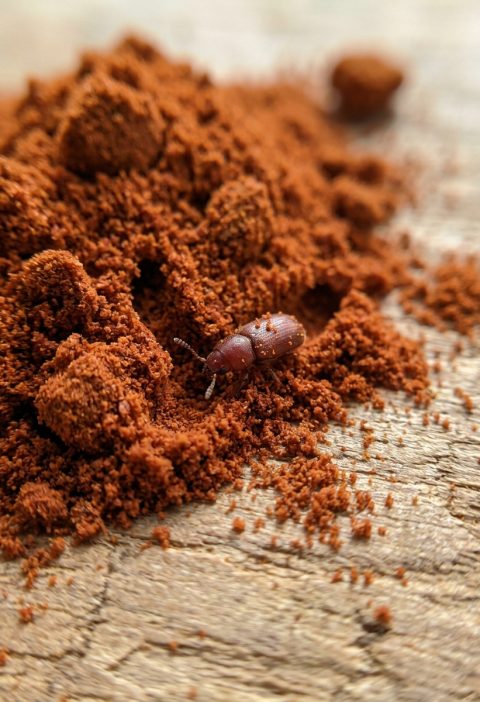
Coffee grounds do not dissolve. They settle in the trap under the sink and pack together into a dense wet sludge that water cannot move. Over months it builds into a plug.
They are also the number one thing plumbers report finding in blocked kitchen drains.
Put them in the trash, or on the garden.
2. Grease, Oil and Fat
Hot bacon fat pours like water, so it feels safe. Thirty seconds later it is inside a cold pipe, where it goes solid again.
Each pour adds a layer to the inside of the pipe until the opening closes. This is how a drain that was fine for years blocks suddenly.
Pour it into a jar, let it set, and throw the jar away.
3. Fibrous Vegetables
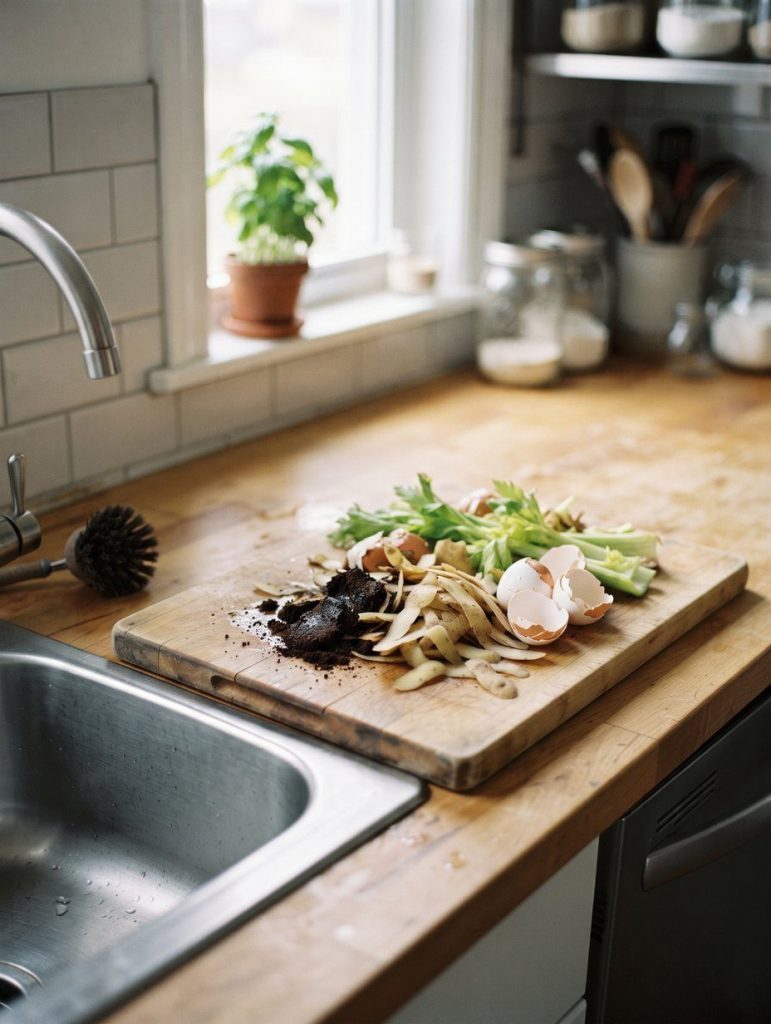
Celery, artichoke leaves, corn husks, onion skins, asparagus ends, rhubarb.
The long stringy fibers wrap around the shredder ring and the motor shaft like thread around a propeller. The motor keeps turning and the fibers stay exactly where they are.
This is the classic cause of a disposal that hums but will not spin.
4. Starchy Foods
Pasta, rice, potato peel, oatmeal, bread.
They keep absorbing water after they go down. A spoonful of rice becomes a cup of paste sitting in the trap.
Potato peels are the worst of them — they turn into a thick glue that coats everything.
5. Bones and Fruit Pits
Small soft bones from fish or chicken are usually fine in a healthy disposal.
Beef and pork bones, peach pits, avocado stones and mango pits are not. They are harder than the grinding ring, so instead of breaking they bounce around and chip the teeth and can crack the housing.
A disposal that has been fed bones grinds worse at everything else for the rest of its life.
6. Eggshells
This one is argued about, because there is a widespread belief that eggshells sharpen the blades.
There are no blades. There is nothing to sharpen.
What eggshells actually do is grind to a fine sandy grit, and the membrane inside the shell wraps around the shredder ring. The grit settles in the trap like coffee grounds and sets there.
How to Keep It Working
Run cold water, not hot. Cold keeps any fat solid so it grinds and washes away instead of coating the pipe. This is the opposite of what most people do.
Run the water for twenty seconds after it stops grinding. Most blockages are things that got most of the way and stopped.
Grind a tray of ice cubes once a month. The ice knocks the buildup off the grinding ring.
Then a lemon half. For the smell, which comes from residue in the chamber.
Feed it slowly. A little at a time with the water running, not a whole plate at once.